Articles · Education
Future 2, and the rule not yet written
Houston ISD's Future 2 model puts AI literacy beside screen-free experiences. The school schedule and the district's unfinished AI policy answer different questions.
Read the story
Houston ISD is reorganizing the school day around a distinction between academic foundations and hands-on learning. Its Future 2 model keeps the district's standard curriculum in the morning and places experiences and workshops in the afternoon.
AI appears in that model in different ways. The schedule names coursework in AI literacy and design thinking. An optional AI-driven reading and math platform is available to students who meet the district's testing criteria.
Screen-free does not mean AI-free
The district describes its afternoon experiences as screen-free. That statement applies to those experiences, not every activity in the school day. It can coexist with the separately described AI coursework and accelerated learning platform.
The campus page lists schools in pairings. The launch announcement described an initial conversion, while later reporting described a wider rollout. Those documents should not be treated as identical snapshots of the program.
The policy was still a separate matter
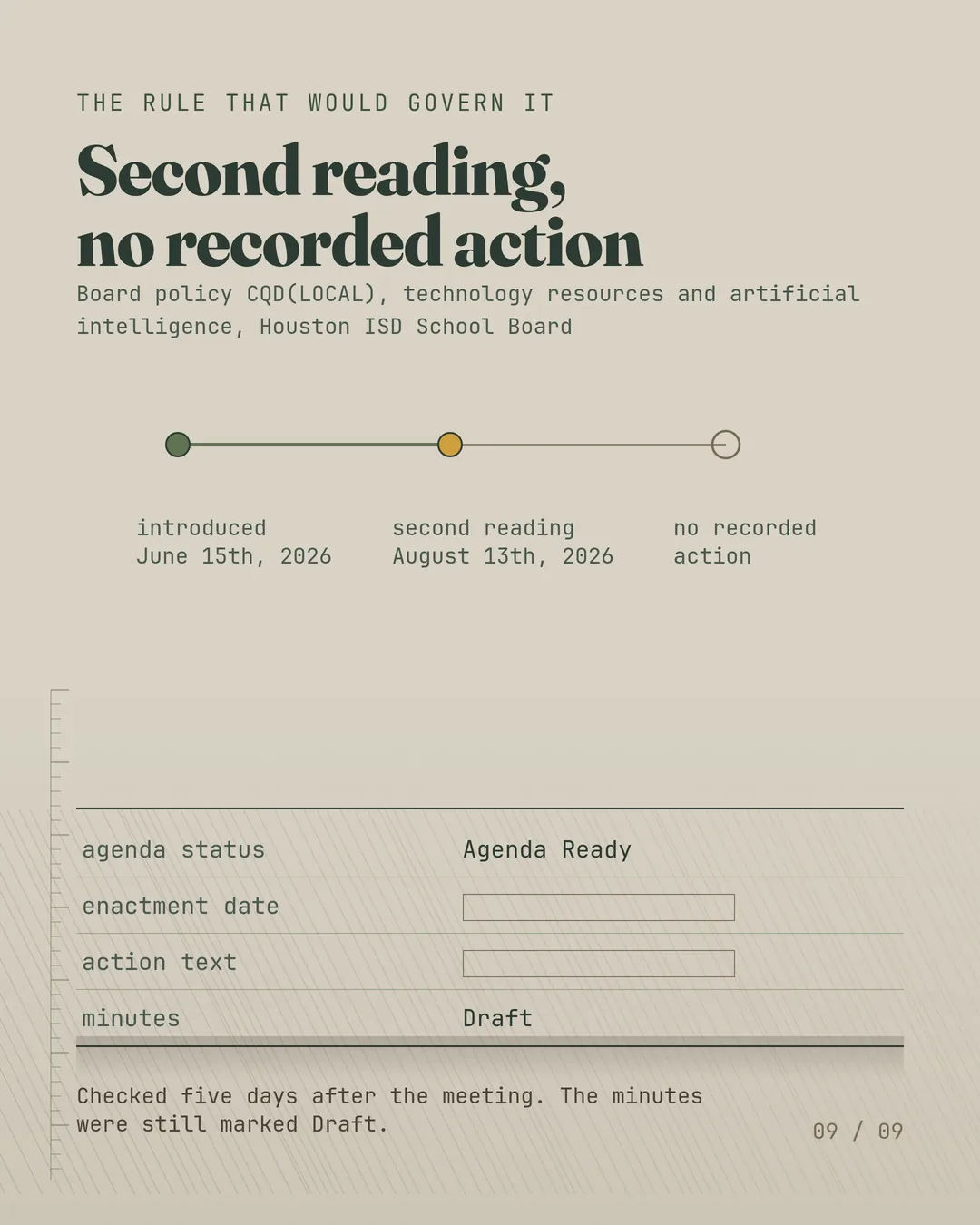
Houston ISD's board policy on artificial intelligence reached a second reading in August. The record checked for this edition did not establish passage. A published school model is not proof that the board adopted the policy governing AI use.
Katy ISD's separate framework explicitly places responsibility for lessons and evaluation with educators. Temple ISD described a phased student rollout after staff training. Neither district's approach establishes Houston's rules.
What remains unresolved
The schedule explains the proposed learning model. A final board action would settle the status of the AI policy. Until that action is verified, the program description and the policy's approval status need to remain separate.
Sources for this story
- Houston Independent School District (HISD Now)
- Houston Independent School District (Future 2 Schools site)
- The Texan
- Houston Independent School District (Future 2 Schools site)
- Katy Independent School District
- Houston ISD Legistar (webapi.legistar.com)
- KWTX
Claim-by-claim verification · 18 claims
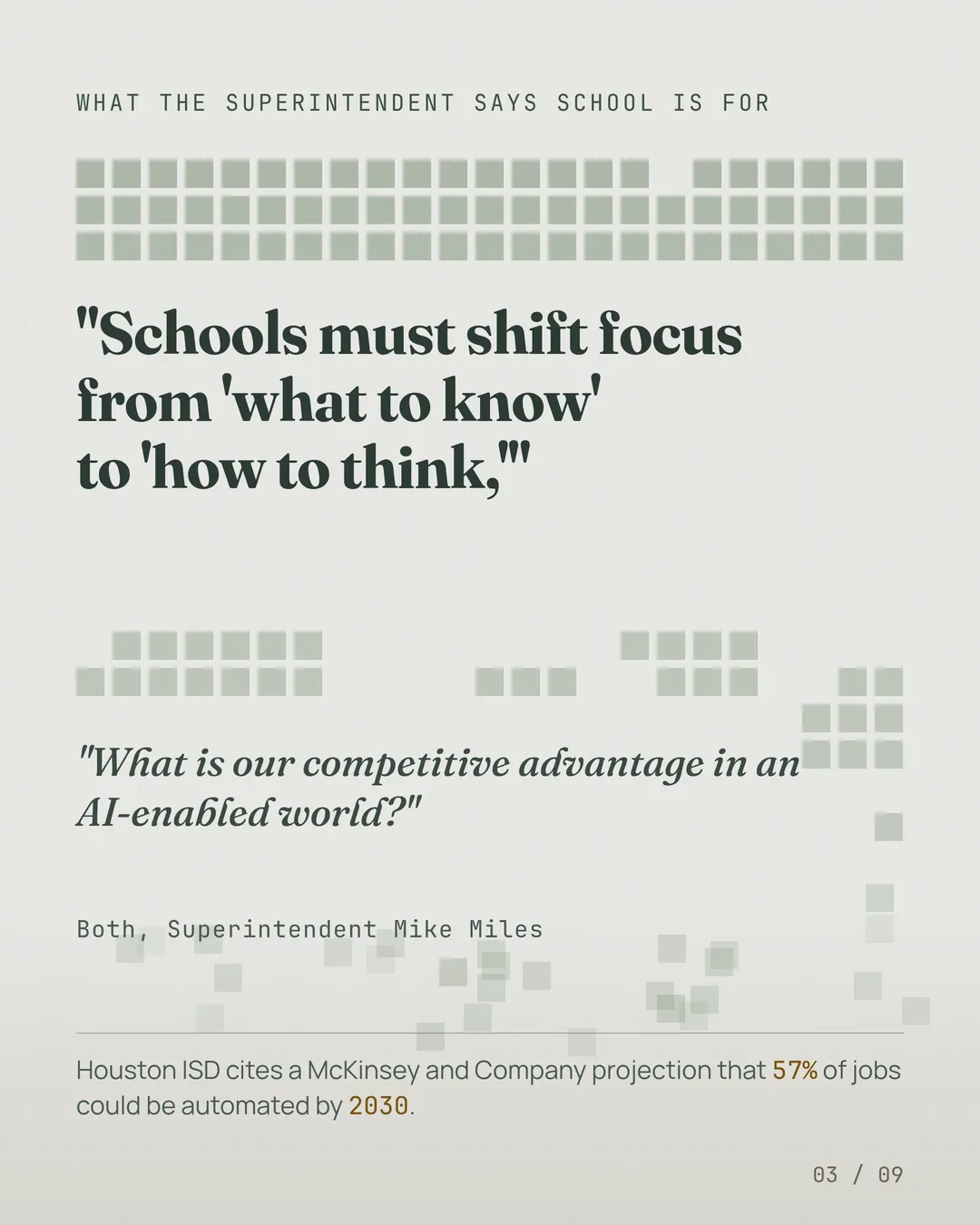
Houston ISD Superintendent Mike Miles framed the Future 2 model as a shift in what schools teach students to do.
"Schools must shift focus from 'what to know' to 'how to think,'" Miles said. "What is our competitive advantage in an AI-enabled world?"
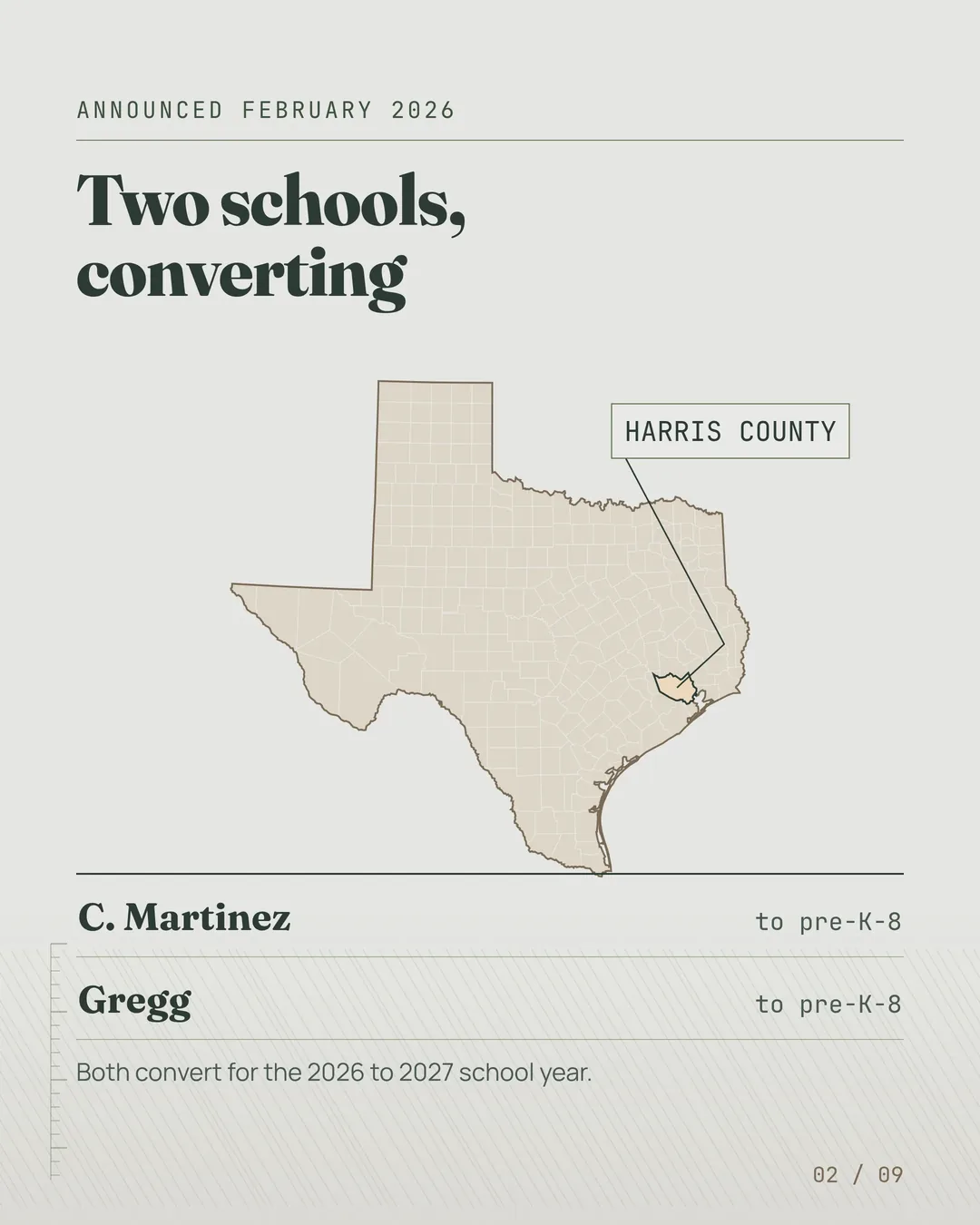
Houston ISD announced the Future 2 model in February 2026 as a launch of two schools, with C. Martinez and Gregg elementary schools converting to pre-K-8 for the 2026 to 2027 school year.
Houston ISD is preparing what Superintendent Mike Miles calls "the next stage in changing the American public education system" with the launch of two Future 2 schools. Beginning in the 2026-27 school year, C. Martinez and Gregg elementary schools will convert to pre-K-8 schools with a new curriculum model.
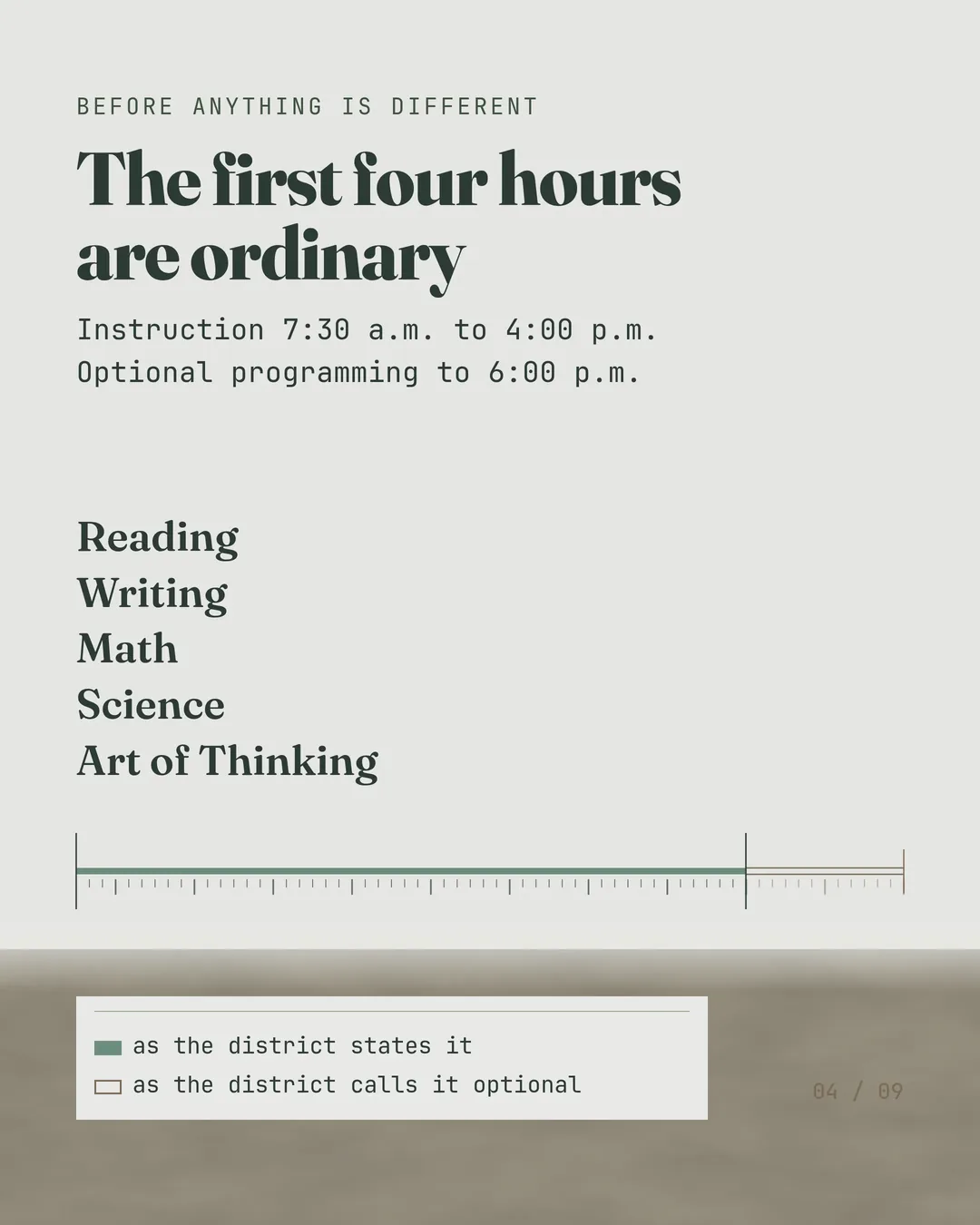
Houston ISD reported that the first four hours of the Future 2 day follow the district's standard NES curriculum.
The first four hours of school follow the standard NES curriculum across the district to include reading, writing, math, science and Art of Thinking core subjects.
Houston ISD divides the Future 2 day into three parts and runs instruction from 7:30 a.m. to 4:00 p.m., with optional programming until 6:00 p.m.
The curriculum separates the day into three parts, operating from 7:30 a.m. to 4:00 p.m. with the option for students to continue programming time until 6:00 p.m.
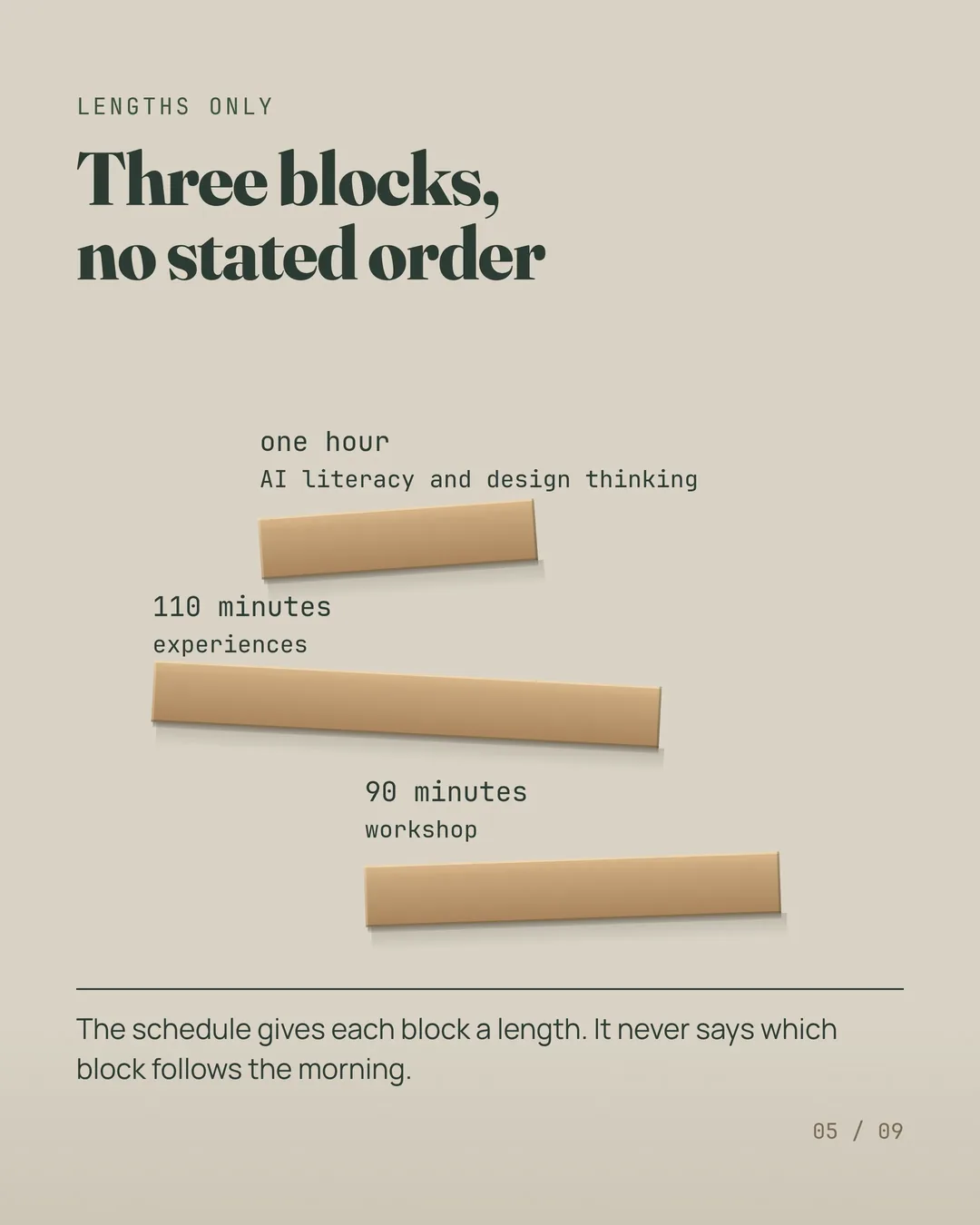
The Future 2 daily schedule sets a one hour coursework block focused on AI literacy and design thinking, a 110 minute experiences block, and a 90 minute workshop block.
Coursework (one hour), with a focus on AI literacy and design thinking courses
Houston ISD states that Future 2 afternoon experiences are screen-free.
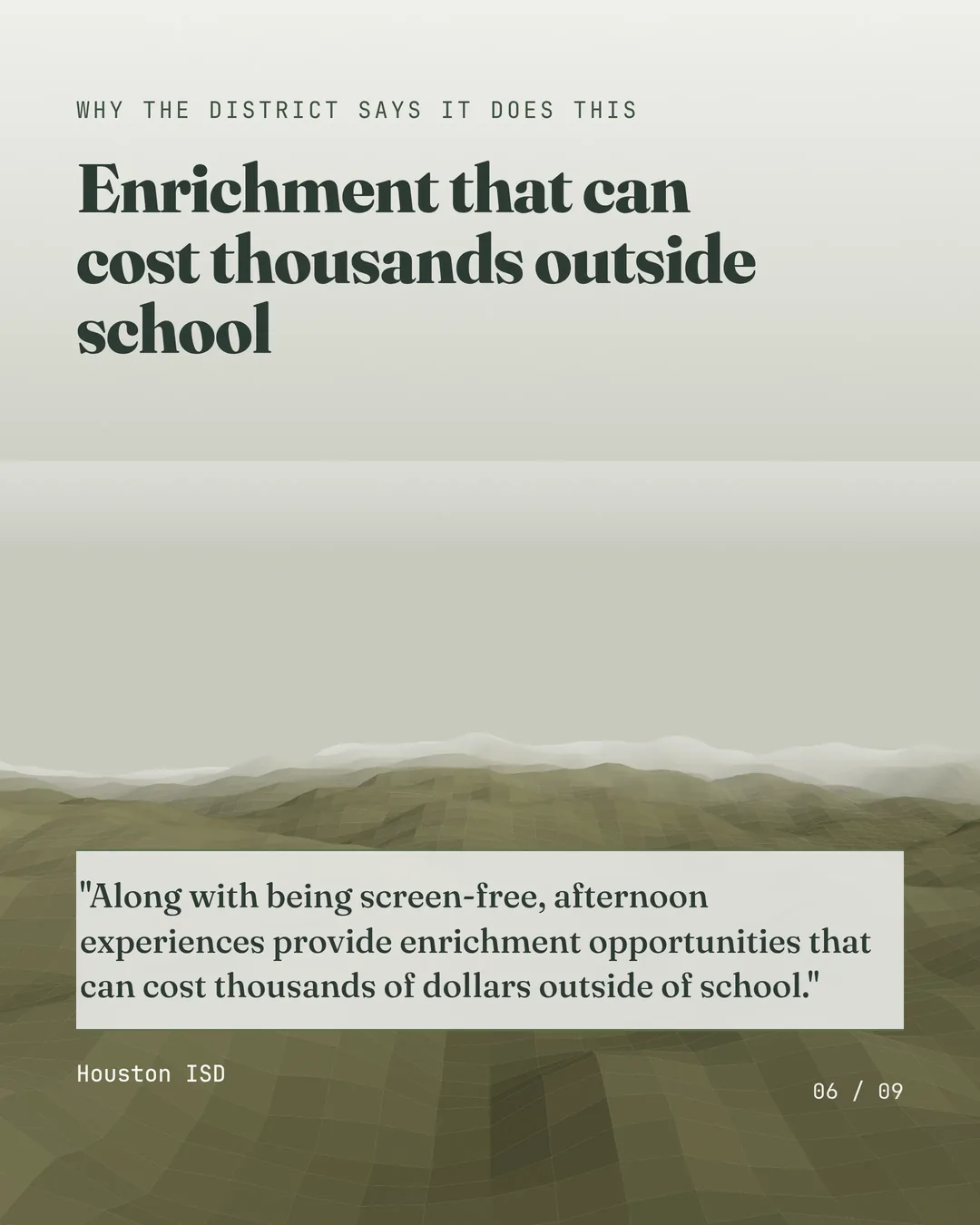
Along with being screen-free, afternoon experiences provide enrichment opportunities that can cost thousands of dollars outside of school.
Houston ISD describes a Future 2 school as one where students build academic foundations in the morning and pursue hands-on experiences and workshops in the afternoon.
A place where students build strong academic foundations in the morning and explore real-world interests through hands-on experiences and workshops in the afternoon, helping them develop the confidence, character, and life skills needed to thrive beyond the classroom.
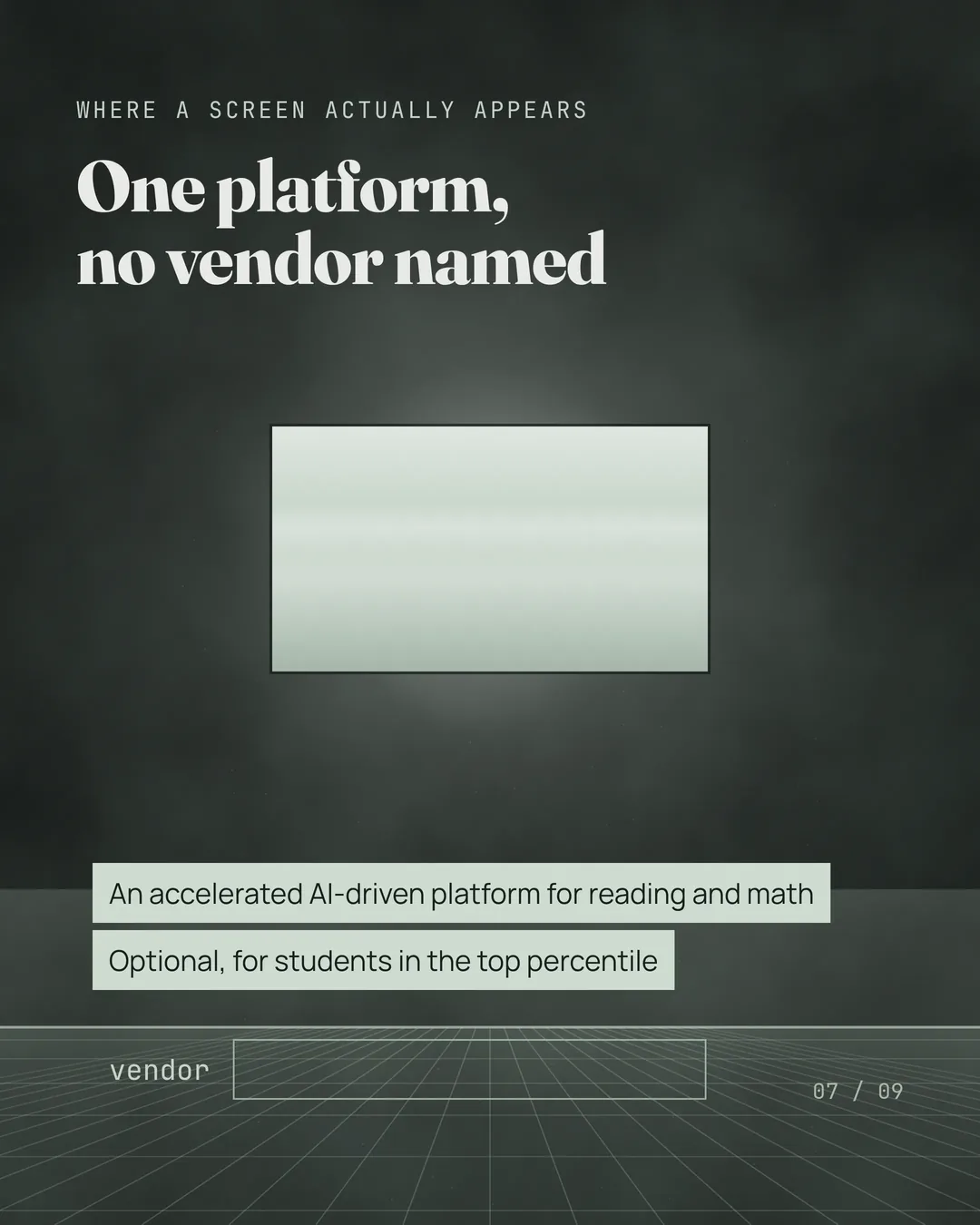
Houston ISD offers students in the top percentile on Measurement of Academic Progress tests an optional accelerated AI-driven learning platform for reading and math.
To increase academic rigor, students among the top percentile on Measurement of Academic Progress (MAP) tests will have the option to follow an accelerated, AI-driven learning platform for their reading and math courses.
Houston ISD requires Future 2 students to clear an attendance rate and a national percentile benchmark to be promoted through the two-year dyad sequence.
Over a 93% attendance rate
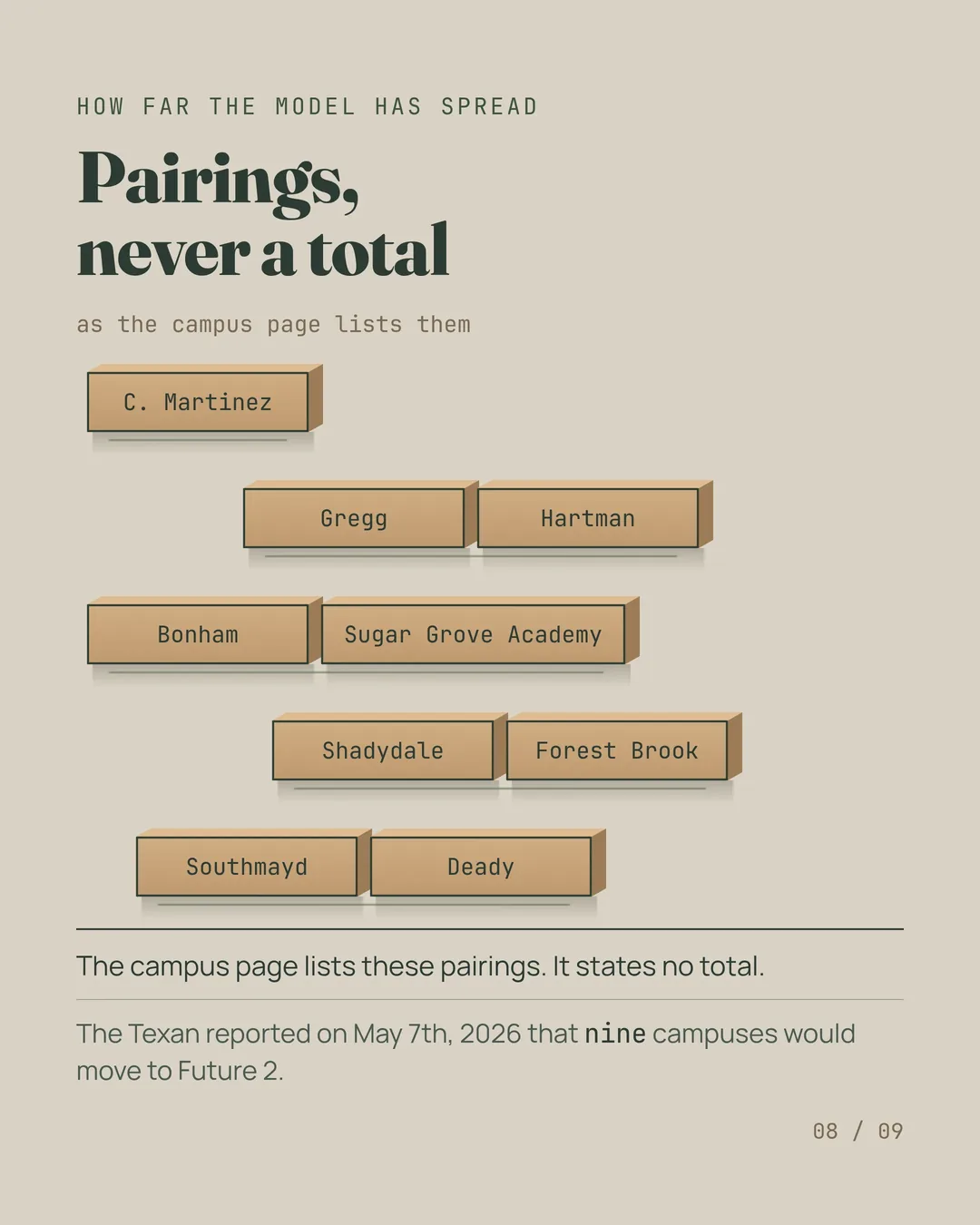
The Texan reported in May 2026 that Houston ISD would move nine campuses to the Future 2 model for the 2026 to 2027 school year.
Houston Independent School District (ISD) will transition nine campuses to the district's Future 2 program
Houston ISD's Future 2 site lists its campuses as five pairings covering Clemente Martinez, Gregg, Hartman, Bonham, Sugar Grove Academy, Shadydale, Forest Brook, Southmayd and Deady.
Gregg ES + Hartman MS
Katy ISD assistant superintendent for teaching and learning Dr. Sanee Bell said the district has a responsibility to prepare students to use AI tools thoughtfully.
"Artificial intelligence is transforming the world our students will inherit, and it is our responsibility to prepare them to use these tools thoughtfully and with clear purpose," said Dr. Sanée Bell, assistant superintendent for teaching and learning.
Katy ISD's framework states that AI is a tool and not a teacher, and that educators remain responsible for designing lessons and evaluating student learning.
Before AI becomes commonplace in classrooms, Katy ISD's framework addresses many questions families have about AI in schools by making it clear that AI is a tool, not a teacher. Katy ISD educators remain responsible for designing lessons, evaluating student learning, building relationships and making instructional decisions.
Katy ISD unveiled its Artificial Intelligence Framework at its July Board Work Study meeting and calls it a living resource expected to evolve.
The presentation also introduced Katy ISD's Artificial Intelligence (AI) Framework, a comprehensive guide for the responsible integration of AI across District classrooms.
Katy ISD reports kindergarten students spend about 35 minutes per week on technology skills. First and second graders spend about one hour per week, and fifth graders about 85 minutes per week.
At the kindergarten level, students spend about 35 minutes per week building foundational technology skills through the district's core curriculum and lessons and activities that directly address the state's TEKS for technology application. In first and second grade, that increases to about one hour per week.
Houston ISD board policy CQD(LOCAL) on artificial intelligence was on the School Board's August 13th, 2026 agenda for second reading and the record shows no passage.
Approval To Establish Board Policy CQD(LOCAL), Technology Resources: Artificial Intelligence-Second Reading
Temple ISD superintendent Dr. Bobby Ott said the district will phase AI in for students this school year, after three years of staff training.
The gradual rollout comes after district staff spent the last three years training with the technology to ensure it is integrated safely and effectively.
Houston ISD cites a McKinsey and Company projection that 57% of jobs could be automated by 2030 as part of its rationale for Future 2.
Amid consulting firm McKinsey and Company's projection that 57% of jobs could be automated by 2030, the curriculum prioritizes interpersonal skills and real-world experiences alongside core academics to prepare students for work technology can't replace.