Articles · Research infrastructure
VISION is No. 66. Both documents say will.
Texas A&M's VISION has a measured world ranking. Its own documentation still limits access to an invitation-only beta, separating demonstrated computing power from general availability.
Read the story

VISION's place on the world supercomputer list is a measured result. The machine's access documentation describes a different fact about its present use. Researchers still need an invitation and approval through Texas A&M System governance.
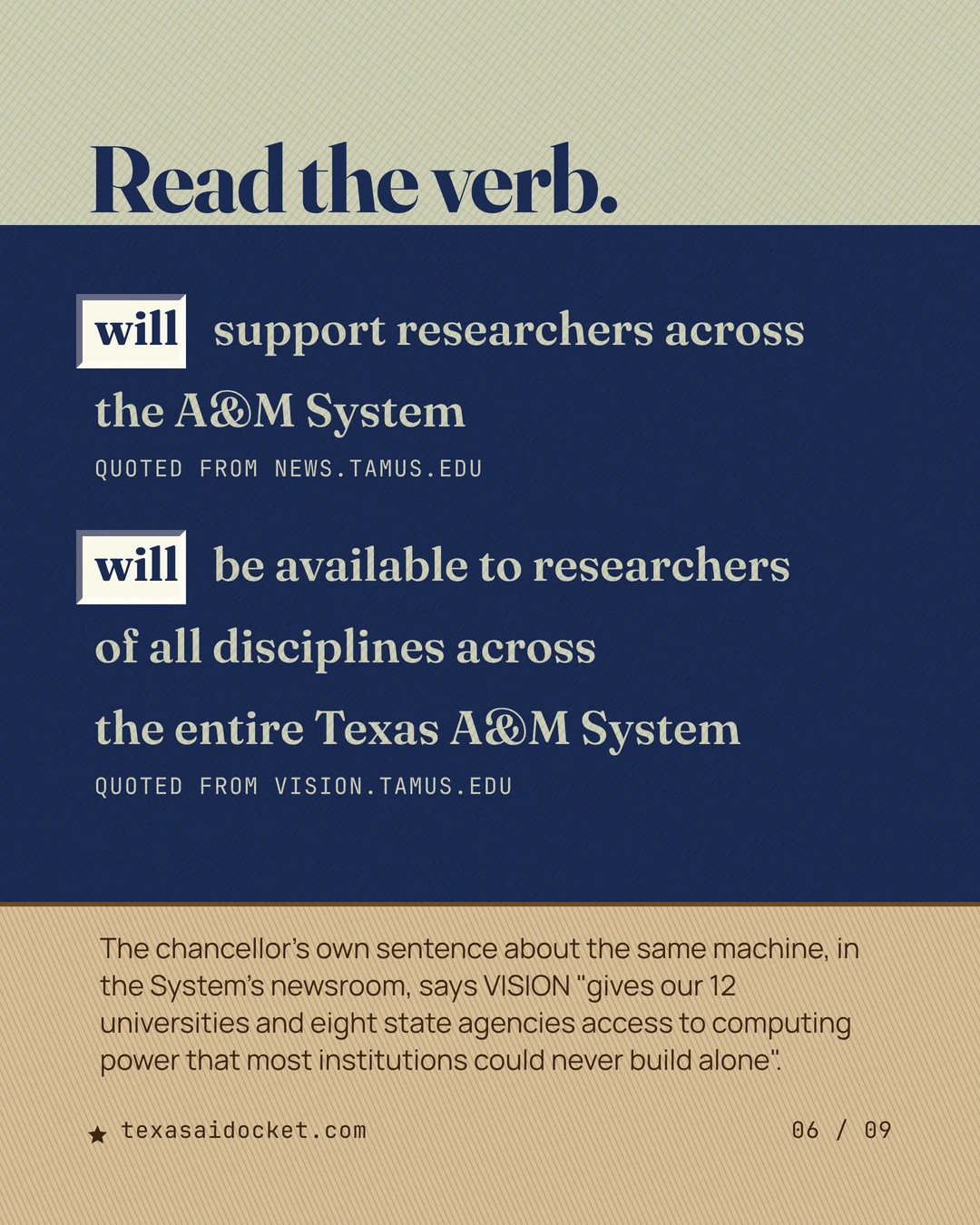
The System says the machine will support researchers across its institutions. That future-tense promise does not mean every eligible researcher can use it now. Performance and access are separate parts of the story.
What the ranking measures
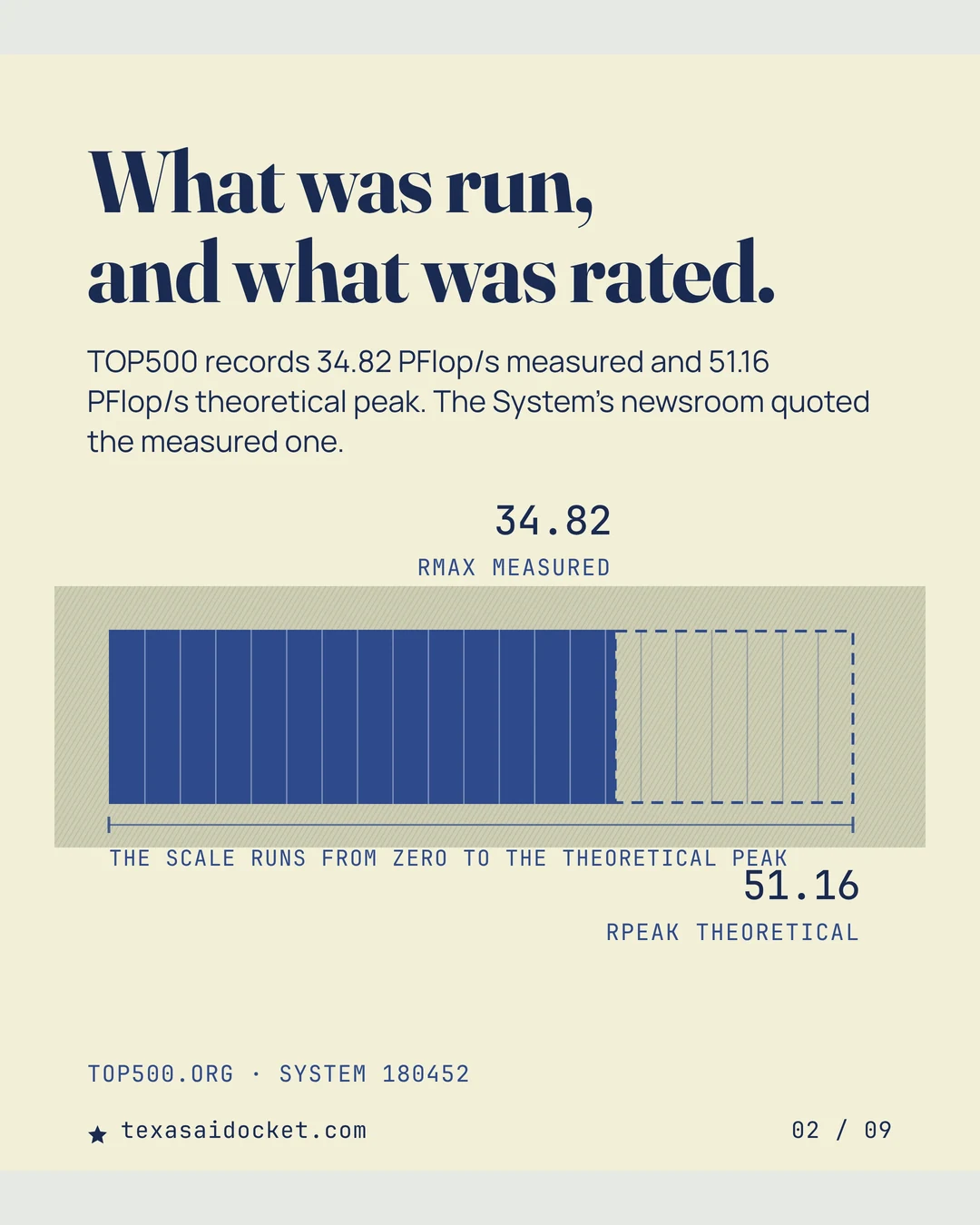
The list reports measured Linpack performance beside a theoretical peak. Those are different quantities. The System credits its governing board's investment and places the computer at Texas A&M's West Campus Data Center.
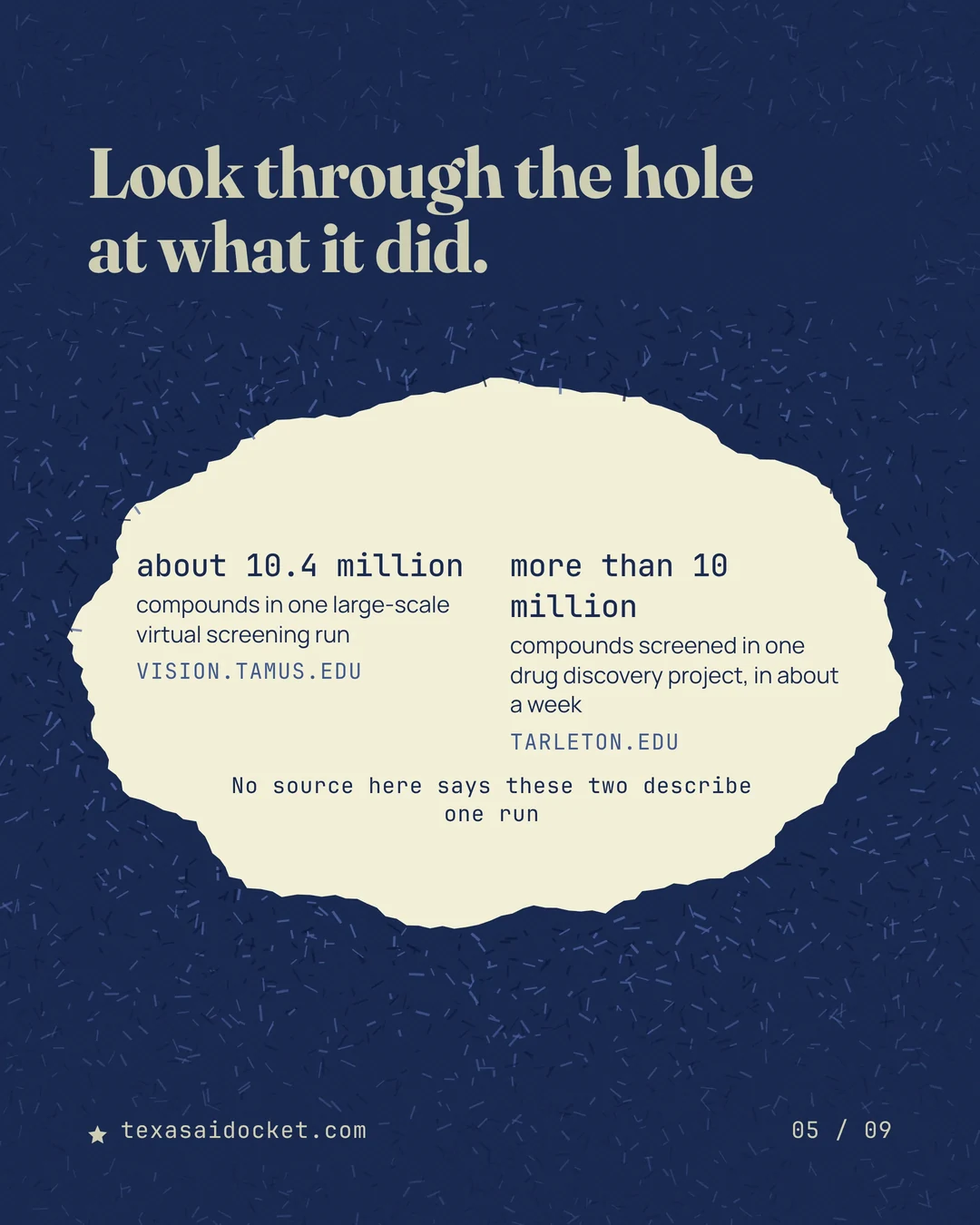
The machine's use-case page describes a large compound-screening run. A separate university account reports a screening project completed in about a week. These examples demonstrate described research use, not unrestricted availability.
The beta has its own conditions
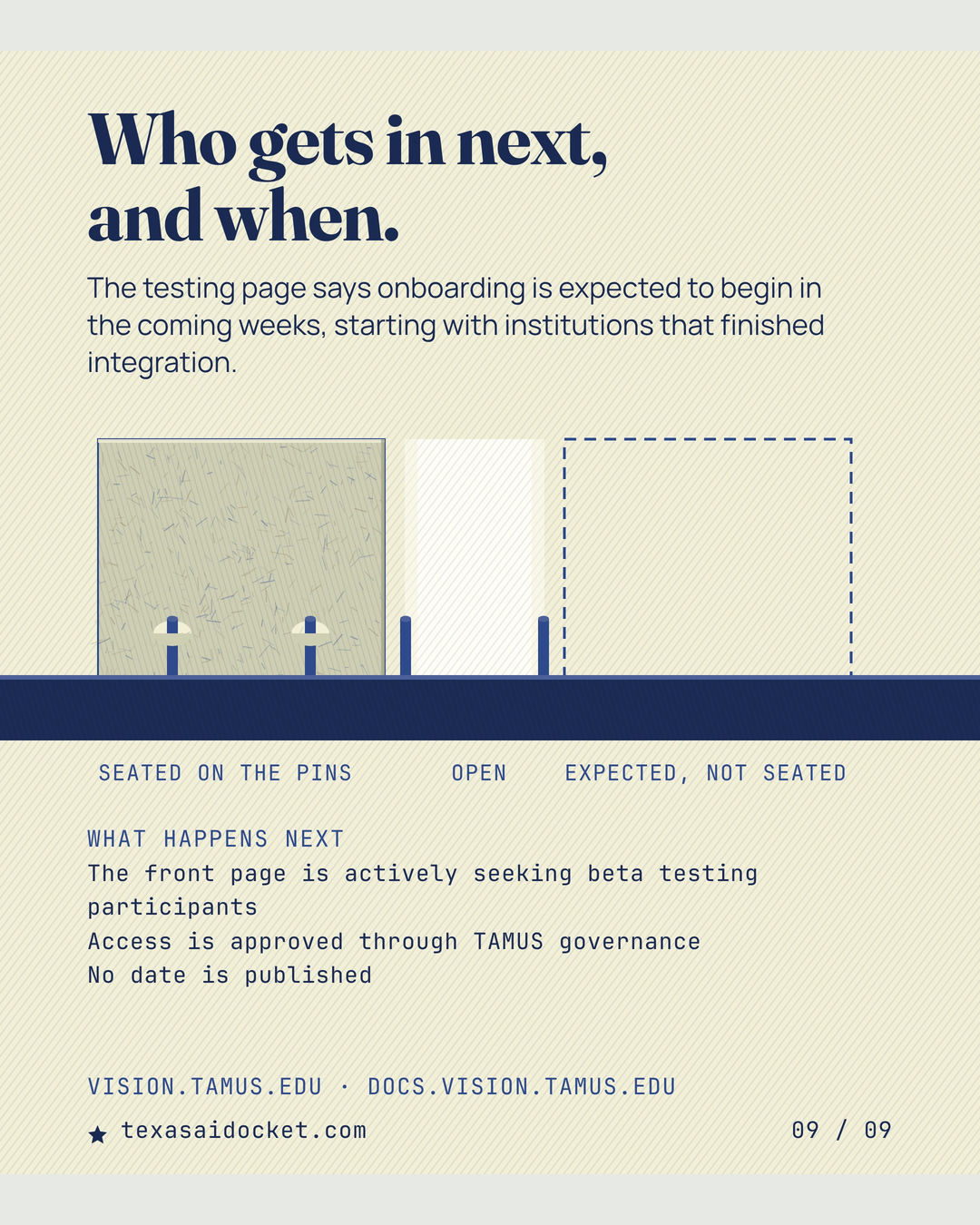
The front page still recruits beta participants while the testing page says the beta is being finalized. The latter expects wider onboarding to begin with institutions that have completed the necessary technical integration.
The documentation also warns that support and capacity are not fully guaranteed during the beta. That qualification belongs beside any invitation to use the system.
What would establish wider access
An updated access policy or confirmed onboarding record would establish the move to general availability. The ranking announcement alone can't answer who has actually received access.
Sources for this story
- top500.org
- news.tamus.edu
- www.tarleton.edu
- docs.vision.tamus.edu
- vision.tamus.edu
- vision.tamus.edu
- vision.tamus.edu
Claim-by-claim verification · 20 claims
The TOP500 list credits the machine to the Texas A&M University System rather than to one campus.
Site: Texas A&M University System URL: https://vision.tamus.edu
The System says VISION entered the list at number 66 in the world.
Ranked No. 66 in the world, VISION now stands in elite company among national laboratories, major research institutions and global technology leaders.
The list records the measured Linpack result and the theoretical peak side by side.
Linpack Performance (Rmax) 34.82 PFlop/s Theoretical Peak (Rpeak) 51.16 PFlop/s
The System states the measured figure in its own words.
VISION posted 34.82 petaflops of measured performance.
The list records the core count and the processor the cores sit in.
Cores: 110,960 Processor: Xeon Platinum 8480C 56C 3.8GHz
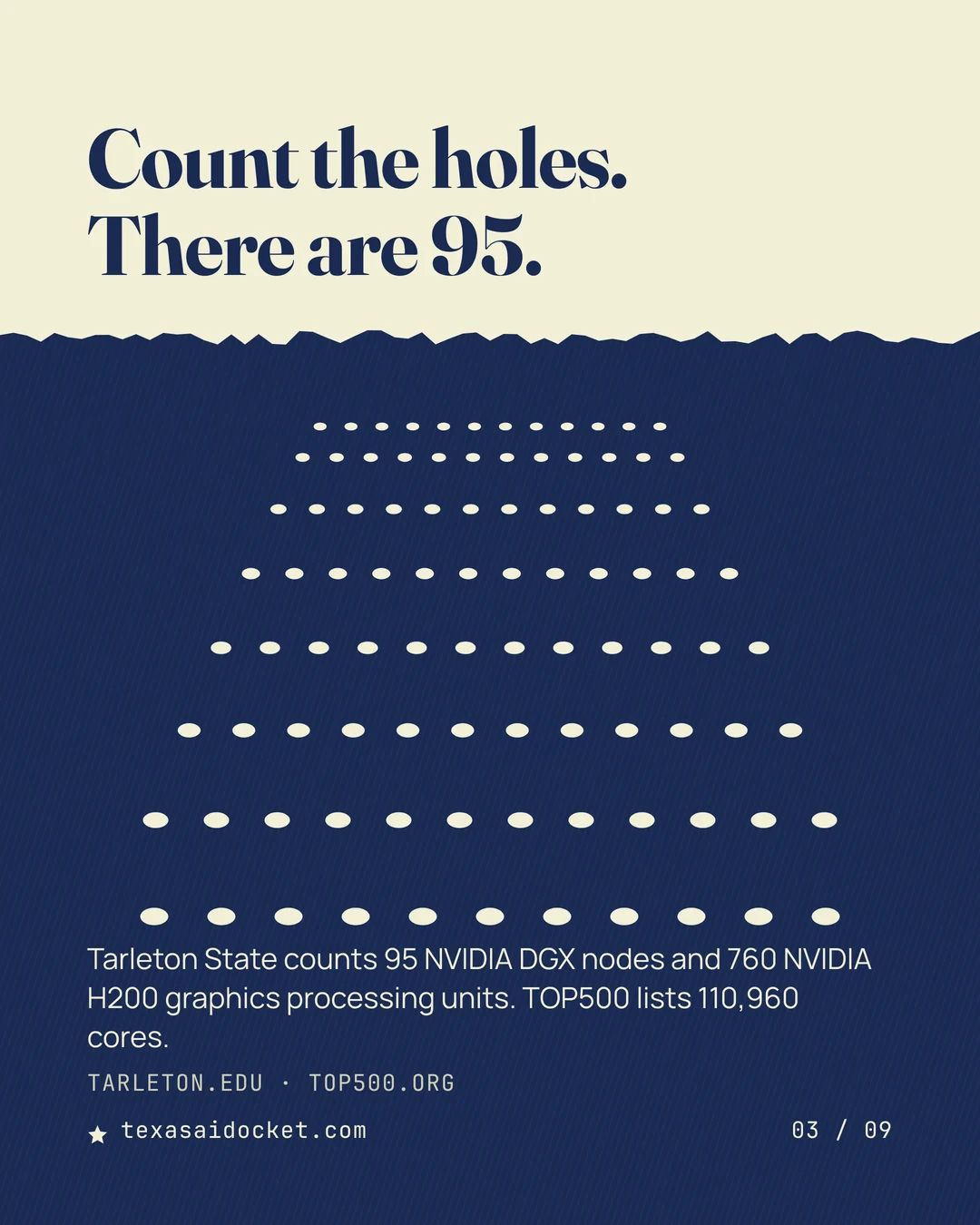
The machine is 95 nodes carrying 760 graphics processors.
The supercomputer features 95 NVIDIA DGX nodes, 760 NVIDIA H200 graphics processing units and high-speed storage designed for data-intensive work.
The System names the building the machine sits in and says who it is for.
The system is housed at the West Campus Data Center at Texas A&M University and will support researchers across the A&M System.
The System attributes the money to its governing board.
The ranking validates the A&M System's $45 million investment in advanced computing infrastructure, approved by the Board of Regents.
The chancellor names who the machine is for.
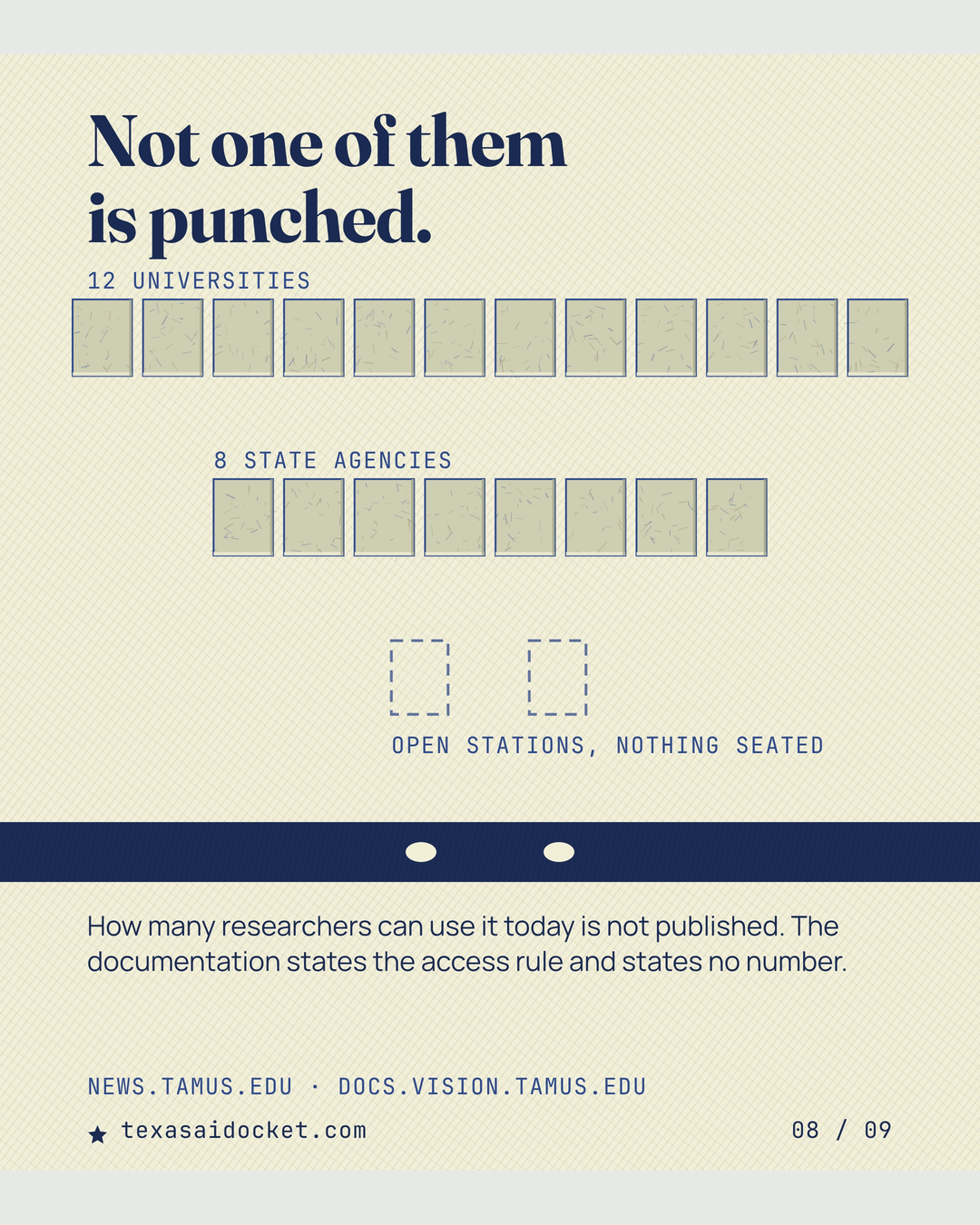
VISION gives our 12 universities and eight state agencies access to computing power that most institutions could never build alone.
The board chairman says what the money was for.
We did not fund VISION for bragging rights. We funded it because Texas needs answers faster,
The machine's own documentation states the present access rule.
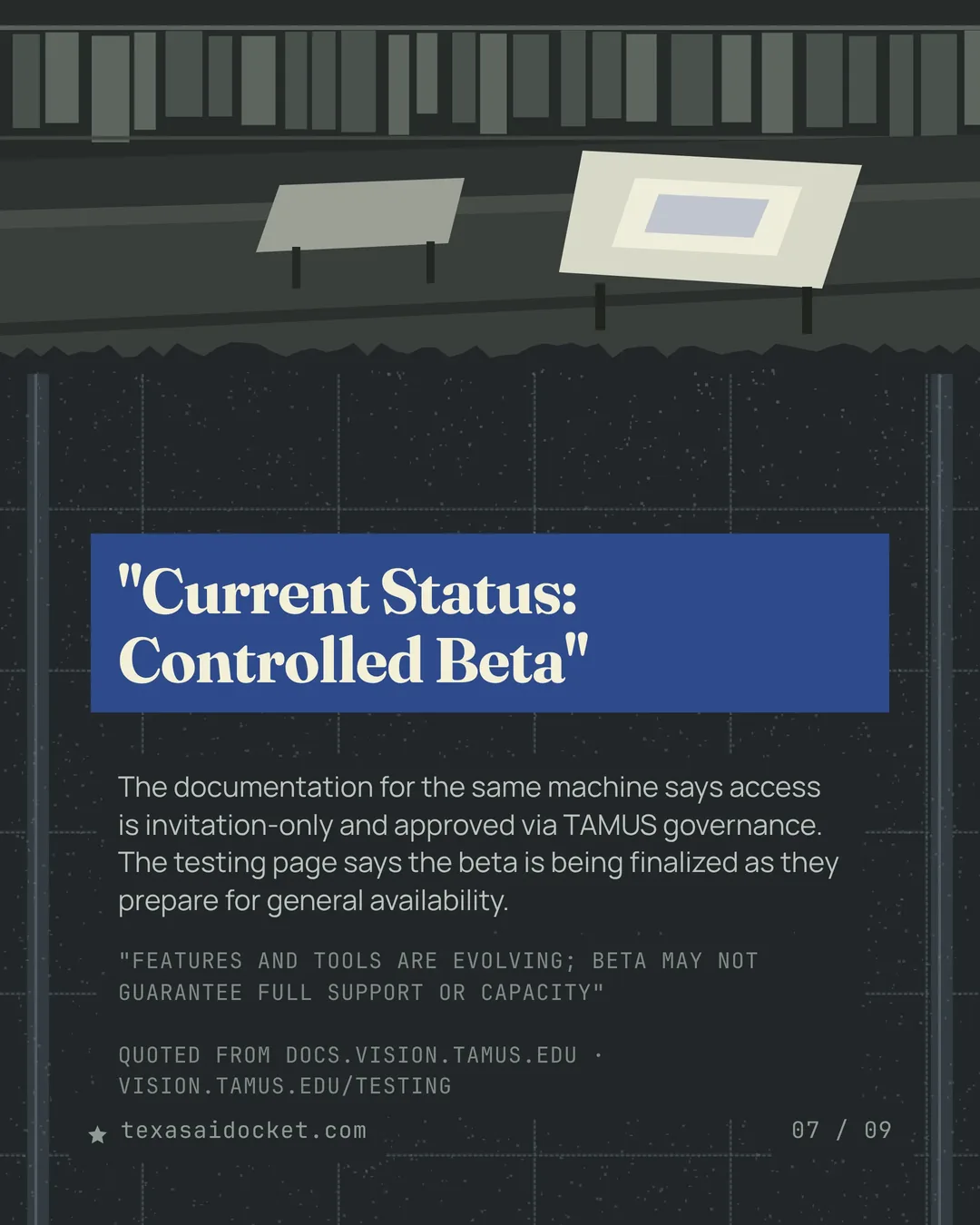
Access is invitation-only and approved via TAMUS governance
The same documentation names the phase the machine is in.
Current Status: Controlled Beta
The machine's own site states who it will eventually be open to.
VISION will be available to researchers of all disciplines across the entire Texas A&M System.
The front page is still recruiting for the beta.
We are now actively seeking beta testing participants to help us refine and optimize the system before its wider release.
The testing page says that same beta is closing.
The VISION beta program is currently being finalized as we prepare for General Availability (GA).
The testing page states when wider access starts and who goes first.
General Availability onboarding is expected to begin in the coming weeks, beginning with institutions that have completed the technical integration requirements necessary to access VISION services.
The machine's own site declines the ranking language its System uses.
one of the highest-performing AI supercomputers at any North American university
The machine's own use cases page states the size of one screening run on it.
large-scale virtual screening of approximately 10.4 million compounds
Tarleton State reports researchers screened more than ten million compounds in about a week.
In one drug discovery project, Texas A&M researchers screened more than 10 million compounds in about a week.
The documentation states what the beta does not promise.
Features and tools are evolving; beta may not guarantee full support or capacity