Articles · Materials research
71 percent from one country.
A Houston-led team will use AI to search for new magnet materials. The supply-chain case is real, but an award to search is not evidence of a better magnet.
Read the story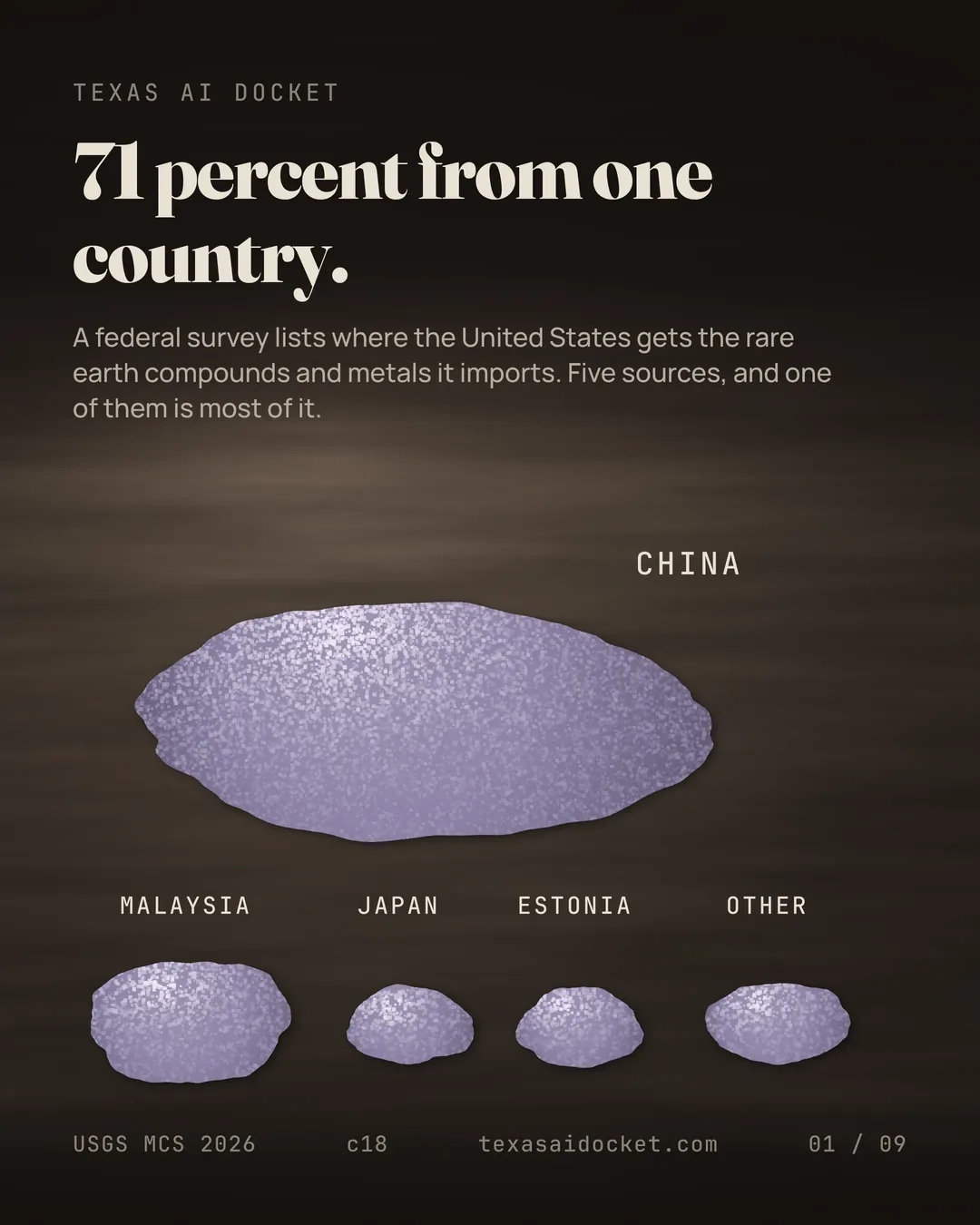
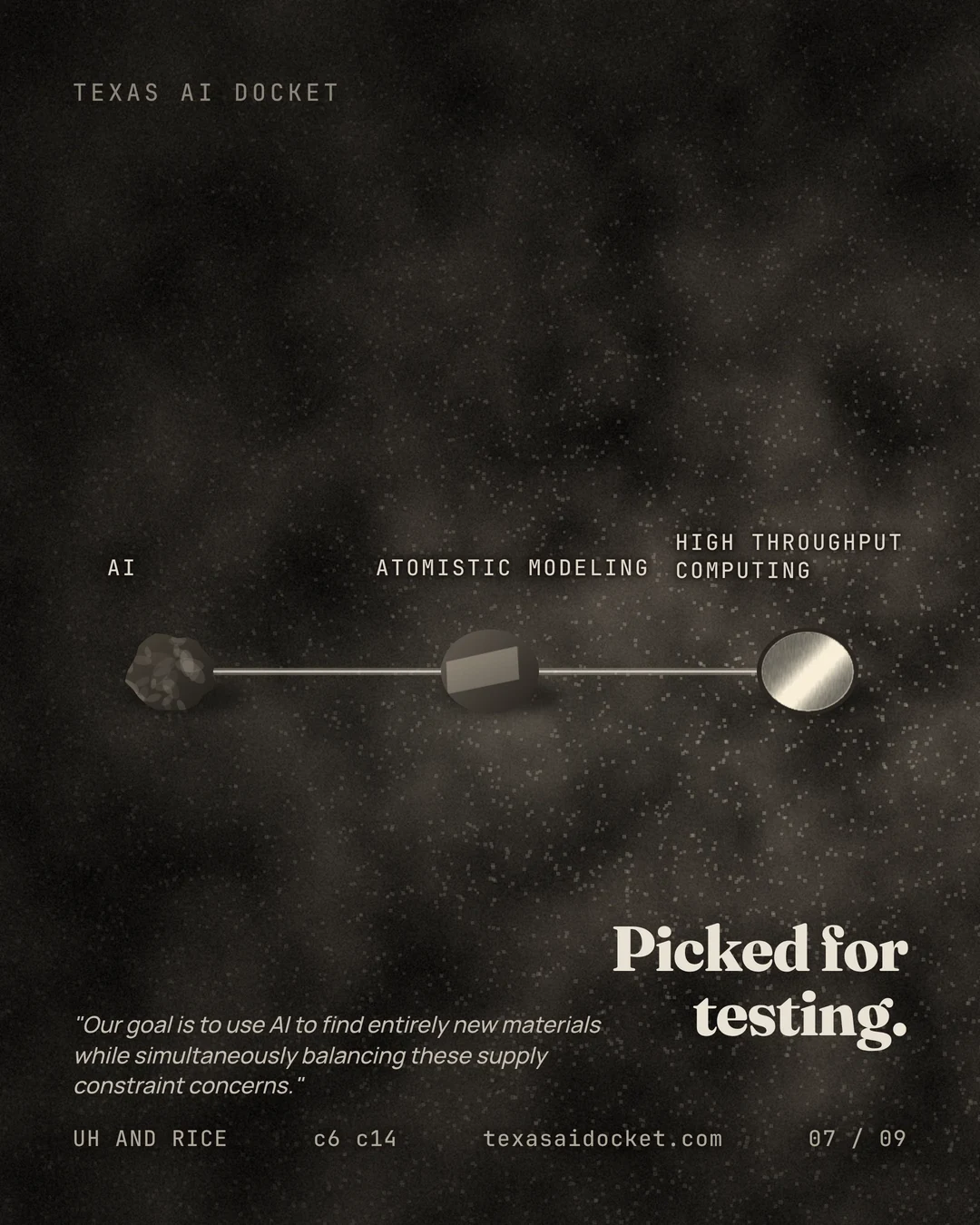
A University of Houston-led research team is searching for magnetic materials that could outperform a widely used industry standard. Rice's role is to use AI, atomistic modeling and high-throughput computing to select candidates for testing.
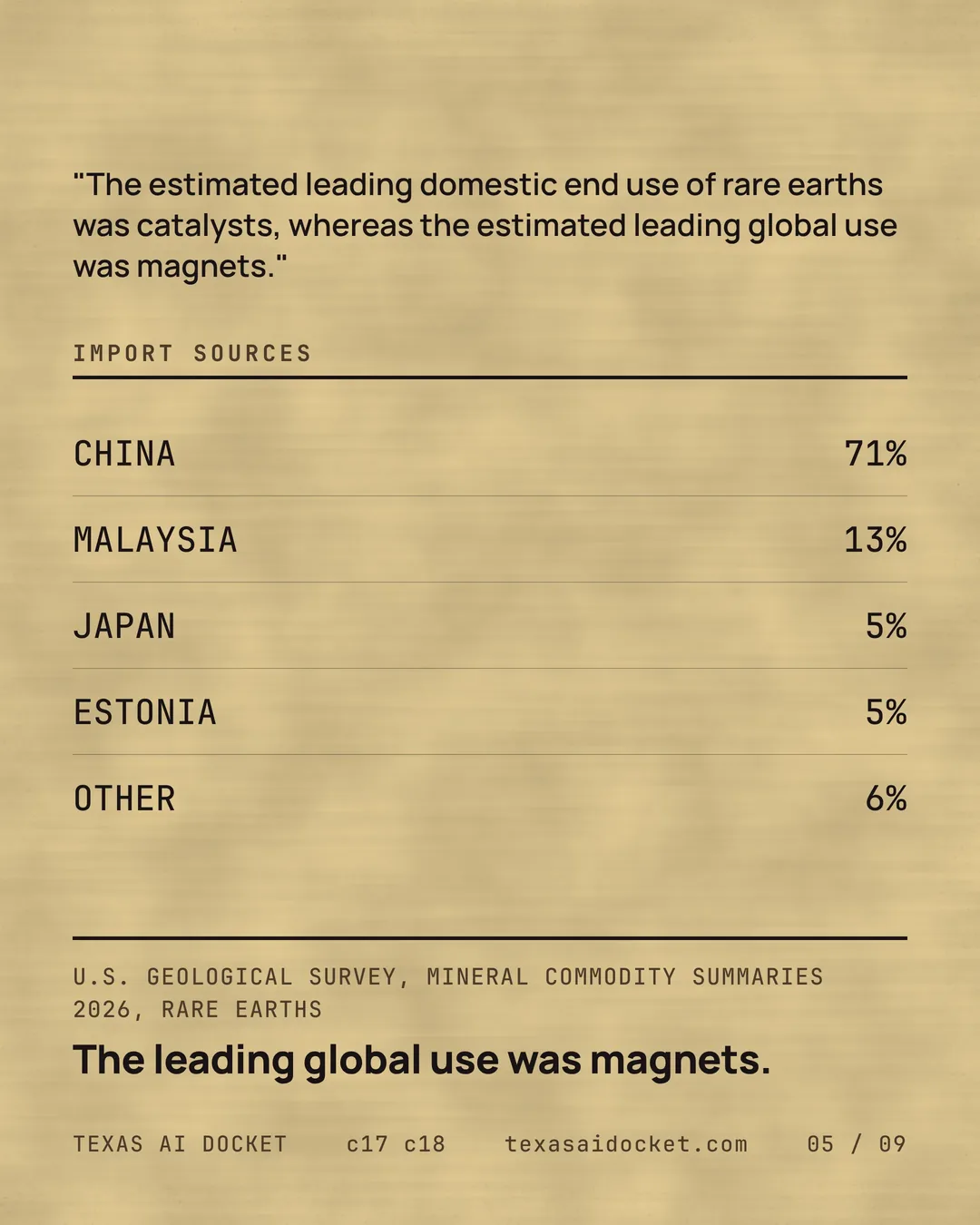
The supply-chain context is specific. The United States Geological Survey attributes 71% of American imports of rare earth compounds and metals in its reported period to China. That statistic is not a measure of every finished magnet sold in the United States.
The model chooses what to test
The team describes AI as a way to identify new materials while considering supply constraints. Candidate selection comes before experimental proof. A material proposed by a model still needs evidence that it has the desired magnetic properties.
The ARPA-E program description sets ambitious performance objectives. Those objectives describe what the research seeks, not performance already demonstrated by this team.
Read the award figures at their precision
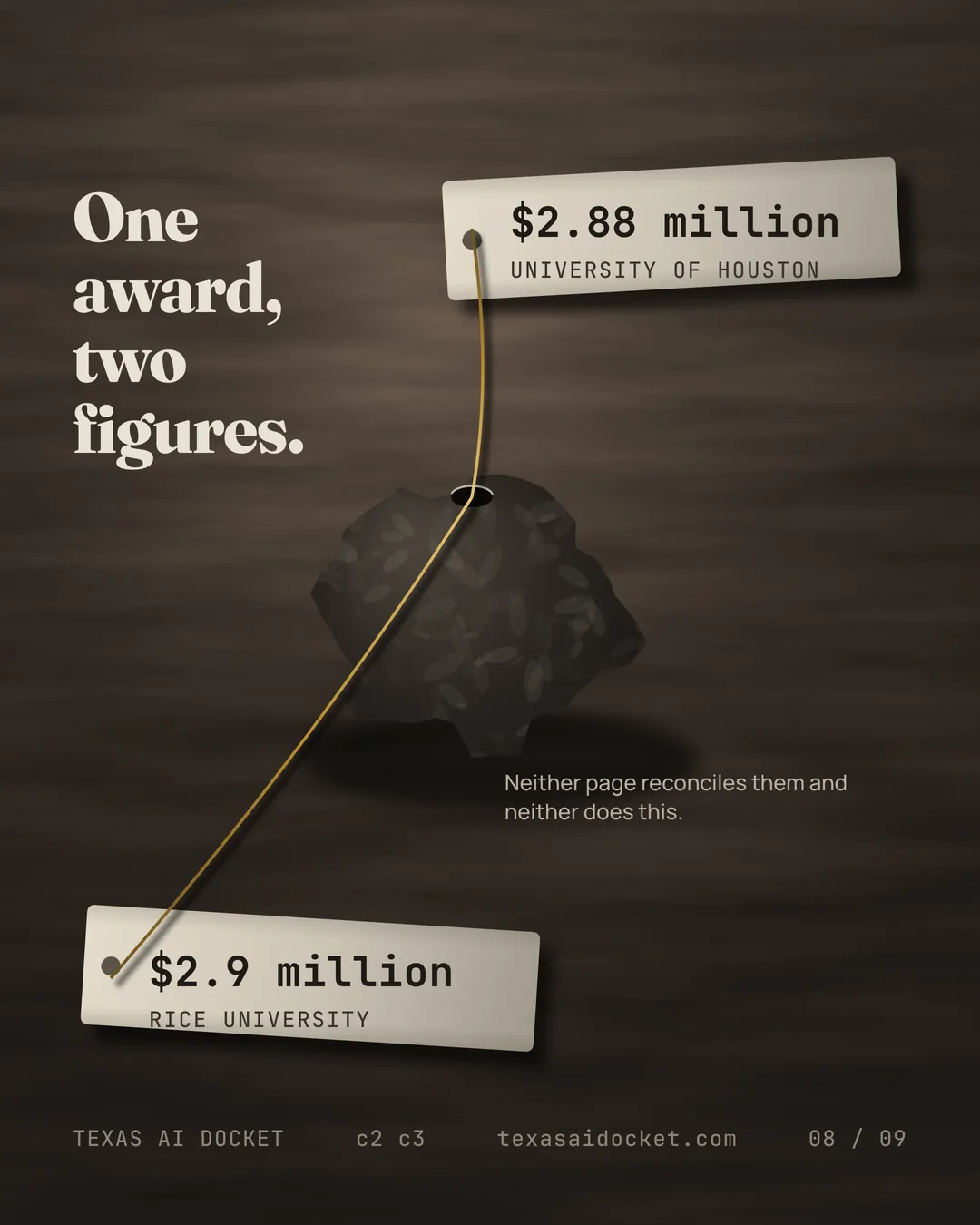
Rice rounds the award more broadly than the University of Houston does. Both describe the same federally funded project. Their different numerical precision should not be treated as evidence of separate awards.
What would count as progress
Measured properties of tested materials would show whether the search is producing a stronger magnet. Manufacturing and supply evidence would answer a different question about practical availability. The award announcements establish neither result yet.
Sources for this story
- Rice brings AI expertise to DOE-backed search for next-generation magnets
- Department of Energy Awards UH-led Team $2.88M to Use AI to Strengthen America's Critical Mineral Supply Chain
- ARPA-E Funding Opportunity Exchange, funding archive
- Magnetic Acceleration Generating New Innovations and Tactical Outcomes (MAGNITO), DE-FOA-0003590, Advanced Research Projects Agency Energy
- U.S. Geological Survey, Mineral Commodity Summaries 2026, Rare Earths
Claim-by-claim verification · 18 claims
Rice University materials scientist Geoffroy Hautier has joined a team led by the University of Houston, according to Rice's own announcement.
Rice University materials scientist Geoffroy Hautier has joined a team led by the University of Houston
Rice's announcement puts the award at a three year, $2.9 million grant from the U.S. Department of Energy's Advanced Research Projects Agency-Energy.
The project has received a three-year, $2.9 million grant from the U.S. Department of Energy's Advanced Research Projects Agency-Energy
The University of Houston, which leads the project, puts the same award at $2.88 million from ARPA-E.
$2.88 million grant from the U.S. Department of Energy's Advanced Research Projects Agency-Energy
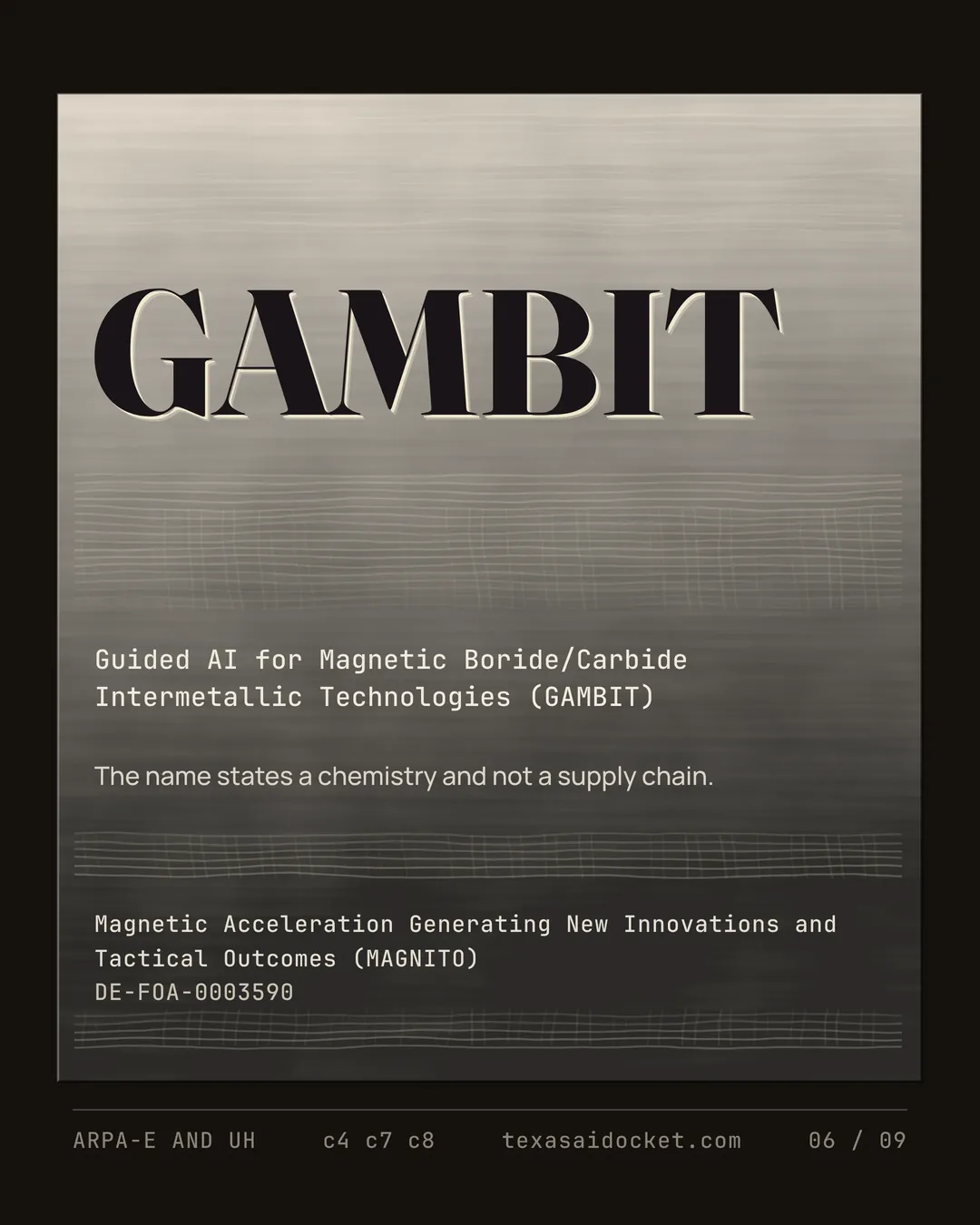
The University of Houston names the three year project Guided AI for Magnetic Boride and Carbide Intermetallic Technologies, or GAMBIT, headed by Jakoah Brgoch.
Over the three-year grant period, Brgoch will head Guided AI for Magnetic Boride/Carbide Intermetallic Technologies (GAMBIT).
Rice names the coalition as Rice, Colorado State University, Carrier Global and the Houston startup Newfound Materials, led by principal investigator Jakoah Brgoch of the University of Houston.
The coalition led by Jakoah Brgoch, principal investigator and the Eby Nell McElrath Professor of Chemistry at UH, includes researchers from Rice, Colorado State University, Carrier Global, and Houston startup Newfound Materials.
Hautier's Rice group will use AI, atomistic modeling and high throughput computing to pick which magnetic materials get tested.
His research team will employ AI, atomistic modeling and high-throughput computing to identify promising magnetic materials for testing.
Rice's release names the ARPA-E program only as Magnetic Acceleration Generating, which is not the program's full name.
under its Magnetic Acceleration Generating program.
ARPA-E's own funding opportunity archive gives the program's full name as Magnetic Acceleration Generating New Innovations and Tactical Outcomes, acronym MAGNITO, listed as DE-FOA-0003590.
Magnetic Acceleration Generating New Innovations and Tactical Outcomes (MAGNITO)
ARPA-E states the MAGNITO objective as finding magnets whose saturation magnetization or maximum energy product beats any known material.
support the discovery, synthesis, and characterization of new, more powerful magnets with either a saturation magnetization or maximum energy product higher than that of any known material
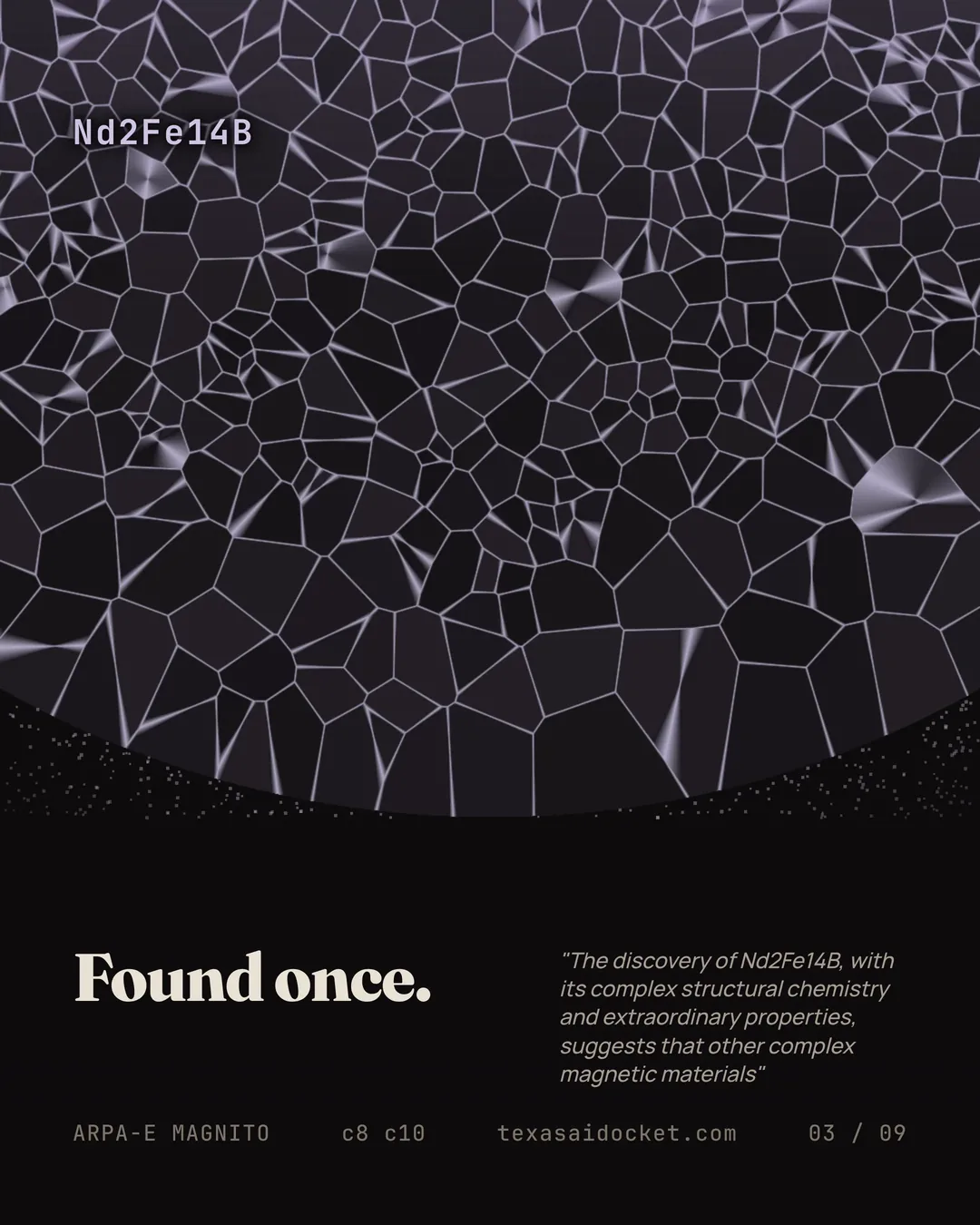
The MAGNITO opportunity argues that the discovery of the neodymium iron boron compound Nd2Fe14B suggests other complex magnetic materials are still undiscovered.
The discovery of Nd2Fe14B, with its complex structural chemistry and extraordinary properties, suggests that other complex magnetic materials
The University of Houston states the team aims to surpass neodymium iron boron, the current industry standard for high performance permanent magnets.
The UH-led team aims to surpass the properties of neodymium iron boron, the current industry-standard material for high-performance permanent magnets.
The University of Houston states that supply chains for neodymium iron boride magnets are heavily concentrated overseas.
Supply chains for neodymium-iron-boride magnets are heavily concentrated overseas.
The University of Houston states the grant is part of a $100 million Department of Energy initiative on domestic magnet manufacturing and critical mineral production.
The grant is part of a $100 million initiative from the DOE to support early-stage research and development projects aimed at boosting domestic magnet manufacturing and critical mineral production.
Principal investigator Jakoah Brgoch frames the work as using AI to find entirely new materials while weighing supply constraints.
Our goal is to use AI to find entirely new materials while simultaneously balancing these supply constraint concerns.
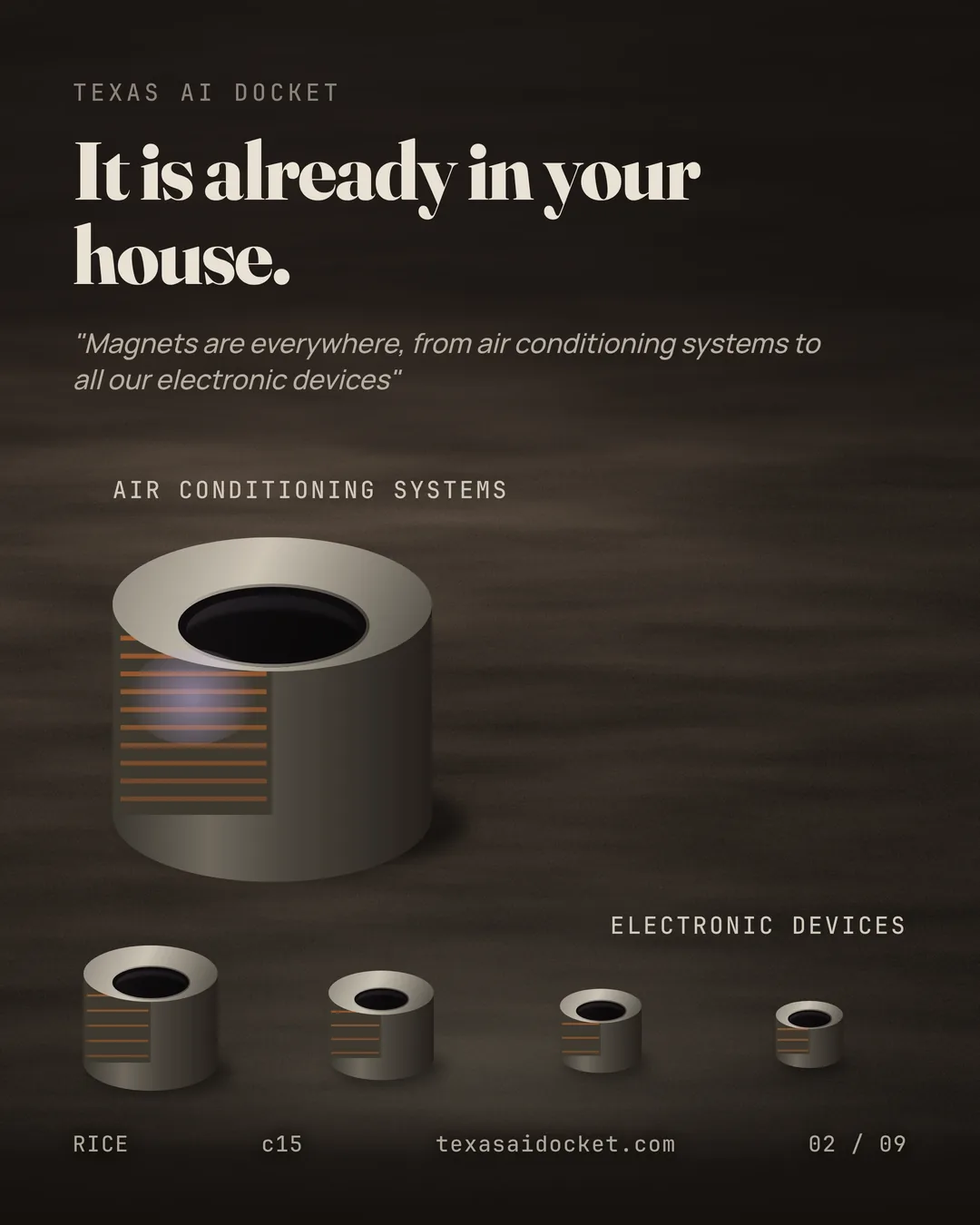
Rice quotes Hautier saying magnets run from air conditioning systems through to electronic devices.
Magnets are everywhere, from air conditioning systems to all our electronic devices
Hautier argues that better magnets translate into an efficiency gain across different technologies.
If you improve the quality of these magnets, that translates into an efficiency gain everywhere
The U.S. Geological Survey reports that the estimated leading global use of rare earths was magnets, while the leading domestic end use was catalysts.
The estimated leading domestic end use of rare earths was catalysts, whereas the estimated leading global use was magnets.
The U.S. Geological Survey lists China as the source of 71 percent of United States imports of rare earth compounds and metals over 2021 to 2024, ahead of Malaysia at 13 percent.
Rare-earth compounds and metals: China,8 71%; Malaysia, 13%; Japan, 5%; Estonia, 5%; and other, 6%.