Articles · Health and research
Software pointed at a gene. Flies ran the test.
An AI tool flagged a gene for one Texas child with no diagnosis. Families found through a network and fruit fly experiments made it a likely diagnosis, not a certain one.
Read the story
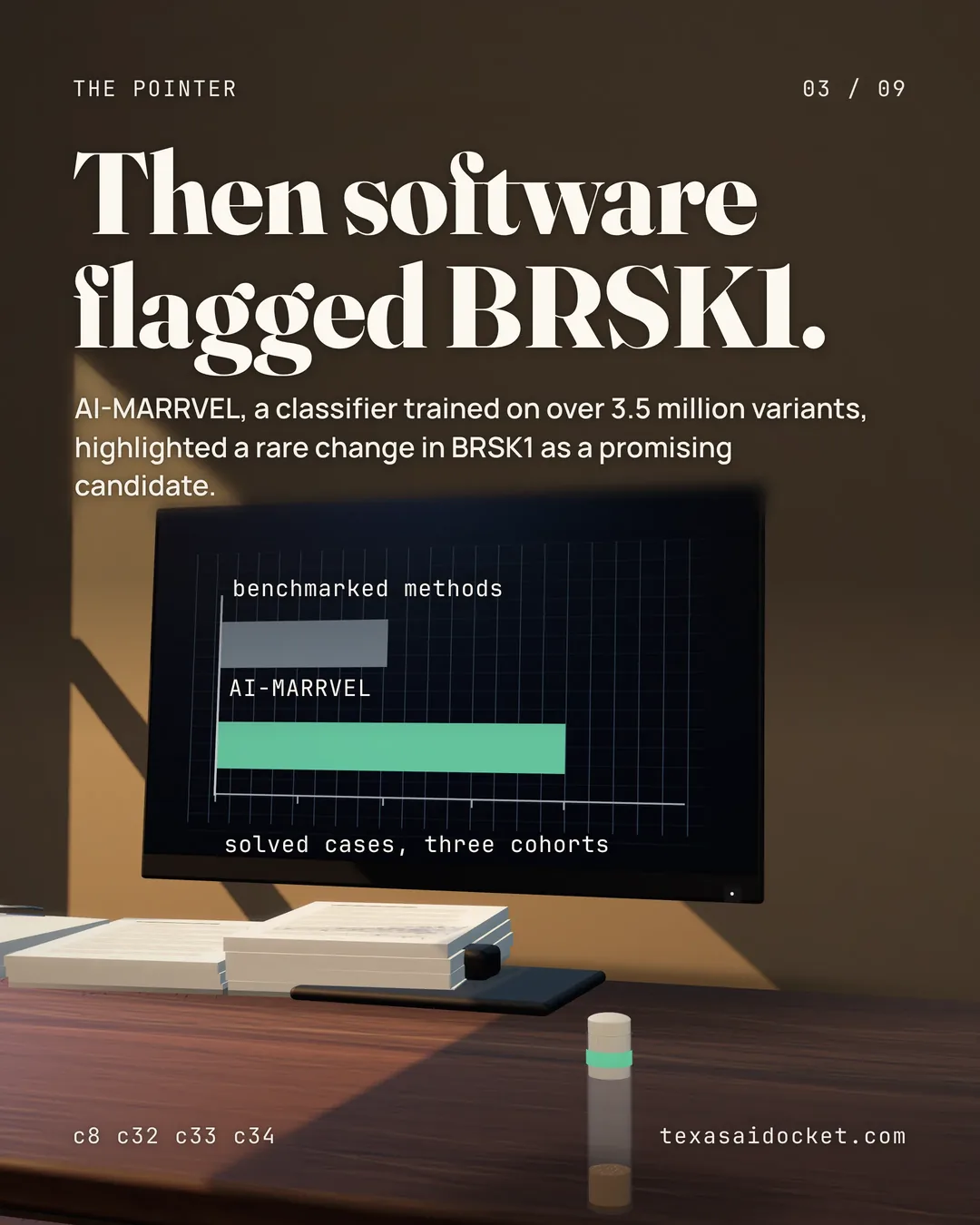
The work began with a child enrolled in the Texome Project. The program provides free genetic testing for medically underserved people with rare and undiagnosed conditions. Standard genetic analyses of the child and a parent did not reveal an answer. Then a new AI tool called AI-MARRVEL analyzed the genomic data and highlighted a rare change in the BRSK1 gene as a promising candidate for a diagnosis.
Texas Children's Hospital put out its release on September 28th, 2026. It says researchers there and at Baylor College of Medicine and the Texome Project have identified BRSK1 variants as a likely diagnosis for a rare neurodevelopmental disorder. The study appears in the American Journal of Human Genetics. The flag came from software. The case for it came from more families and from flies.
What the software did
AI-MARRVEL is described in a peer-reviewed paper in NEJM AI. It uses a random forest classifier trained on over 3.5 million variants from thousands of diagnosed cases. Its developers report that it doubled the number of solved cases against the methods it was benchmarked with. The comparison covered three real world cohorts.
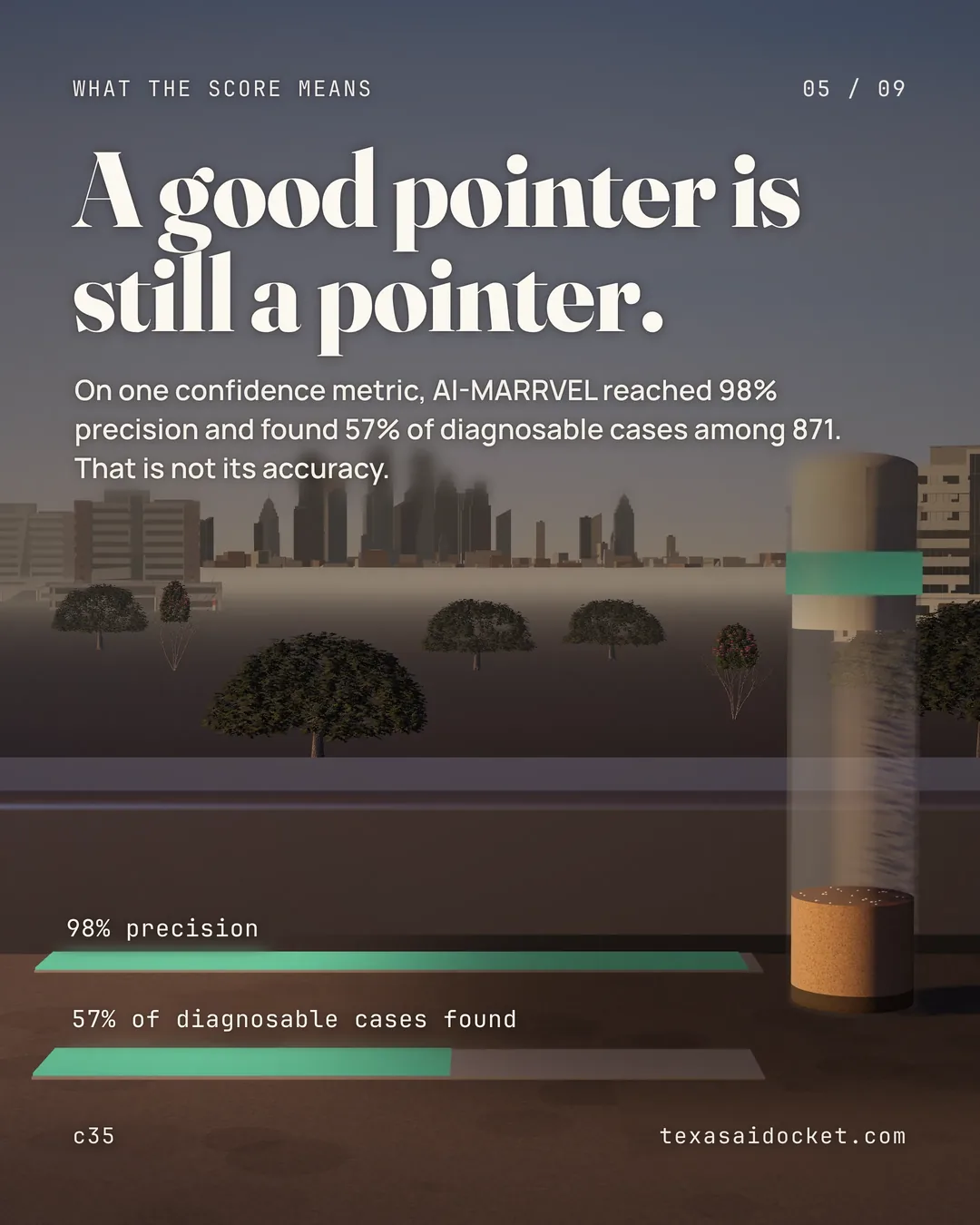
On one confidence metric it reached 98% percent precision and found 57% percent of the diagnosable cases in a collection of 871. Precision and the share of cases found measure different things. Neither is an accuracy figure for this child. The tool's output was a candidate rather than a diagnosis.
What the families and the flies added
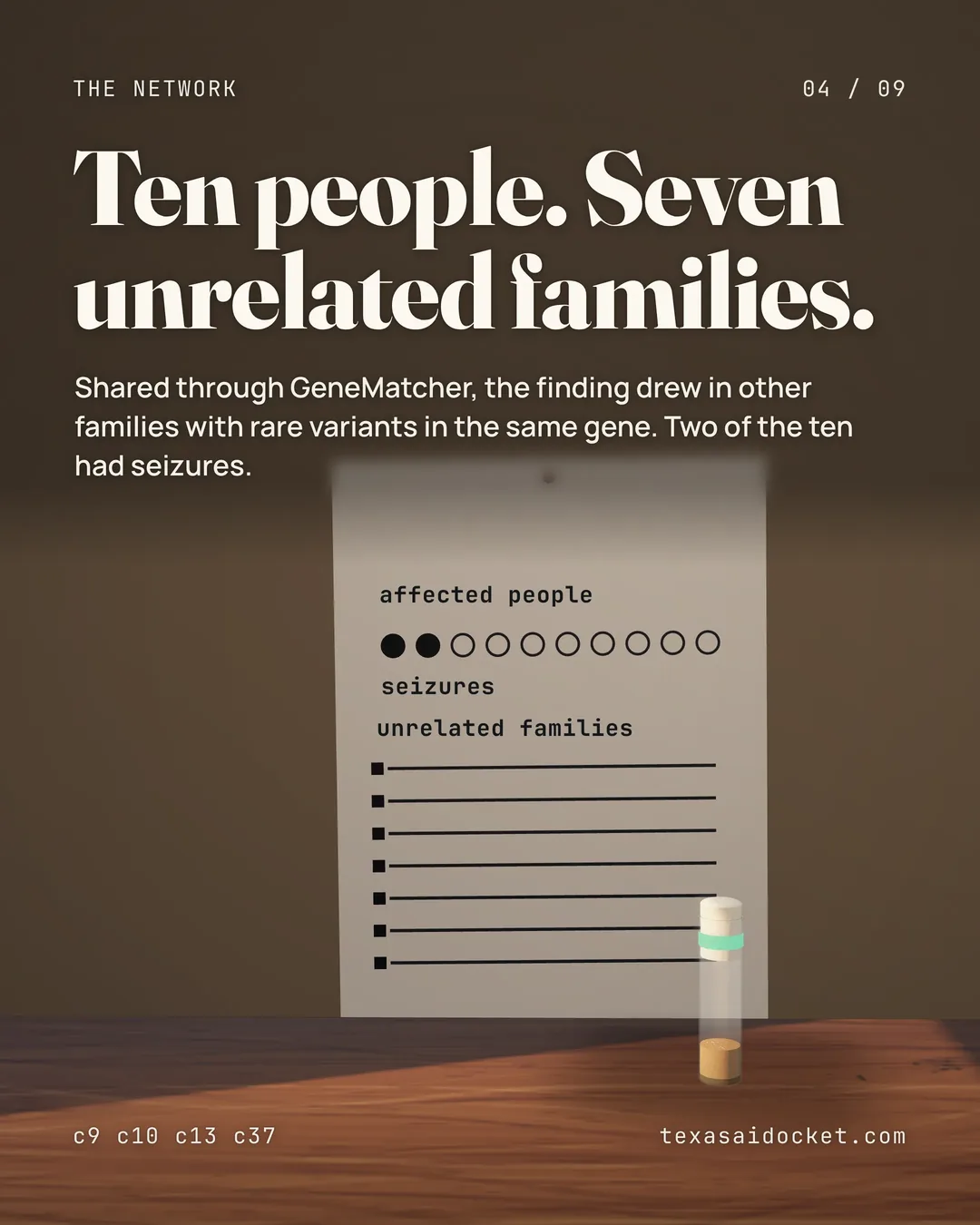
The researchers shared the finding through a research network called GeneMatcher. Other families then reported rare variants in the same gene. GeneMatcher is a tool built to connect people interested in the same gene. The study grew to 10 affected people from seven unrelated families. Every one of them showed some degree of developmental delay. The severity varied. Common features included delayed speech and language, intellectual disability, autism, ADHD, anxiety, low muscle tone and microcephaly. Two of them had seizures.
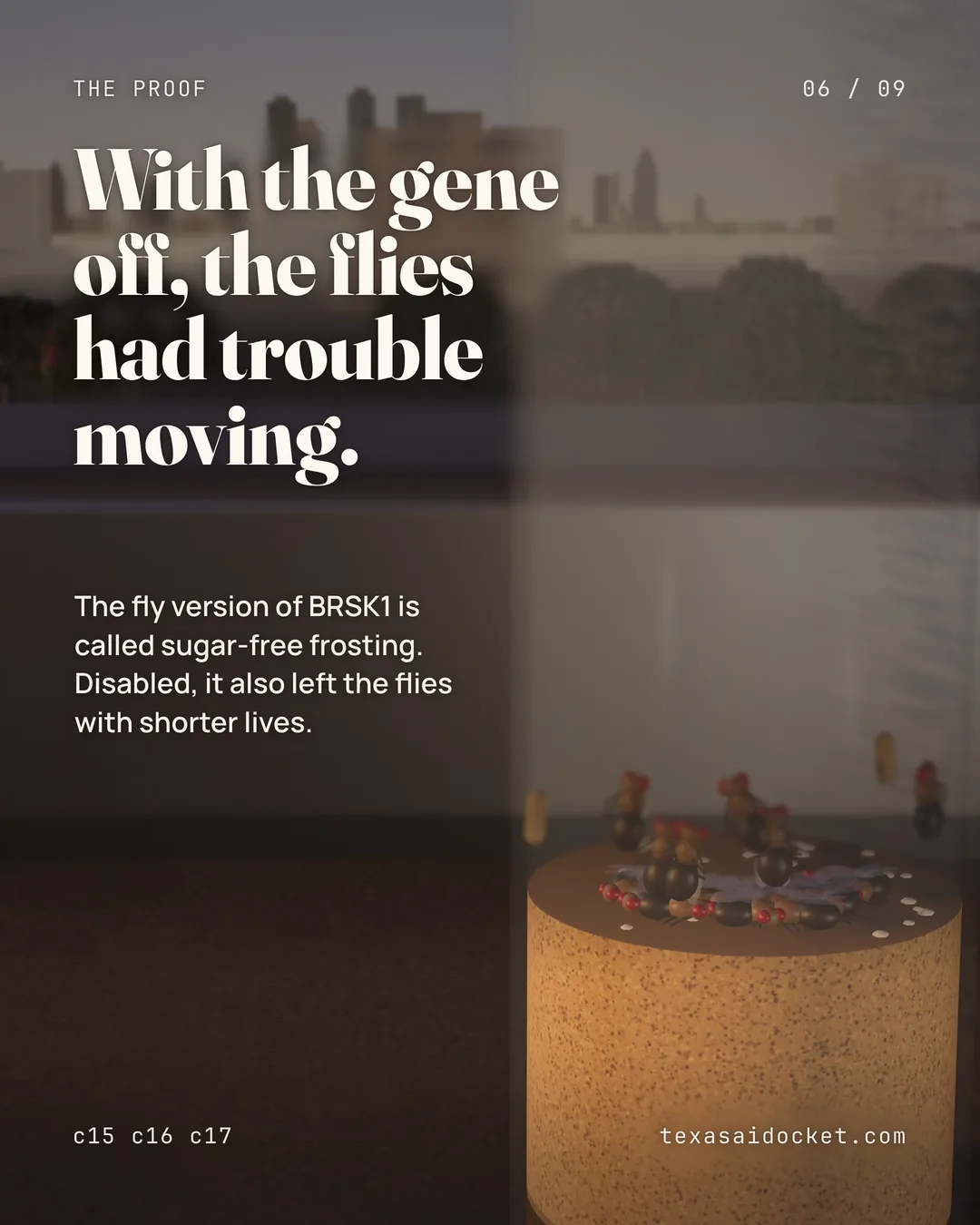
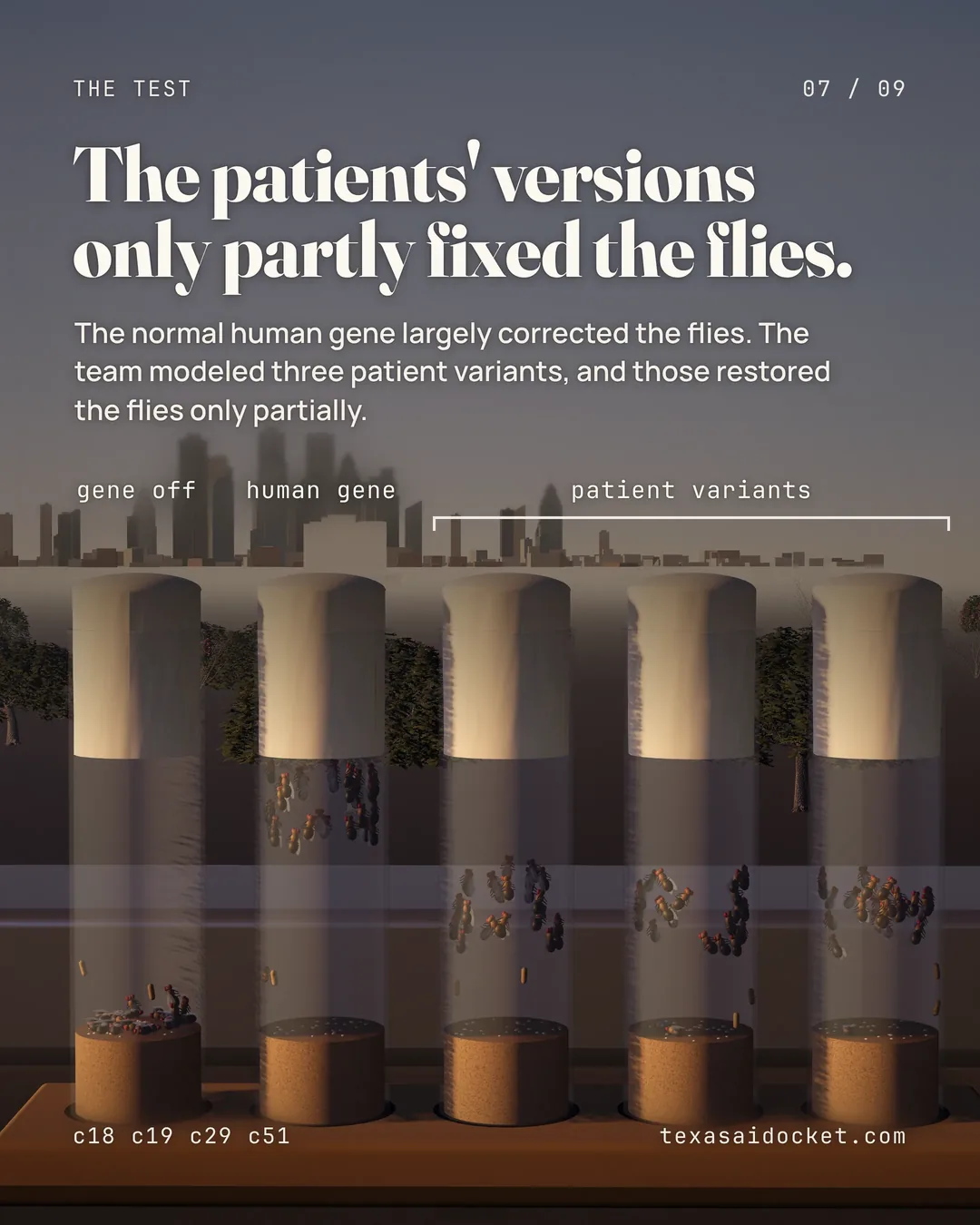
In fruit flies the gene's equivalent is called sff, for sugar-free frosting. It is active mainly in neurons. With the fly gene disabled the flies had trouble moving. They were more prone to seizure-like behavior and lived shorter lives. The normal human gene largely corrected those problems. The team modeled three of the patients' variants in flies. Each of the three gave only a partial rescue, which suggests the variants reduce the protein's activity without removing it.
What a family can do
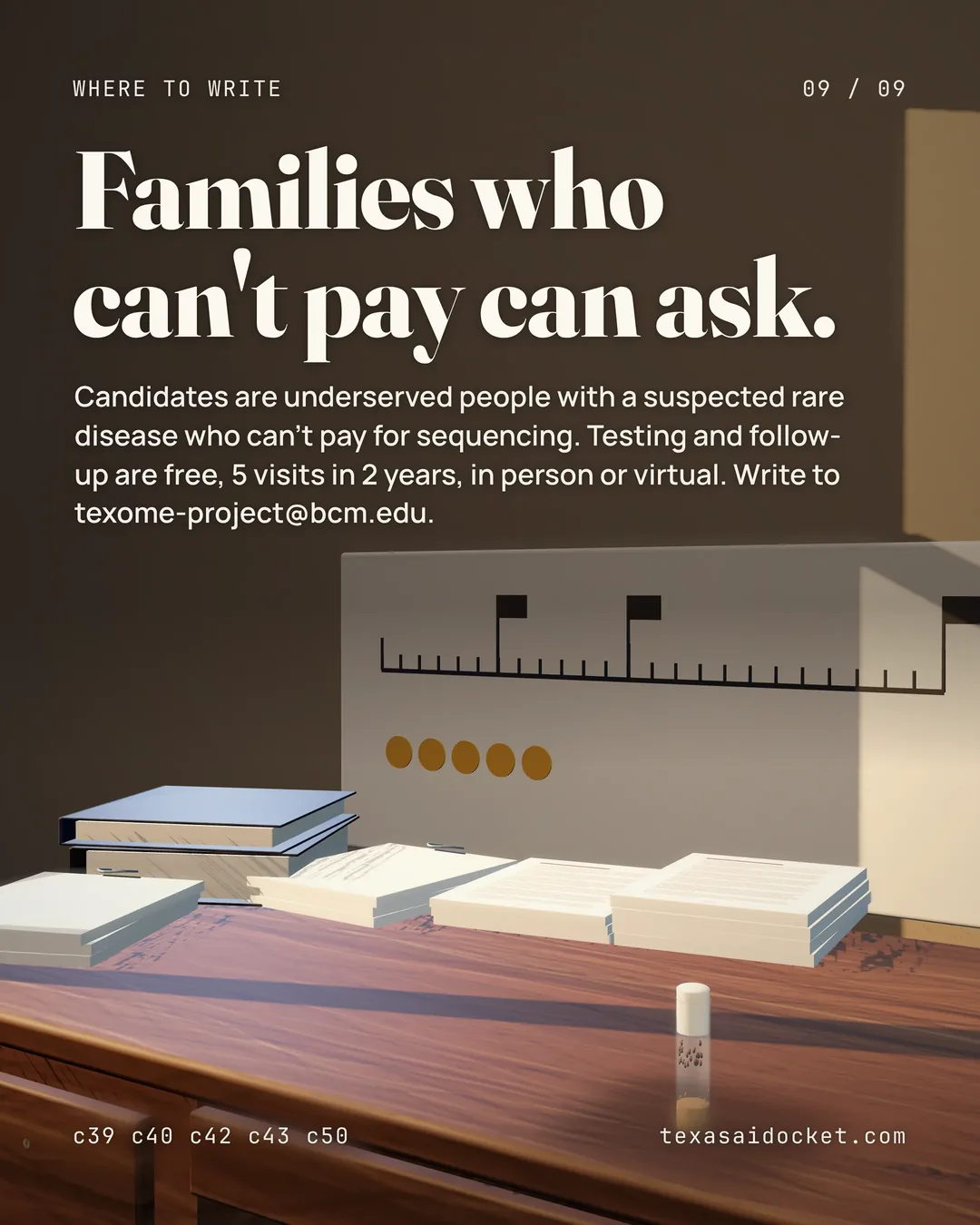
Texome takes as candidates people from underserved populations with a suspected rare disease who can't pay for DNA sequencing. Its genetic testing and follow-up consultations come at no cost. The study runs 5 visits over 2 years in person or virtually. It re-evaluates key genes at six months, one year and two years. The project asks anyone who thinks they may be eligible to write to texome-project@bcm.edu.
What the record can't show
The paper's authors conclude that losing one working copy of BRSK1 leads to a neurodevelopmental syndrome whose features vary. The release calls the variants a likely diagnosis. This edition does not upgrade that to a certain one. Texome states a plan to sequence about 400 children with undiagnosed disorders. The sources checked for this edition do not say how many it has reached.
Sources for this story
- Texas Children's Hospital news release, September 28th, 2026
- Deng et al., American Journal of Human Genetics, DOI 10.1016/j.ajhg.2026.09.005, abstract via Europe PMC
- Mao et al., NEJM AI, DOI 10.1056/aioa2300009, abstract via Europe PMC
- Hamosh et al., Human Mutation, PMID 35170833, abstract via Europe PMC
- The Texome Project, For Patients
- The Texome Project, About
- The Texome Project, For Providers
Claim-by-claim verification · 51 claims
Texas Children's Hospital dated its release on the BRSK1 study September 28th, 2026, with a Houston dateline.
HOUSTON (September 28, 2026)
Researchers at the Duncan Neurological Research Institute at Texas Children's Hospital, Baylor College of Medicine and the Texome Project, with collaborating institutions, report the BRSK1 finding.
Researchers at the Duncan Neurological Research Institute (Duncan NRI) at Texas Children's Hospital, Baylor College of Medicine, the Texome Project and collaborating institutions
The team identified variants in the gene BRSK1 as a likely diagnosis for a rare, complex neurodevelopmental disorder that had gone unexplained for the people who have it.
have identified variants in gene BRSK1 as a likely diagnosis for individuals with a rare and complex neurodevelopmental disorder who until now had not received an explanation for their condition
The study is published in the American Journal of Human Genetics.
The study appears in the American Journal of Human Genetics
The work started with one child enrolled in the Texome Project, which the Texas Children's release describes as free genetic testing for medically underserved people with rare, undiagnosed conditions.
The project began with a child enrolled in the Texome Project, a program that provides free genetic testing for medically underserved individuals with rare, undiagnosed conditions
Hugo Bellen is a Distinguished Service Professor in Baylor's Department of Molecular and Human Genetics and chair in neurogenetics at the Duncan NRI, and a co-lead author of the study.
co-lead author Dr. Hugo Bellen, Distinguished Service Professor in the Department of Molecular and Human Genetics at Baylor and chair in neurogenetics at the Duncan NRI
Standard genetic analyses of a parent and child with the condition found no answer.
Standard genetic analyses of a parent and child with the condition did not reveal an answer
An AI tool called AI-MARRVEL then analyzed the genomic data and flagged a rare change in BRSK1 as a promising candidate diagnosis.
when a new artificial intelligence-based tool called AI-MARRVEL analyzed the genomic data, it highlighted a rare change in the BRSK1 gene as a promising candidate for a genetic diagnosis
The researchers shared the finding through the GeneMatcher network, and other families reported rare variants in the same gene.
After sharing this finding through a research network called GeneMatcher, additional families reported rare variants in the same gene
The study covered 10 affected people from seven unrelated families, according to first author Mingxi Deng, a postdoctoral fellow in the Bellen lab.
Altogether, we studied 10 affected individuals from seven unrelated families
Every affected person had some developmental delay, though how severe it was and which symptoms appeared differed from person to person.
All affected individuals showed some degree of developmental delay, but the severity and specific symptoms varied
Common features were delayed speech and language, intellectual disability, autism, ADHD, anxiety, low muscle tone and a smaller than average head.
Common features included delayed speech and language development, intellectual disability, autism spectrum disorder, attention-deficit/hyperactivity disorder, anxiety, low muscle tone and microcephaly
Two of the affected people had seizures.
Two individuals experienced seizures.
Relatives who carried the same variant had symptoms anywhere from mild to severe, which the researchers call variable expressivity.
Even among members of the same family carrying the same genetic variant, symptoms ranged from mild to severe.
To test whether the variants disrupt the gene, the team used the lab fruit fly, which shares many biological pathways with humans.
Fruit flies share many biological pathways with humans
The fly version of BRSK1 is called sff, short for sugar-free frosting, and it is active mostly in neurons, as in humans.
We studied the fly equivalent of BRSK1, called sff (sugar-free frosting), and found that this gene is active primarily in neurons
Flies with the gene switched off had trouble moving, were more prone to seizure-like behavior and heat-induced paralysis, and died younger.
When the fly gene was disabled, the flies developed difficulties moving, showed increased sensitivity to stressors that can trigger seizure-like behavior, became more vulnerable to heat-induced paralysis and lived shorter lives
Adding the normal human BRSK1 gene to flies lacking sff largely fixed their movement and neurological problems, showing the two genes do similar jobs.
the human gene largely corrected the flies' movement and neurological problems
The patients' versions of the gene restored the flies only partly, which suggests the variants weaken the protein without wiping out its activity.
the neurological and movement problems were only partially restored, suggesting that these variants reduce but do not completely eliminate the protein's activity
Losing BRSK1 activity raised levels of a protein that organizes microtubules, the internal scaffolding of neurons.
increased levels of a protein involved in organizing microtubules, a structural framework inside neurons
Deng notes that microtubule disruption has been tied to several neurodevelopmental and neurological disorders.
Microtubule disruption has been linked to several neurodevelopmental and neurological disorders
The release concludes the patient variants cause a disorder of developmental delay plus neurological and behavioral symptoms, with or without epilepsy.
a disorder characterized by developmental delays and a range of neurological and behavioral symptoms, with or without epilepsy
Bellen credits the result to pairing AI-driven gene discovery with experiments in model organisms.
highlights the power of combining AI-driven gene discovery with experimental studies in model organisms
Co-lead author Michael Wangler, an associate professor at Baylor and a Duncan NRI investigator, says the team wanted to build a program focused on families in Texas.
we wanted to build a program focused on families in Texas
Wangler says the project learned along the way how AI can help interpret genomic data.
As the project progressed, we learned how artificial intelligence can help us interpret genomic data.
The peer-reviewed paper is titled Monoallelic variants in BRSK1 are associated with a neurodevelopmental disorder with or without epilepsy.
Monoallelic variants in BRSK1 are associated with a neurodevelopmental disorder with or without epilepsy
The paper itself says the first patient was found in the Texome Project using AI-MARRVEL, and describes Texome as serving financially disadvantaged people in Texas.
An individual with a variant in BRSK1 was identified in the Texome Project, which provides genomic diagnosis to financially disadvantaged individuals in Texas, using AI-MARRVEL
The paper says nine more people carrying rare BRSK1 variants were found through GeneMatcher.
We subsequently found nine individuals harboring rare heterozygous BRSK1 variants through GeneMatcher
The team modeled three of the patients' missense variants in fruit flies.
We utilized Drosophila to model three missense variants
The paper names the raised protein as Futsch, the fly counterpart of MAP1B, which binds microtubules.
elevated levels of Futsch (MAP1B), a microtubule-associated protein
The authors conclude that losing one working copy of BRSK1 leads to a neurodevelopmental syndrome whose features vary.
heterozygous loss of BRSK1 leads to a neurodevelopmental syndrome with variable phenotypes
AI-MARRVEL was described in a peer-reviewed paper in NEJM AI.
AI-MARRVEL - A Knowledge-Driven AI System for Diagnosing Mendelian Disorders
AI-MARRVEL is a random forest machine learning classifier trained on more than 3.5 million variants from thousands of diagnosed cases.
uses a random-forest machine-learning classifier trained on over 3.5 million variants from thousands of diagnosed cases
Across three real-world patient groups, AI-MARRVEL doubled the number of solved cases compared with the methods it was benchmarked against.
doubling the number of solved cases as compared with benchmarked methods, across three distinct real-world cohorts
On a confidence metric built to pick diagnosable cases out of unsolved ones, AI-MARRVEL reached 98% precision and found 57% of diagnosable cases among 871 cases. That figure is not an overall diagnostic accuracy.
we designed a confidence metric on which AIM achieved a precision rate of 98% and identified 57% of diagnosable cases out of a collection of 871 cases
An online version of AI-MARRVEL is available at ai.marrvel.org.
The online version of AIM is available at https://ai.marrvel.org
GeneMatcher is a tool that connects people interested in the same gene.
GeneMatcher (genematcher.org) is a tool designed to connect individuals with an interest in the same gene.
The Texome Project states its mission as making expert genetic services reachable for people with no insurance or no way to pay for genomic testing.
making genetic services from leading experts in the field more accessible to participants who have no insurance or are unable to pay for genomic testing
Texome lists as candidates people from underserved populations with a suspected rare disease who can't pay for DNA sequencing.
Individuals from an underserved population with a suspected rare disease and without the means to pay for DNA sequencing
Texome says its genetic testing and follow-up consultations are free.
The genetic testing and following consultations will come at no cost.
Participants receive a $100 gift card after all 5 visits.
At the end of all 5 visits, you will receive a $100 gift card
A family that thinks it may qualify can contact the Texome Project by email at texome-project@bcm.edu.
If you think you could be eligible or have questions please don't hesitate to contact us at texome-project@bcm.edu
The Texome study runs 5 visits over 2 years, in person or virtual.
The study consists of 5 visits (in-person or virtual) over a 2 year period
Texome is funded by the National Human Genome Research Institute.
We receive funding from National Human Genome Research Institute (1R01HG011795-01).
The name Texome joins Texas and exome, the type of genetic analysis the study provides.
Our name comes from a combination of the words Texas and exome.
Texome states a plan to sequence roughly 400 children with undiagnosed disorders, with their parents. That is a target, not a count of families served.
We will perform trio whole exome sequencing for diagnostic purposes in ~400 children with undiagnosed disorders.
Texome focuses on Texas but accepts applications from other states.
Though we are focused on populations in Texas, we are open to applications from other states as well.
Texome says many people in the Houston area lack access to genomic medicine because it costs too much and insurance does not cover it.
many individuals in the Houston area are largely underserved and lack access to genomic medicine because of prohibitive cost and lack of insurance coverage
Texome describes the tool it uses on exome data as using AI to find disease links people miss.
This tool is integrated with artificial intelligence to sift through all the data and identify disease relationships that humans can't always connect.
Texome follows participants with re-evaluation at 6 months, 1 year and 2 years.
at 6 months, 1 year and 2 years in which we will re-evaluate key genes in the context of the individual
In the fly test, all three patient-derived variants provided only a partial rescue.
the three individual-derived alleles (BRSK1<sup>p.Ile202Val</sup>, BRSK1<sup>p.Arg237Cys</sup>, and BRSK1<sup>p.Thr406Ile</sup>) provide only a partial rescue