Articles · Cities
A phone on a vehicle window will survey San Antonio's loose dogs
San Antonio will repeat its count of loose dogs with a phone on a vehicle window and object detection software. Automated and human review will check the clips, and the survey is a sample.
Read the story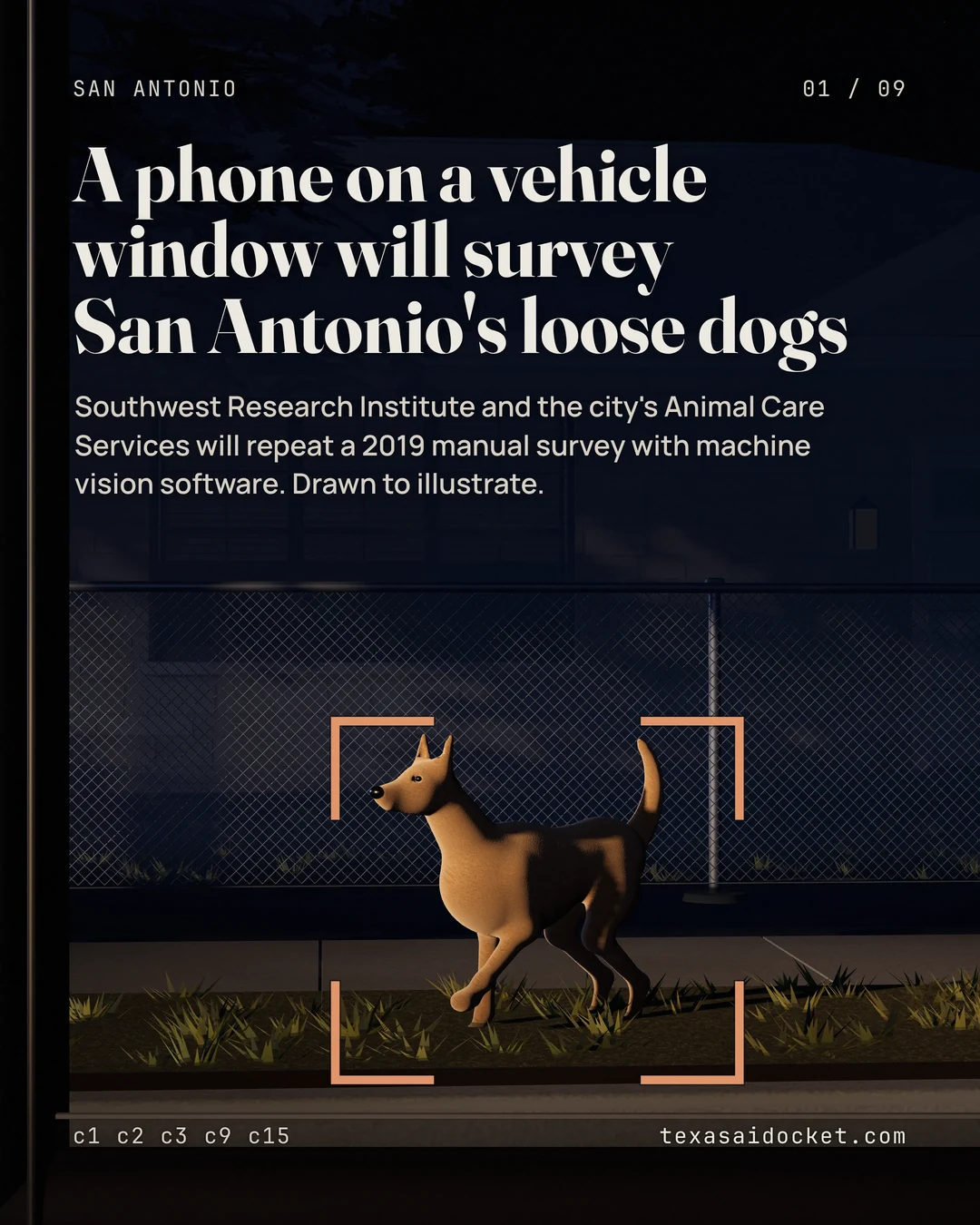
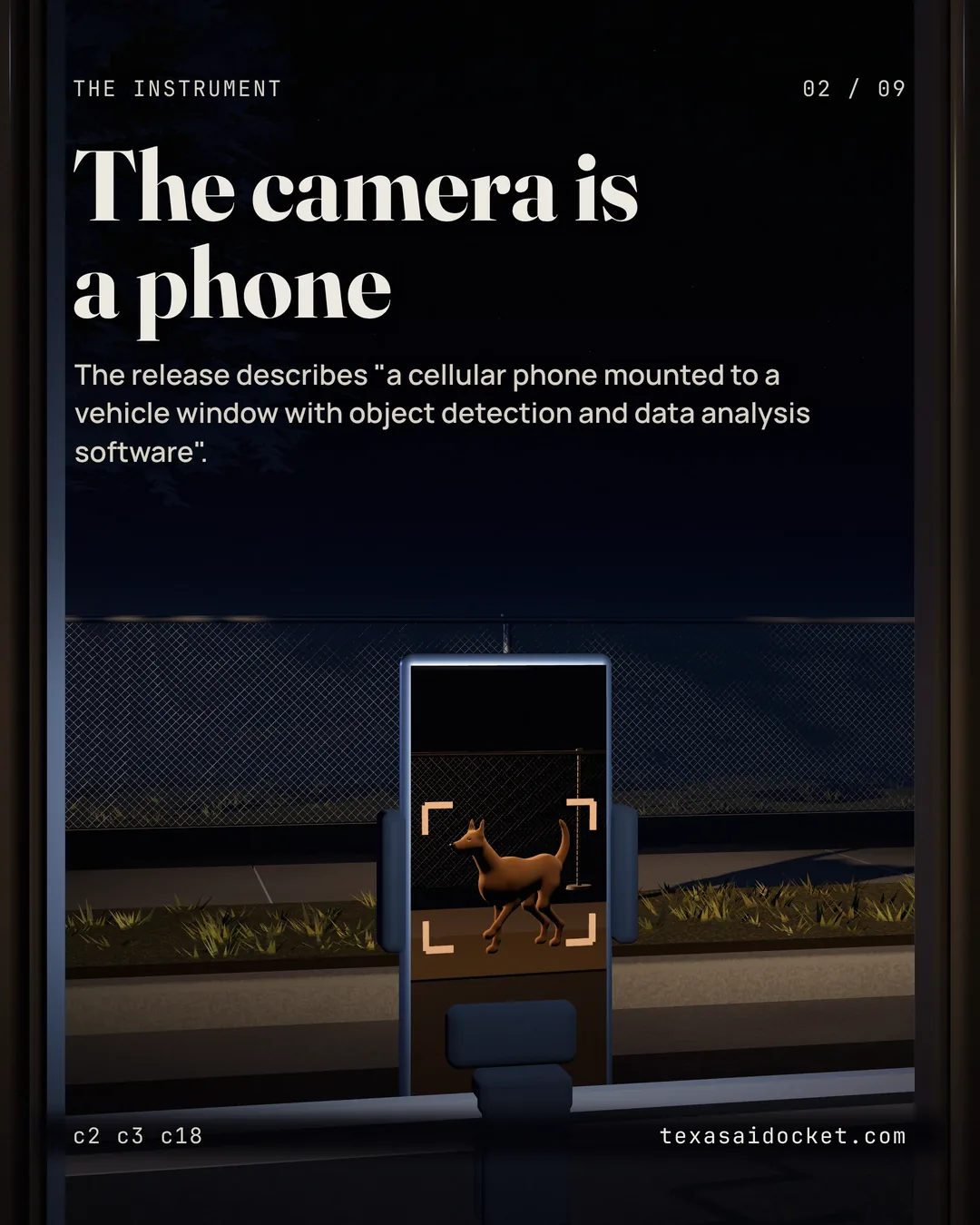
Southwest Research Institute is working with the City of San Antonio on an automated survey of unrestrained dogs. The city's Animal Care Services says it is collaborating with the institute's researchers. The program pairs machine vision software with cell phone cameras. A phone mounted to a vehicle window is paired with object detection and data analysis software.
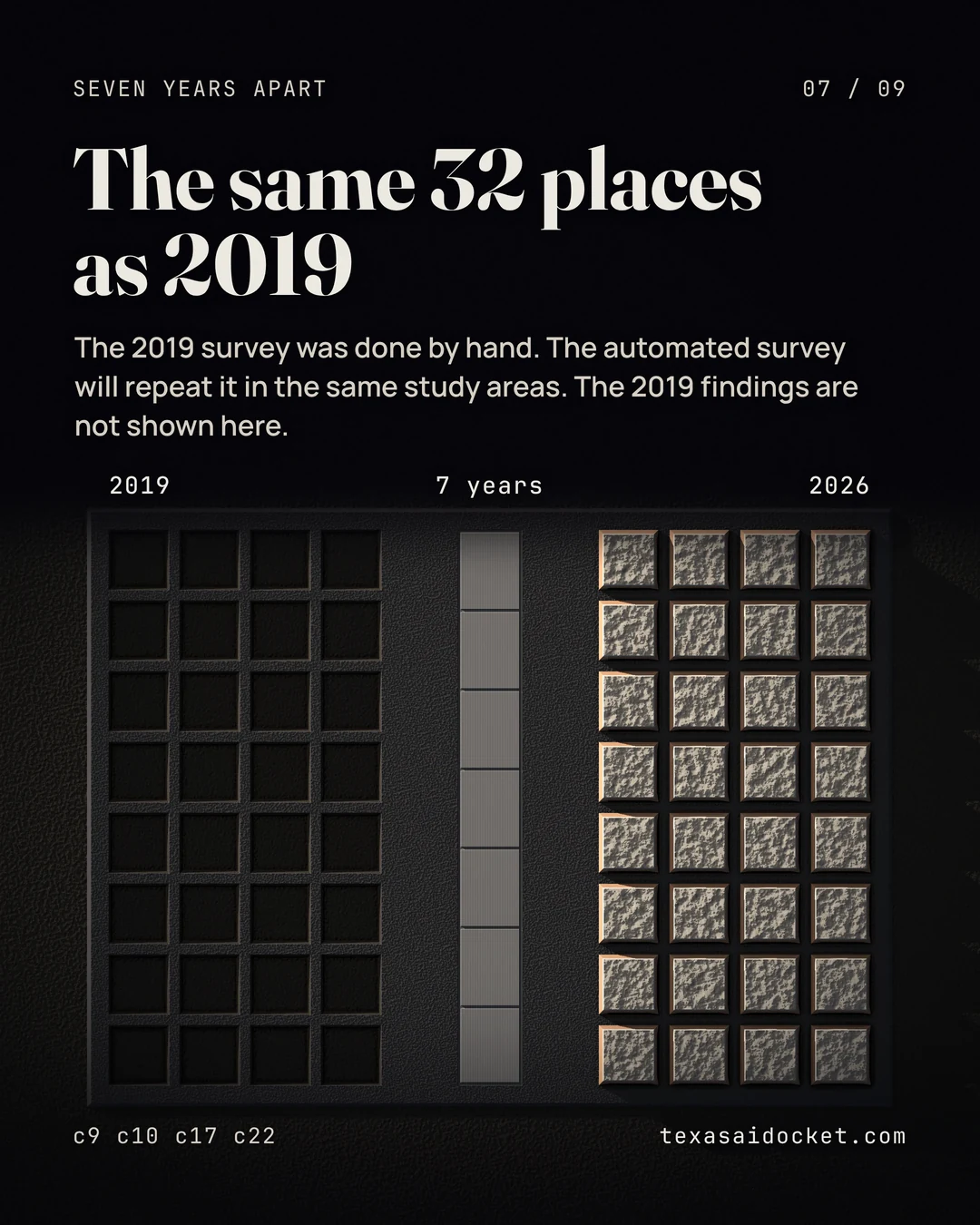
The automated project will recreate a manual survey from 2019, and it will cover the same 32 study areas the city used in that effort. The city published its own account of the study on October 20th, 2026.
What the software sees and what a person checks
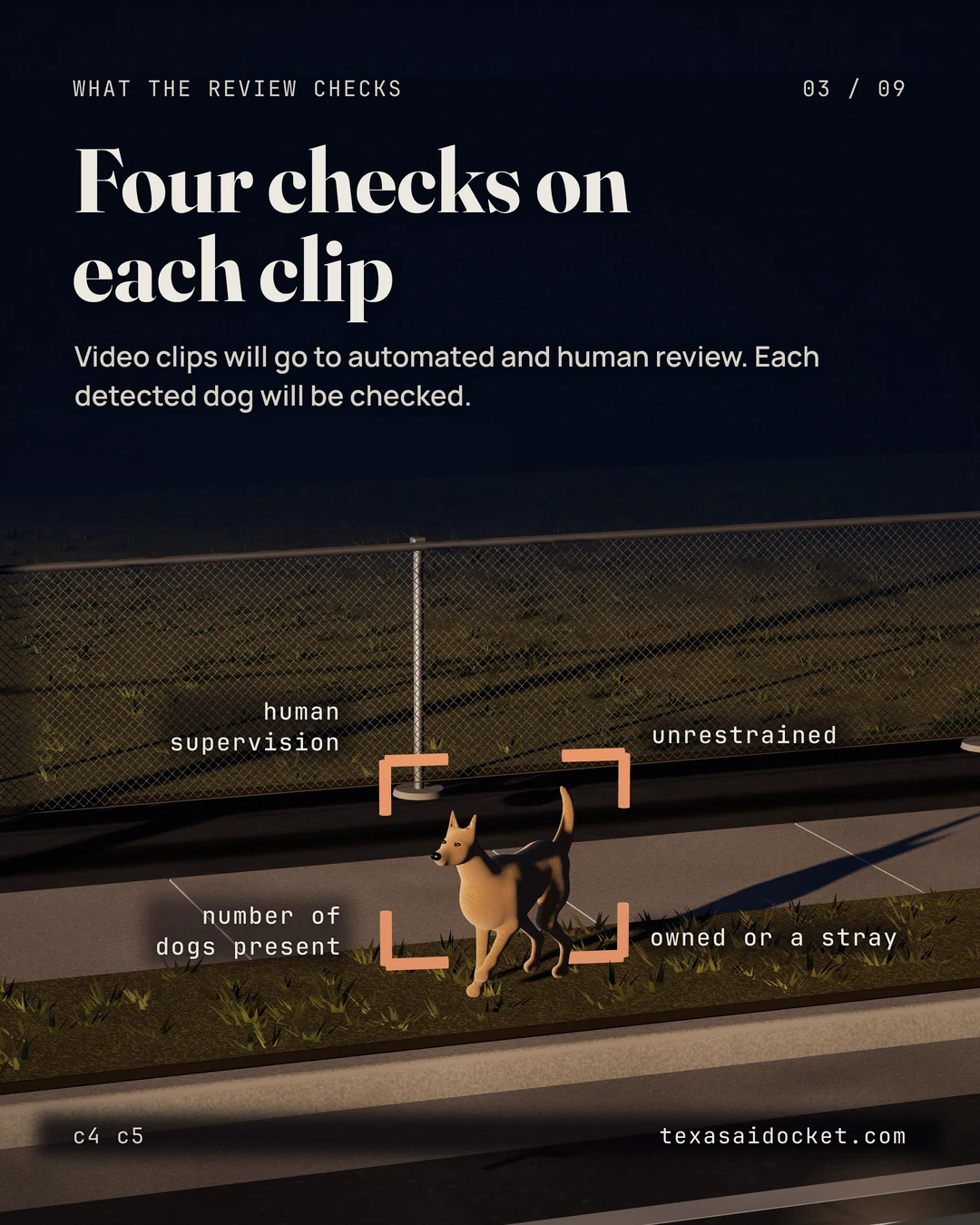
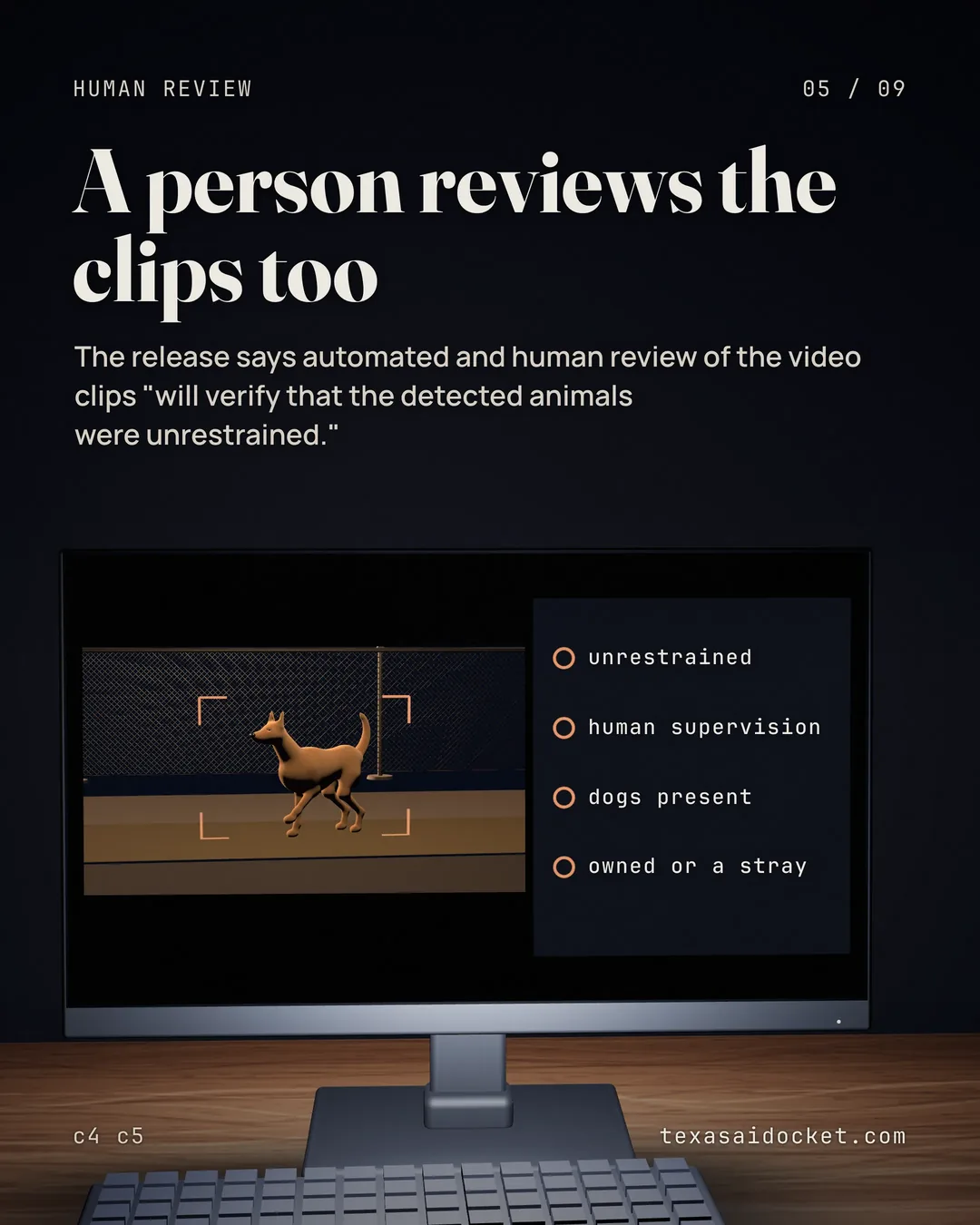
Automated and human review of the video clips will verify that each detected animal was unrestrained. The same review will record any human supervision, how many dogs were present and whether each dog was owned or a stray.
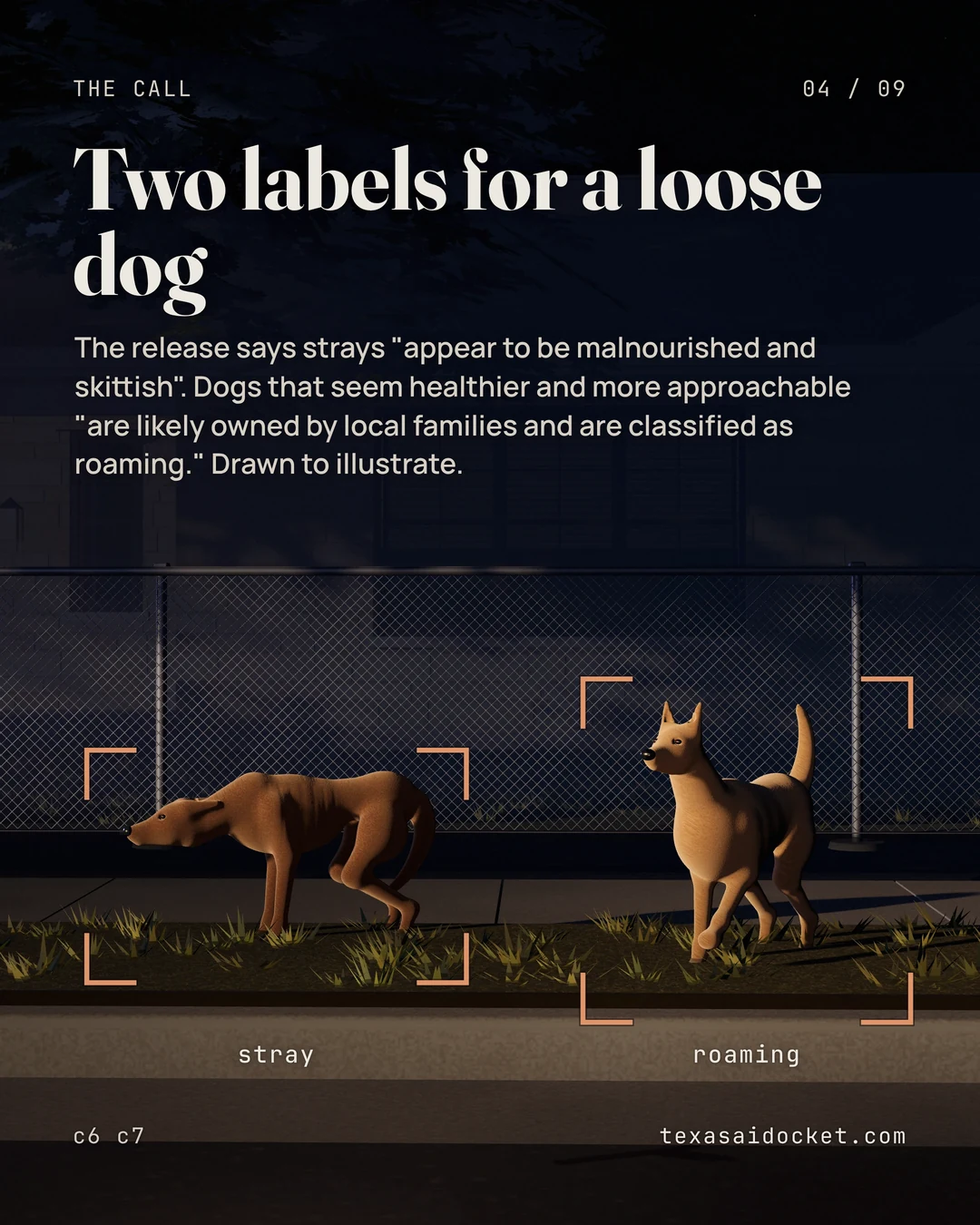
The release describes the two labels a loose dog can get in terms of how it looks and acts. Strays appear malnourished and skittish, while dogs that seem healthier and more approachable are likely owned by local families and are classified as roaming. That is a judgement made from video of a dog on the street, and the record does not yet hold any measure of how often it is right.
A sample, not a census
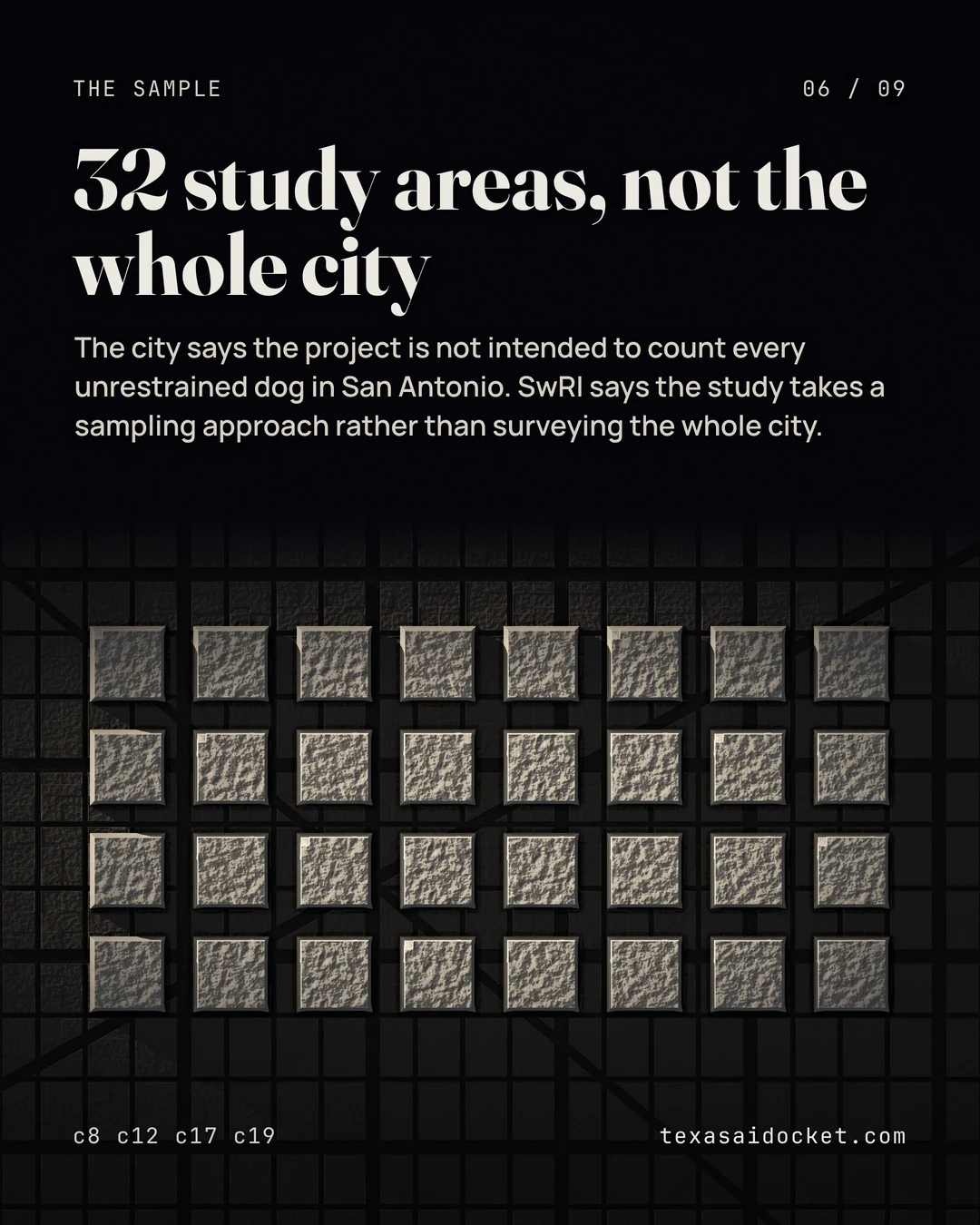
Mike Koets of the institute said the study takes a sampling approach rather than surveying the entire city. The city says the same thing in its own release. Because the project samples, it is not intended to count every unrestrained dog in San Antonio.
The Animal Care Services statistics page links to a 2019 Unrestrained Dog Study. Its findings are not part of this account, so no 2019 count appears here, and the comparison the new survey is built to make can't be stated yet.
What comes next
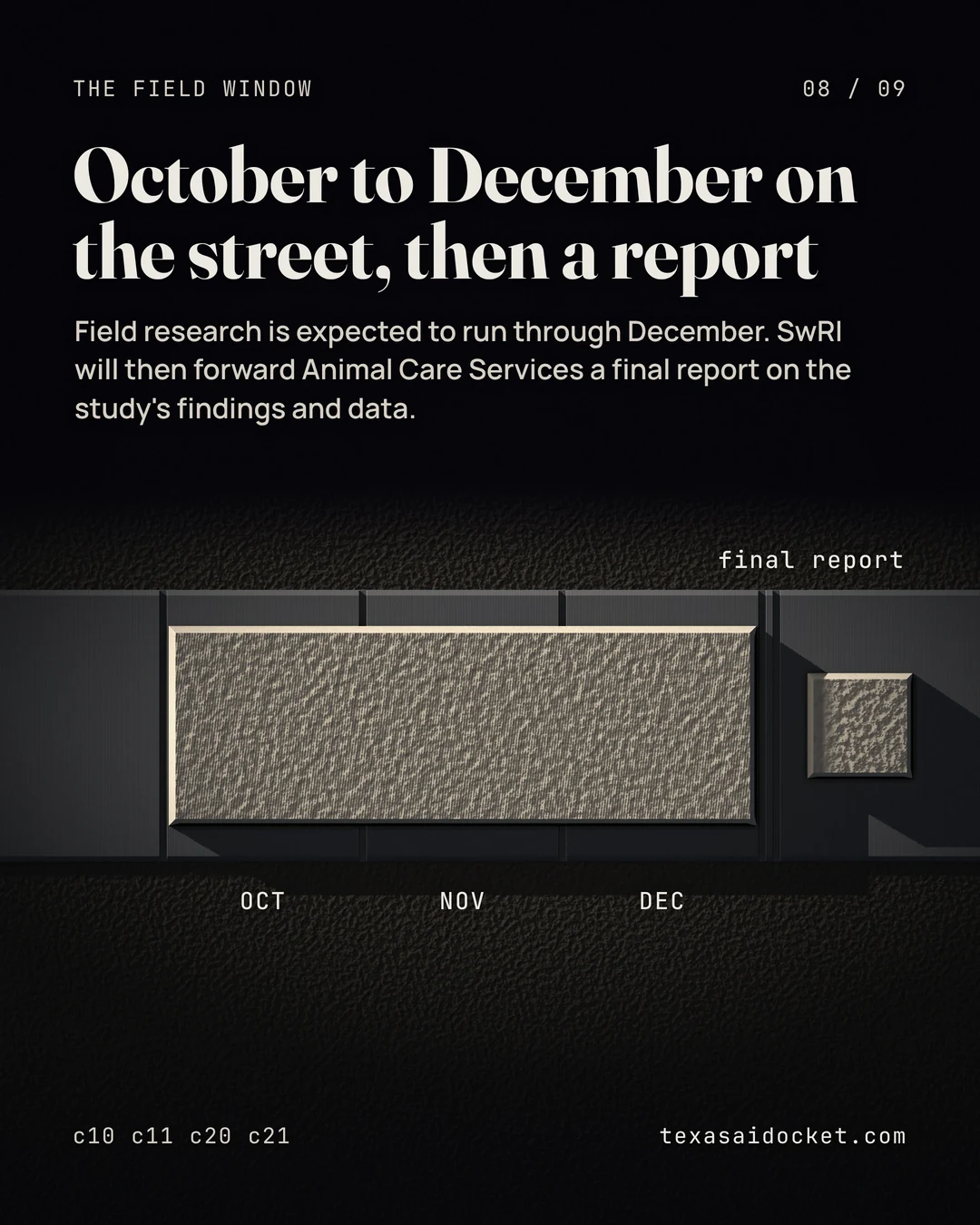
Field research is expected to run through December 2026. The institute will then compile a final report with summary data and videos of the dogs it observed, and it will forward that report to Animal Care Services. ACS Director Jon Gary called the study another tool for understanding where unrestrained dogs are being seen. Questions about the results belong with the department, which receives the report.
Sources for this story
- SwRI applies automation to count unrestrained dogs in San Antonio
- Southwest Research Institute Leads City's Roaming Dog Study
- Statistics
Claim-by-claim verification · 54 claims
Southwest Research Institute is working with the City of San Antonio on an automated survey of unrestrained dogs.
Southwest Research Institute (SwRI) is working with the city of San Antonio to conduct an automated survey
The program pairs machine vision software with cell phone cameras.
The program is using machine vision software paired with cell phone cameras
The SwRI tools put a cell phone on a vehicle window and pair it with object detection and data analysis software.
a cellular phone mounted to a vehicle window with object detection and data analysis software
Automated review and human review of the video clips check that each detected animal was unrestrained.
Automated and human review of the video clips will verify that the detected animals were unrestrained
The same review records any human supervision, how many dogs were present and whether each dog was owned or a stray.
determine any human supervision, verify the number of dogs present and assess whether the dog was owned or a stray
In the release, strays look malnourished and skittish. Dogs that look healthier and more approachable count as something else.
Strays appear to be malnourished and skittish, while dogs that seem healthier and more approachable
The healthier and more approachable dogs are probably owned by local families and get classified as roaming.
are likely owned by local families and are classified as roaming.
SwRI engineers will run the system in the same study locations, which cover 32 areas.
SwRI engineers will deploy the system in the same study locations, spread across 32 areas
The automated project repeats a manual survey from 2019.
The automated project will recreate a manual survey conducted in 2019
SwRI plans to run its research between October and December of 2026.
After conducting research between October and December of 2026
SwRI will then put together a final report with summary data and videos of the dogs it observed.
SwRI will compile a final report with summary data and videos of observed dogs
Mike Koets of SwRI said the study samples the city instead of surveying all of it.
This study takes a sampling approach, so we are not surveying the entire city
Koets is a staff engineer in the Intelligent Systems Division at SwRI.
staff engineer in SwRI’s Intelligent Systems Division
ACS Director Jon Gary said the study gives the city another tool for seeing where unrestrained dogs turn up.
This study gives us another tool to better understand where we are seeing unrestrained dogs
San Antonio Animal Care Services says it is working with researchers at Southwest Research Institute on the study.
San Antonio Animal Care Services (SAACS) is collaborating with researchers at the
The City of San Antonio published its own release on the roaming dog study on October 20th, 2026.
Published on October 20, 2026
The city says SwRI researchers will survey the same 32 study areas the city used in its 2019 effort.
SwRI researchers will survey the same 32 study areas as in the City's 2019 effort
In the city's account, the survey uses smartphone cameras and automated technology.
using smartphone cameras and automated technology
The city says the study works from a sample and is not meant to count every unrestrained dog in San Antonio.
Because the project uses a sampling methodology, it is not intended to count every unrestrained dog in San Antonio
The city expects field research to run through December 2026.
Field research is expected to take place through December 2026.
After the analysis, SwRI will send Animal Care Services a final report on what the study found and the data it collected.
SwRI will forward a final report to SAACS summarizing the study findings and data collected.
The Animal Care Services statistics page links to a 2019 Unrestrained Dog Study.
2019 Unrestrained Dog Study
San Antonio City Council members approved the new data center policy in a 9 to 2 vote on Thursday, according to Texas Public Radio.
Council members approved the new policy in a 9-2 vote on Thursday.
Council members Misty Spears and Marc Whyte voted against it.
Council members Misty Spears (D9) and Marc Whyte (D10) both voted no.
Every new data center in San Antonio now needs case by case approval from the council through a specific use authorization.
also known as a specific use authorization, from the council
Under the new rules, approved data centers are allowed only in commercial or industrial zones.
The new rules will only allow the approved data centers in commercial or industrial zones.
The council also voted unanimously for rules covering the city's UNESCO World Heritage Sites on the South Side.
Council members also unanimously supported rules for the city’s UNESCO World Heritage Sites on the South Side.
Pflugerville City Council unanimously approved the SAFE Technology policy at its October 27th meeting.
unanimously approved the Secure, Accountable, Fair and Explainable, or SAFE, Technology policy at its Oct. 27 meeting
The policy sorts city technology into low, moderate or high risk by intended use and potential impact.
The policy classifies city technology as low, moderate or high risk based on its intended use and potential impact
Community Impact reports that a resident commission appointed by the council will review proposed technology and make recommendations.
A City Council-appointed resident commission will review proposed technology and provide recommendations
The policy took effect immediately, according to Community Impact.
went into effect immediately
The policy follows the city's decision to end its contract with Flock Safety.
The policy comes after the city decided to end its contract with Flock Safety
Fox 7 reports that the city has 90 days to formally set up the resident advisory commission.
the city has 90 days to formally establish the resident advisory commission
The draft posted on Pflugerville's Legistar is a resolution adopting standards for Secure, Accountable, Fair, and Explainable technology use.
A RESOLUTION OF THE CITY OF PFLUGERVILLE, TEXAS, ADOPTING STANDARDS FOR SECURE, ACCOUNTABLE, FAIR, AND EXPLAINABLE (SAFE) TECHNOLOGY USE
The draft resolution requires City Council approval for high risk systems.
require City Council approval for High-Risk Systems as provided by this Resolution.
Before the city acquires or deploys a high risk system, the draft requires the council to approve it affirmatively and in public.
the City Council must affirmatively approve the system in public.
The draft resolution bars facial recognition and other biometric identification unless public Council action separately authorizes it.
Unless separately authorized by public Council action following City Attorney review and an opportunity for public comment, the City shall not use or benefit from
In the draft, artificial intelligence may assist city work but may not replace accountable human judgment by the city.
Artificial intelligence and automated systems may assist City work but may not replace accountable City judgment.
The draft resolution commits the city to comply with the Texas Responsible Artificial Intelligence Governance Act.
including the Texas Responsible Artificial Intelligence Governance Act
TRIUMPH-IBC is a joint team of UT Austin and UT MD Anderson working on inflammatory breast cancer.
Translating Research Insights at UT Austin and UT MD Anderson
The team uses AI tools to narrow down which therapies reach the clinical trial stage.
to streamline the selection of therapies that ultimately make it to the clinical trial stage in research
Adam Klivans said his team will use and build custom AI tools that could come up with protein binders.
use and develop the latest custom AI tools that could potentially come up with protein binders
Klivans directs the Institute for Foundations of Machine Learning and co-directs the UT Center for Generative AI.
Adam Klivans, the director of the IFML and co-director of the UT Center for Generative AI
Inflammatory breast cancer makes up about 1% to 5% of breast cancer cases.
inflammatory breast cancer, which accounts for about 1%-5% of cases
Inflammatory breast cancer has no therapies made specifically for it.
Unlike other types, inflammatory breast cancer currently has no specific therapies for treatment.
The Texas Attorney General's lawsuit against OpenAI and Sam Altman was filed in Collin County district court, according to the Texas Tribune report carried by KBTX.
The lawsuit was filed Friday in Collin County district court against OpenAI and its founder, Sam Altman.
Attorney General Ken Paxton is suing the maker of ChatGPT, alleging that it deceived and harmed Texans.
Attorney General Ken Paxton is suing OpenAI, the maker of ChatGPT, for allegedly deceiving and harming Texans.
OpenAI did not respond right away when asked for comment.
OpenAI did not immediately respond to a request for comment.
Imtiaz Karim of UT Dallas received a $307,250 National Science Foundation award for the project.
Karim received a $307,250 award for the project through the National Science Foundation
The award is one part of a $1.2 million collaboration with the University of South Florida and Purdue University.
The award is part of a $1.2 million collaboration with the University of South Florida and Purdue University.
The project is titled Quantum-Ready and AI-Enabled by Design, Resilient and Deployable Next-Gen Cellular Networks.
Quantum-Ready and AI-Enabled by Design: Resilient and Deployable Next-Gen Cellular Networks
Karim is an assistant professor of computer science at UT Dallas.
Dr. Imtiaz Karim, assistant professor of computer science at The University of Texas at Dallas
The work runs as a three-year project under the NSF VINES program.
During the three-year VINES project
Karim's team tests its designs on a 5G test bed it built in its own lab.
We actually design and deploy this on a 5G test bed that we have built in our lab.