Articles · Energy
ExxonMobil has three automated drilling rigs in the Permian and plans more
ExxonMobil says three of its Permian drilling rigs now run with robotic pipe handling. It plans automated rigs on about half its Permian fleet by 2028.
Read the story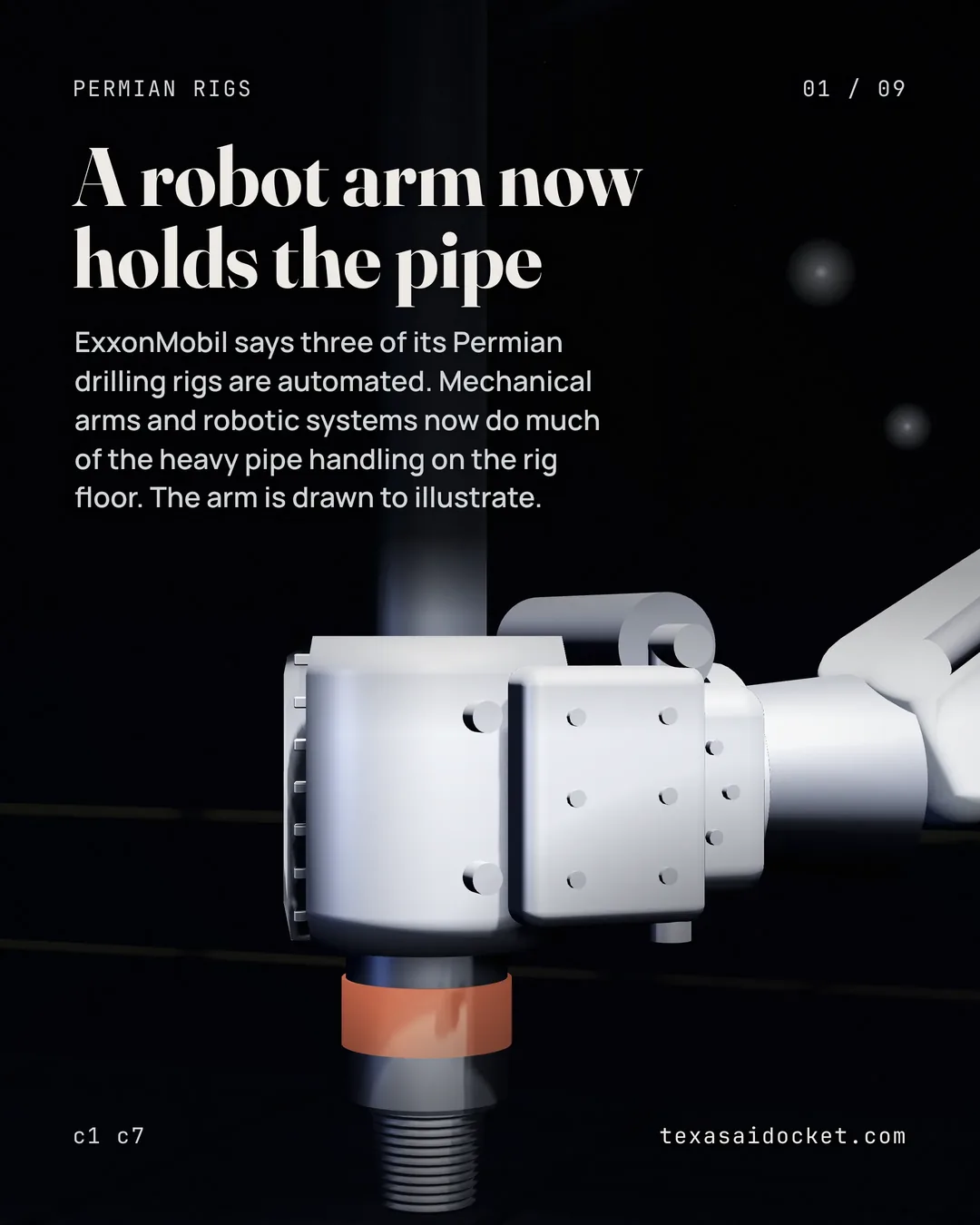

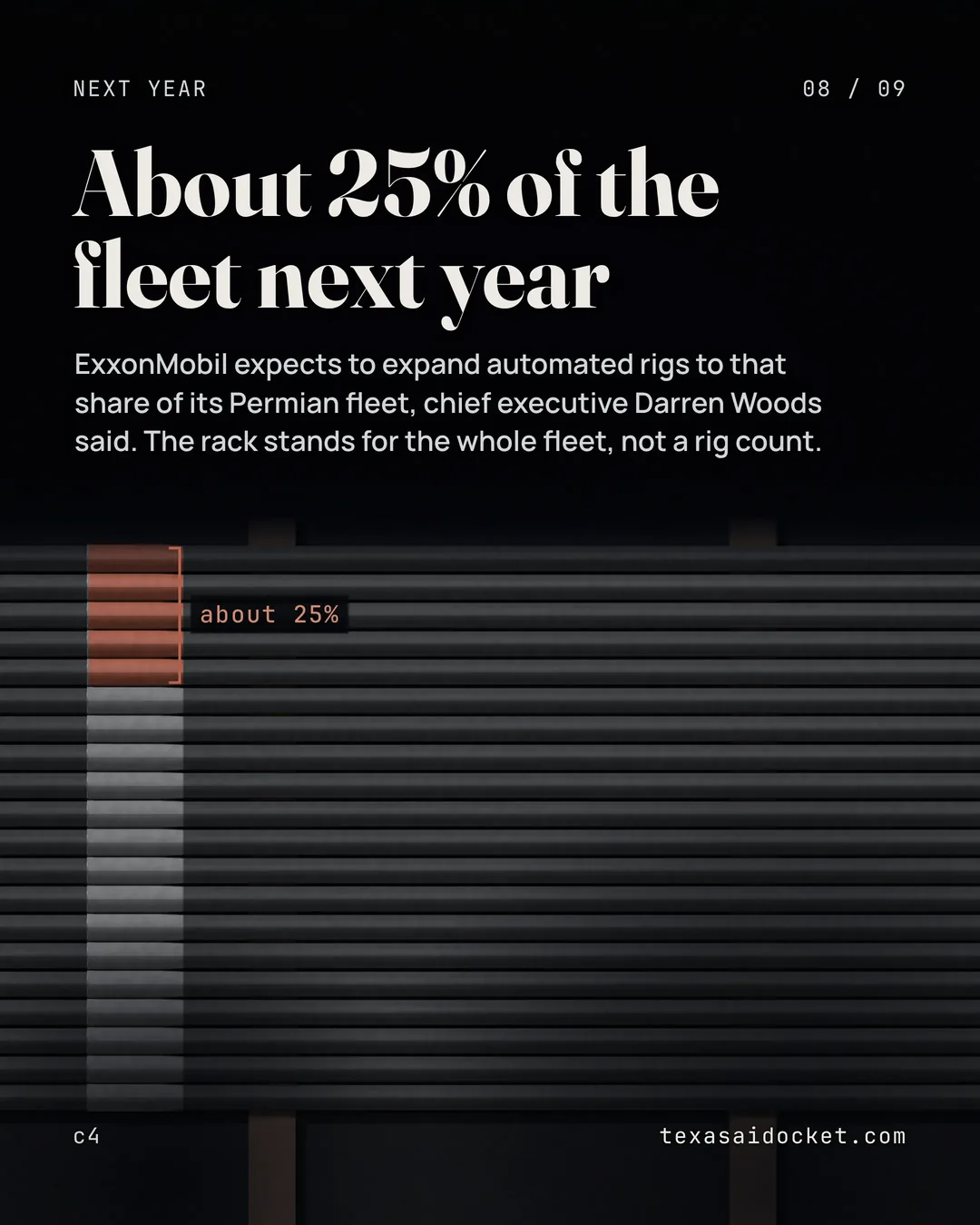
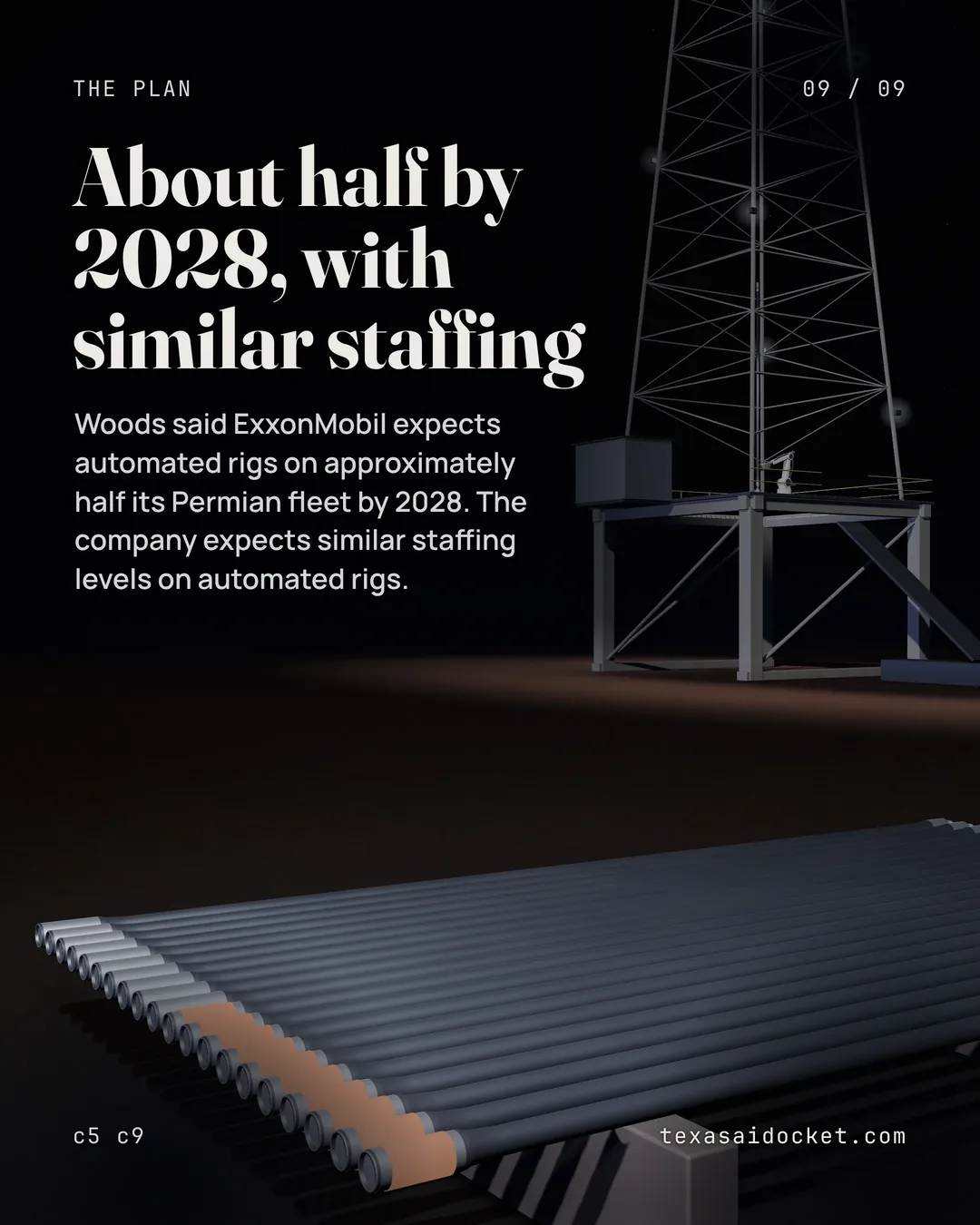
ExxonMobil chief executive Darren Woods told investors on the company's third quarter earnings call that it has three automated drilling rigs in operation in the Permian. He said the company expects to expand them to about 25%% of its Permian fleet next year and to approximately half by 2028.
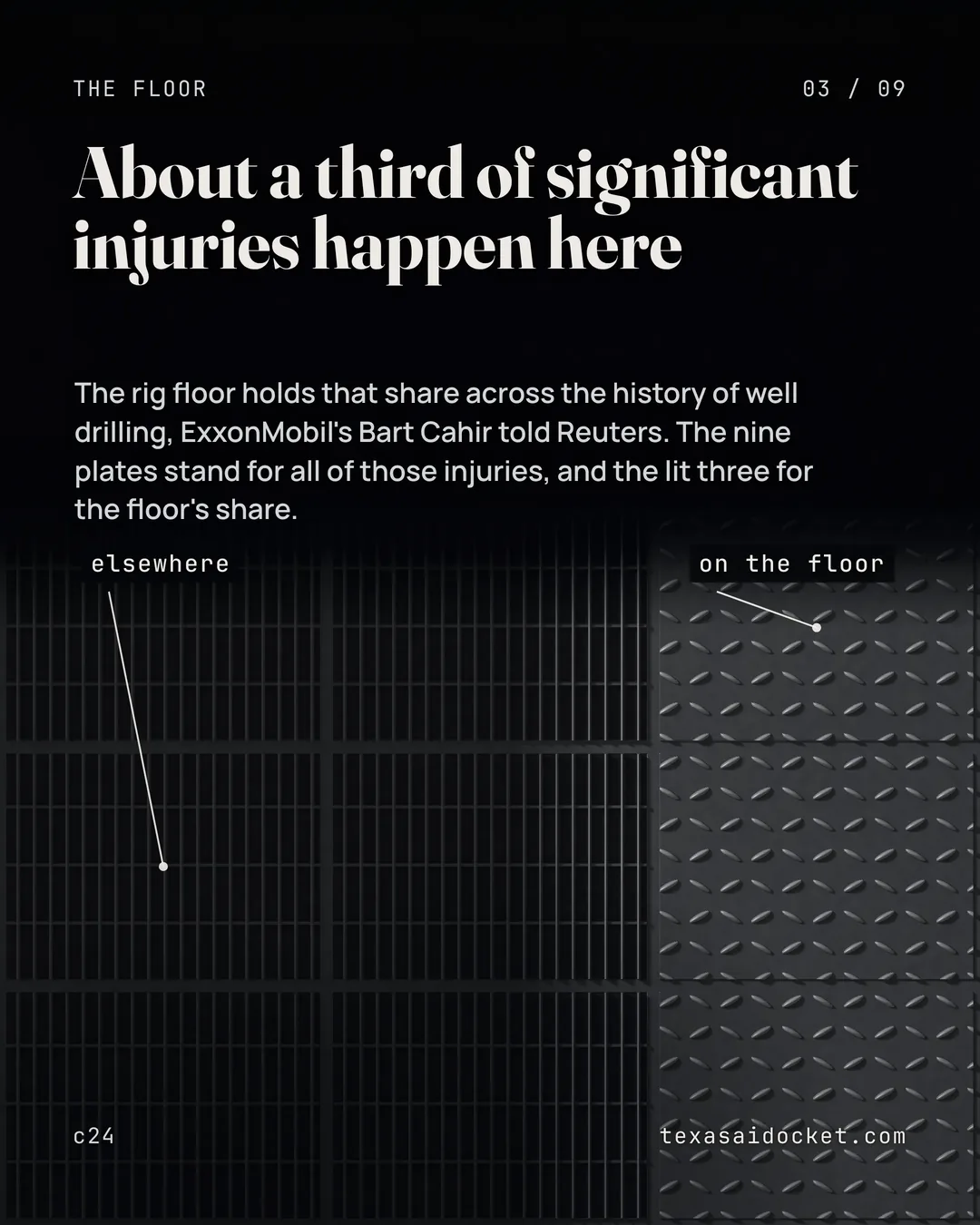
The company says mechanical arms and robotic systems can now do much of the heavy drill pipe handling. That work once put workers on the rig floor close to moving machinery. Bart Cahir, its senior vice president of unconventionals, told Reuters that about a third of significant injuries in well drilling happen on the rig floor.
What the machines do
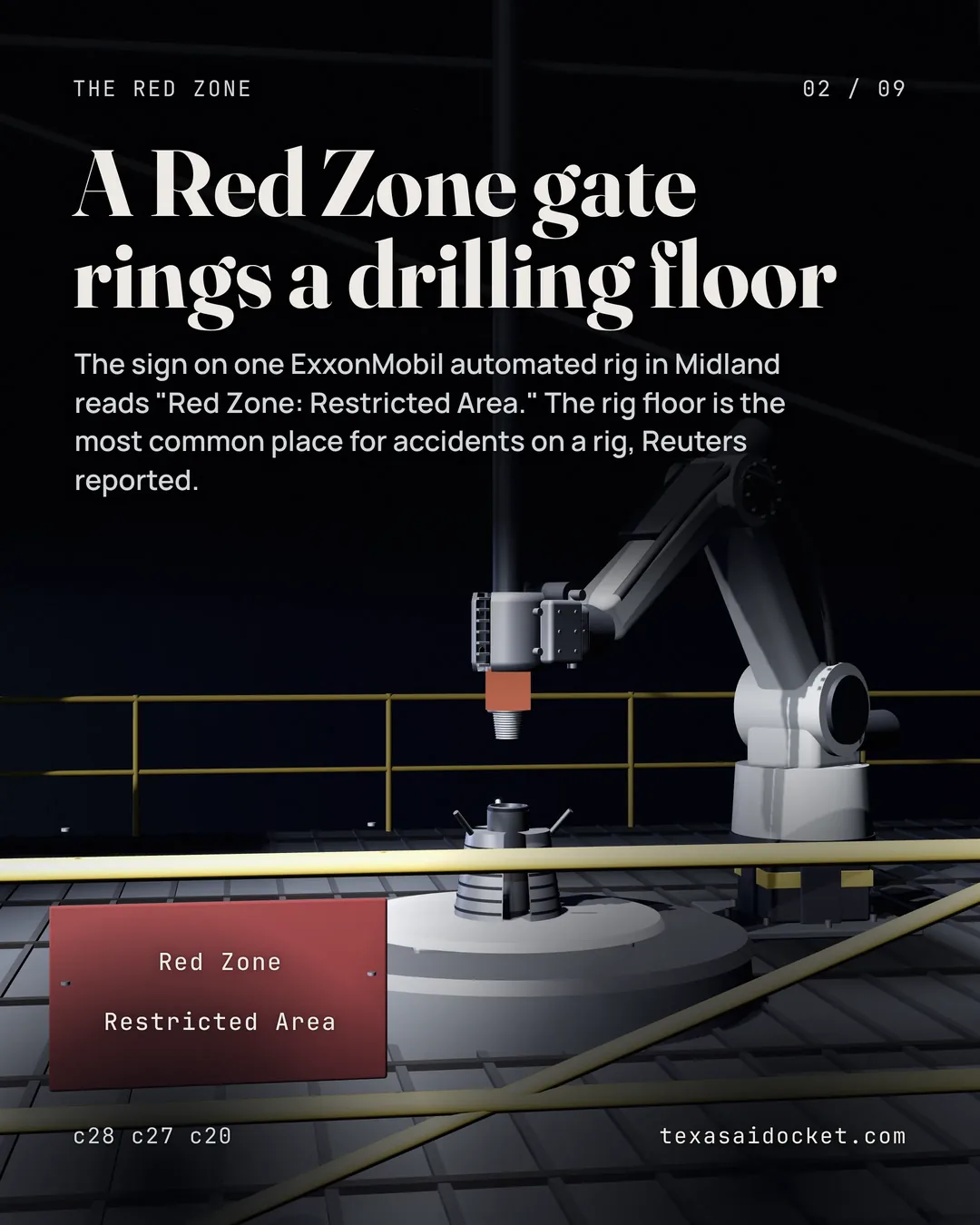
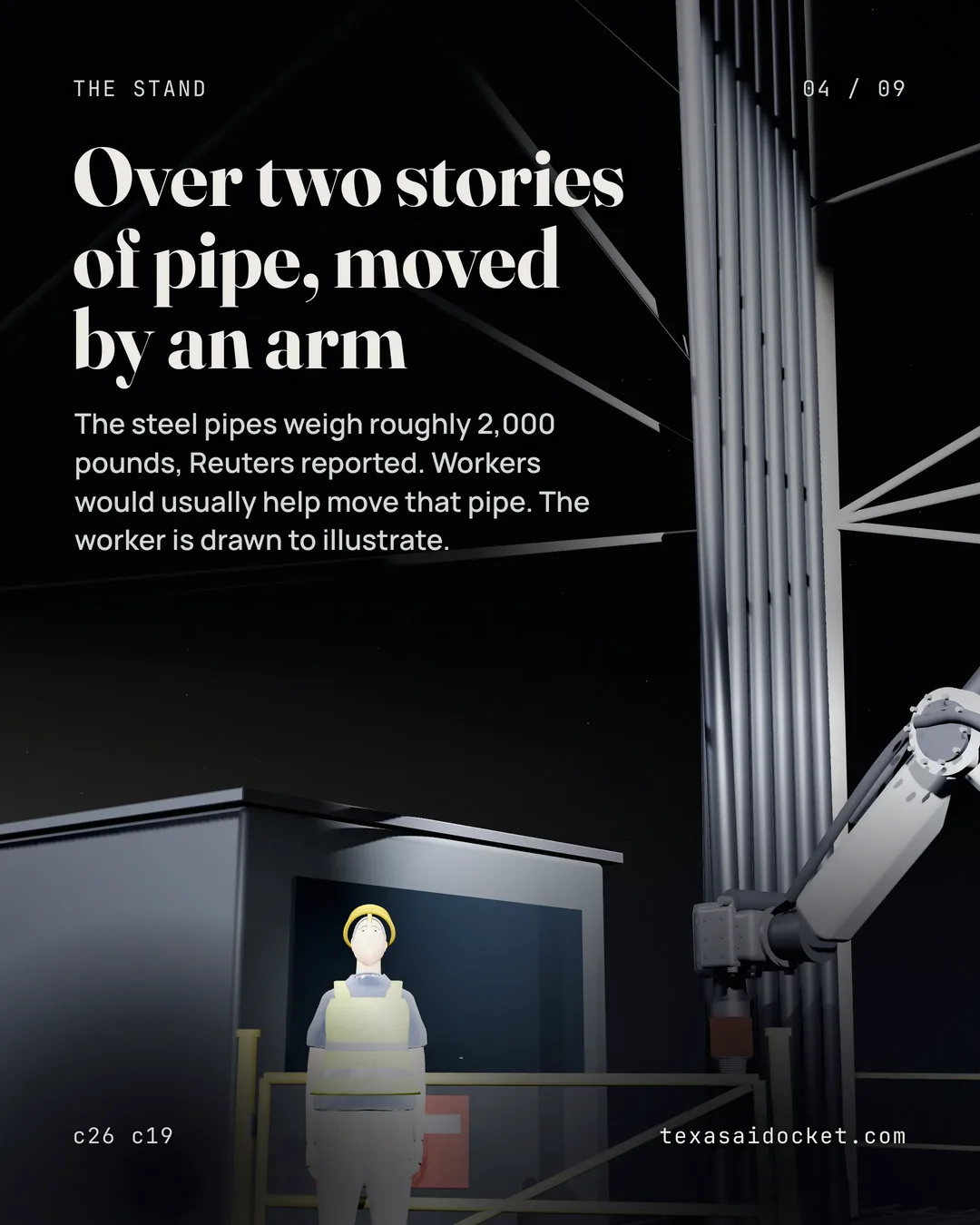
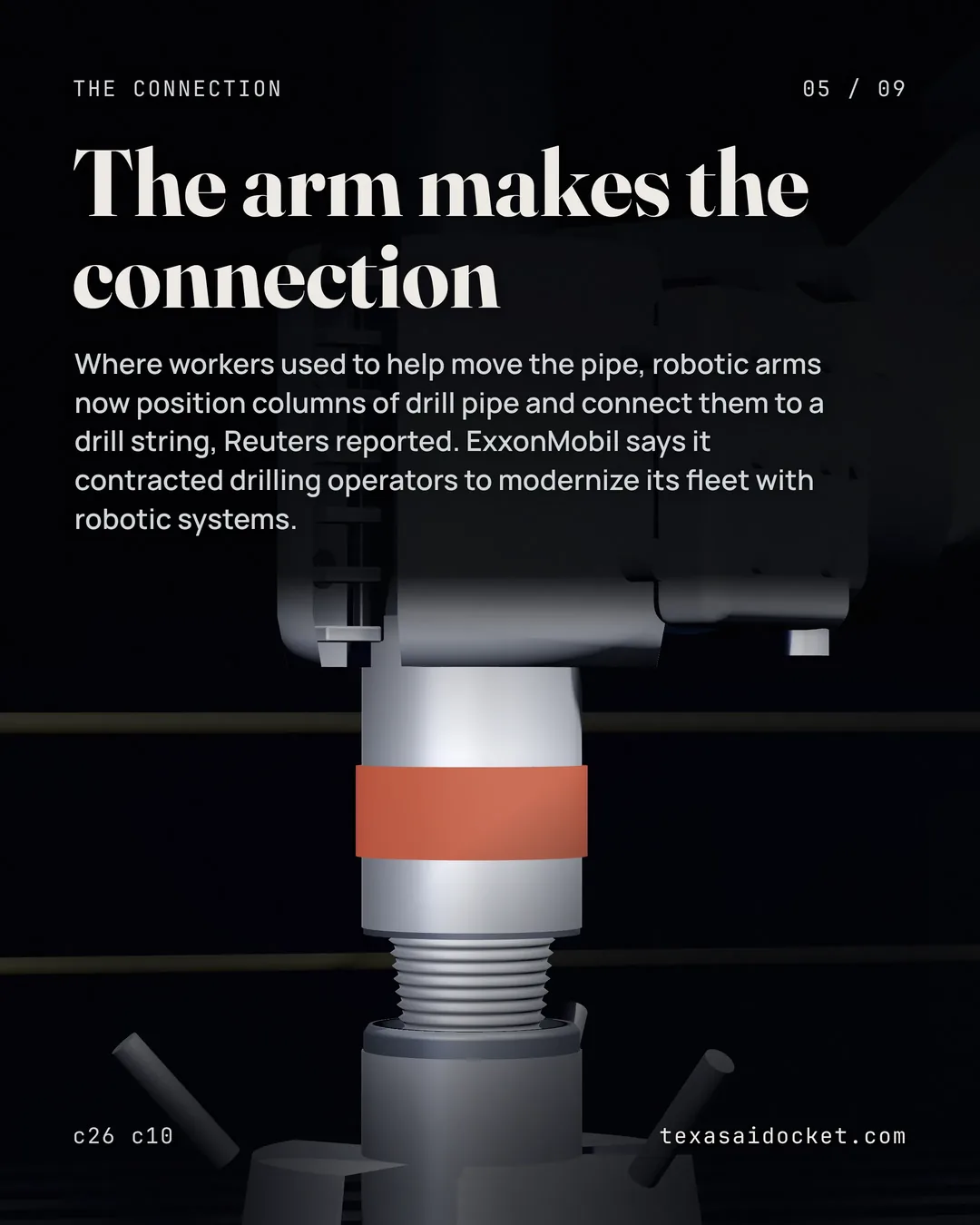
Reuters reported that robotic arms now position columns of drill pipe over two stories tall and connect them to a drill string, work that crews would usually help with. It put the steel pipes at roughly 2,000 pounds. On one automated rig in Midland a gate with a Red Zone sign surrounds the drilling floor.
Reuters described a contractor in rural west Texas running the robotic machinery from a small office on the rig with controls on a screen. Employees on the rig work with ExxonMobil's central operations team in Houston to set the robot's precise movements.
How fast the plan is moving
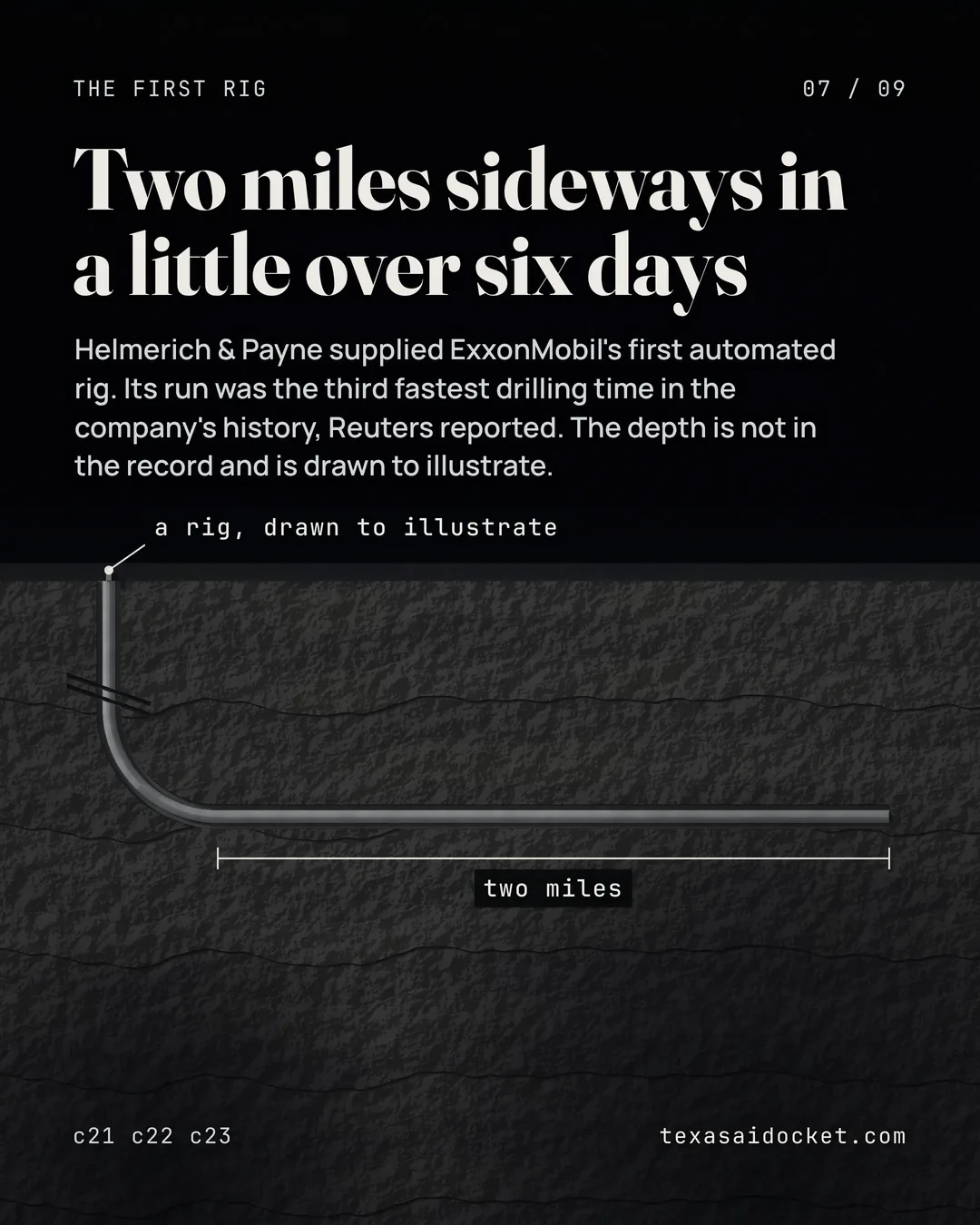
In August Reuters reported that ExxonMobil operated more than 30 drilling rigs in the Permian, two of them automated. Its first automated rig came from the drilling contractor Helmerich & Payne. That rig drilled two miles horizontally in a little over six days, the third fastest drilling time in the company's history.
On October 7th, 2026 Helmerich & Payne said it expects to deploy seven more of its FlexRobotics systems for ExxonMobil over the next 12 months, for nine in operation. The ExxonMobil newsroom puts the goal as automating more than half of its unconventional Permian rigs by year end 2028. It calls automated rigs one of more than 50 technologies it is deploying in the Permian.
What the company has not shown
Woods said the rigs are significantly improving safety and delivering some of the strongest drilling performance in the fleet, and gave no figure for either. The company says it believes automation could eliminate roughly one-third of high-consequence drilling incidents. That is a stated potential. The call and the newsroom post print no incident count from the automated rigs.
ExxonMobil expects to keep similar staffing levels on automated rigs. The call and the newsroom post don't say how many people work on an automated rig today or how the work on the floor is divided now. The plan for 2028 is a company expectation and not a measured result.
Sources for this story
- ExxonMobil Third-Quarter 2026 Earnings Call Transcript
- Technology and people driving the next generation of drilling in the Permian
- Exxon turns to automated drilling in the Permian in push for higher oil output
- H&P & ExxonMobil Expand Deployment of FlexRobotics Technology (news release)
Claim-by-claim verification · 30 claims
ExxonMobil chief executive Darren Woods said on the company's third-quarter earnings call that it has three automated drilling rigs in operation in the Permian today.
In the Permian, we’re the only operator currently using automated drilling rigs. We have three in operation today.
Woods said ExxonMobil is the only operator in the Permian currently using automated drilling rigs. That is the company's own claim about its competitors, not an independent finding.
In the Permian, we’re the only operator currently using automated drilling rigs.
Woods said the automated rigs are significantly improving safety and delivering some of the strongest drilling performance in ExxonMobil's fleet. He gave no figure for either on the call.
In addition to significantly improving safety, they are delivering some of the strongest drilling performance in our fleet.
Woods said ExxonMobil expects to expand automated rigs to about 25% of its Permian fleet next year.
We expect to expand their use to about 25% of our Permian fleet next year
Woods said ExxonMobil expects automated rigs to make up approximately half of its Permian fleet by 2028.
about 25% of our Permian fleet next year and approximately half by 2028 — helping us continue to grow U.S. production safely and at a lower cost.
ExxonMobil's newsroom says the company plans to automate more than half of its unconventional drilling rigs in the Permian by year-end 2028.
ExxonMobil is scaling deployment across the Permian, with plans to automate more than half of its unconventional drilling rigs by year-end 2028.
ExxonMobil says mechanical arms and robotic systems can now do much of the heavy drill pipe handling. That work once required workers on the rig floor to stand close to moving machinery.
Activities such as handling heavy drill pipe have historically required workers on the rig floor to operate close to heavy equipment and moving machinery. Now, mechanical arms and robotic systems can perform much of that work
ExxonMobil says it believes automated rigs have the potential to eliminate roughly one-third of high-consequence drilling incidents. This is a stated potential, not a measured result.
We believe this technology has the potential to eliminate roughly one-third of high-consequence drilling incidents.
ExxonMobil expects to keep similar staffing levels on automated rigs and calls the technology a force multiplier, not a replacement for workers.
We expect to maintain similar staffing levels on automated rigs, and we view the technology as a force multiplier, not a replacement.
ExxonMobil says it has contracted outside drilling operators to modernize its Permian drilling fleet with advanced robotic systems.
We’ve contracted industry-leading drilling operators to help modernize our drilling fleet with advanced robotic systems
ExxonMobil points to recent demonstrations of H&P's FlexRobotics technology as a view of what the future of drilling can look like.
Recent demonstrations of H&P's FlexRobotics ® technology highlight what the future of drilling can look like
ExxonMobil says automated rigs are one of more than 50 technologies it is deploying across its Permian operations.
Automated rigs are just one of more than 50 technologies being deployed across ExxonMobil's Permian operations
ExxonMobil's stated goal is to raise its Permian production to approximately 2.5 million oil-equivalent barrels per day by 2030.
our goal of increasing Permian production to approximately 2.5 million oil-equivalent barrels per day by 2030
ExxonMobil describes its Permian operations as spanning West Texas and Southeast New Mexico.
We operate in the United States' largest oil-producing region, spanning West Texas and Southeast New Mexico.
In West Texas, ExxonMobil says it currently operates in the Greater Midland and Trans-Pecos areas.
We have the largest contiguous acreage position in West Texas. We currently operate in the Greater Midland and Trans-Pecos areas.
Reuters reported in August that ExxonMobil operates more than 30 drilling rigs in the Permian Basin.
operates more than 30 drilling rigs in the Permian Basin, two of which are automated rigs with robotic equipment.
At the time of that August report, two of those Permian rigs were automated rigs with robotic equipment.
two of which are automated rigs with robotic equipment
Reuters described an ExxonMobil contractor in rural west Texas sitting in a small office on a drilling rig and operating robotic machinery with controls on a screen.
In rural west Texas where oil rigs and pump jacks dot the sparse flat landscape, an ExxonMobil contractor sits in a small office on a drilling rig, using controls on a screen to operate robotic machinery
Reuters reported that the robotic machinery moves tall steel pipes weighing roughly 2,000 pounds.
move tall steel pipes weighing roughly 2,000 pounds.
Reuters reported that the rig floor is the most common location for accidents on a drilling rig.
This work would usually require human overseers standing on the rig floor, the most common location for accidents on a rig.
Reuters reported that ExxonMobil installed its first automated rig, supplied by drilling contractor Helmerich & Payne, the year before its August report.
The company installed its first automated rig, supplied by drilling contractor Helmerich & Payne, last year.
Reuters reported that this first automated rig drilled two miles horizontally underground in a little over six days.
It drilled two miles horizontally underground in a little over six days
Reuters reported that the run was the third fastest drilling time in ExxonMobil's history.
in a little over six days, the third fastest time in Exxon's history.
Bart Cahir, ExxonMobil's senior vice president of unconventionals, told Reuters that about a third of significant injuries in well drilling happen on the rig floor.
In the history of well drilling activity, about a third of significant injuries that occur happen on the rig floor
Reuters reported that employees on the rig work with ExxonMobil's central operations team in Houston to set the precise movements of the robotic system.
Employees on the rig communicate with Exxon's central operations team in Houston to determine the precise movements the robotic system should make.
Reuters reported that robotic arms now position columns of drill pipe over two stories tall and connect them to a drill string. Workers would usually help move that pipe.
Where workers would usually help move columns of drill pipe over two stories tall, robotic arms now position the pipes and connect them to a drill string.
A Reuters photo caption identifies an automated drilling rig operated by ExxonMobil in Midland, Texas.
An automated oil drilling rig operated by ExxonMobil in Midland, Texas, August 17, 2026. REUTERS/Sheila Dang
Reuters reported that a gate with a Red Zone sign surrounds the drilling floor on one of ExxonMobil's automated rigs in Midland.
On one of Exxon's automated rigs in Midland, a gate surrounds the drilling floor with a sign reading "Red Zone: Restricted Area."
Helmerich & Payne said on October 7th, 2026 that it expects to deploy seven additional FlexRobotics systems for ExxonMobil over the next 12 months, bringing the total operating to nine.
H&P expects to deploy seven additional FlexRobotics® systems for ExxonMobil over the next 12 months, bringing the total number of systems operating to nine.
ExxonMobil's Bart Cahir said in the H&P release that expanding FlexRobotics builds on what the company learned from its initial deployments and shows it using automation to improve drilling performance.
Expanding the use of FlexRobotics® builds on what we’ve learned from our initial deployments and is another example of how we’re using automation to improve drilling performance.