Articles · Local government
Dallas AI cameras on brush trucks flag concerns, not violations
Cameras on Dallas sanitation trucks scanned 10,000 properties. A city memo counts 57 citations, issued only after an in-person inspection.
Read the story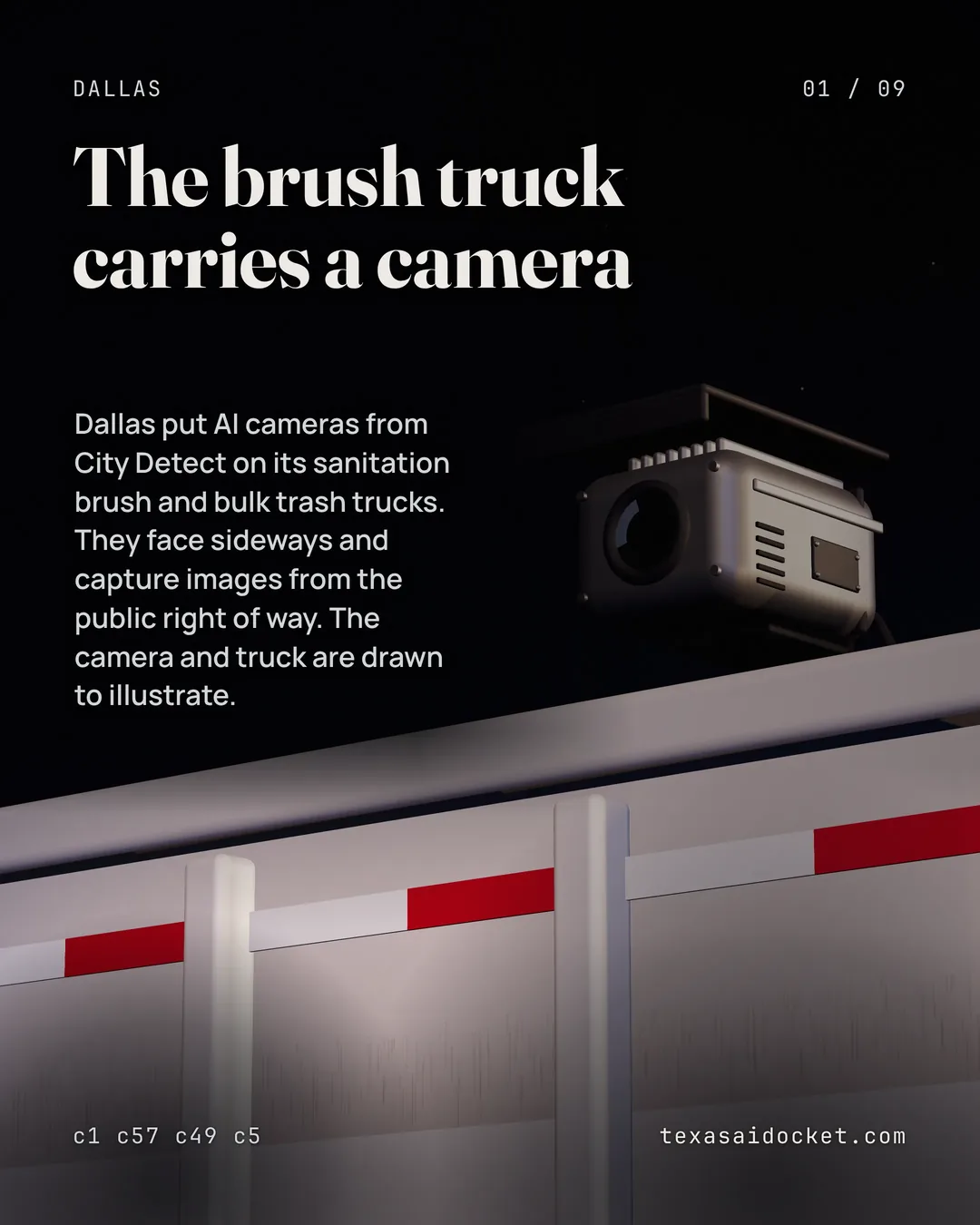
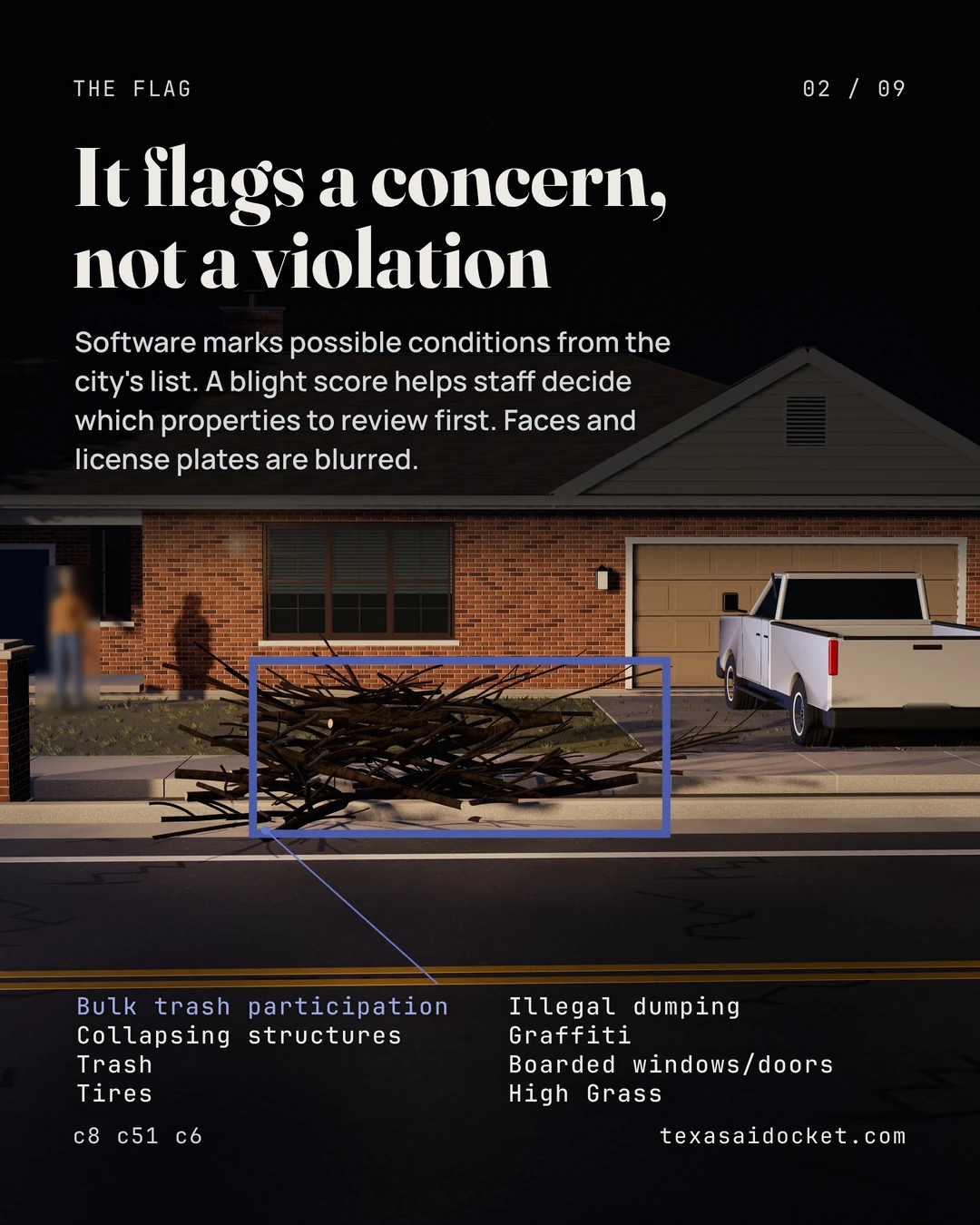
Dallas put cameras made by City Detect on its bulk trash trucks, and they scan homes and buildings for potential code violations. The city's own briefing to its Finance Committee says the cameras face sideways and capture images from the public right of way.
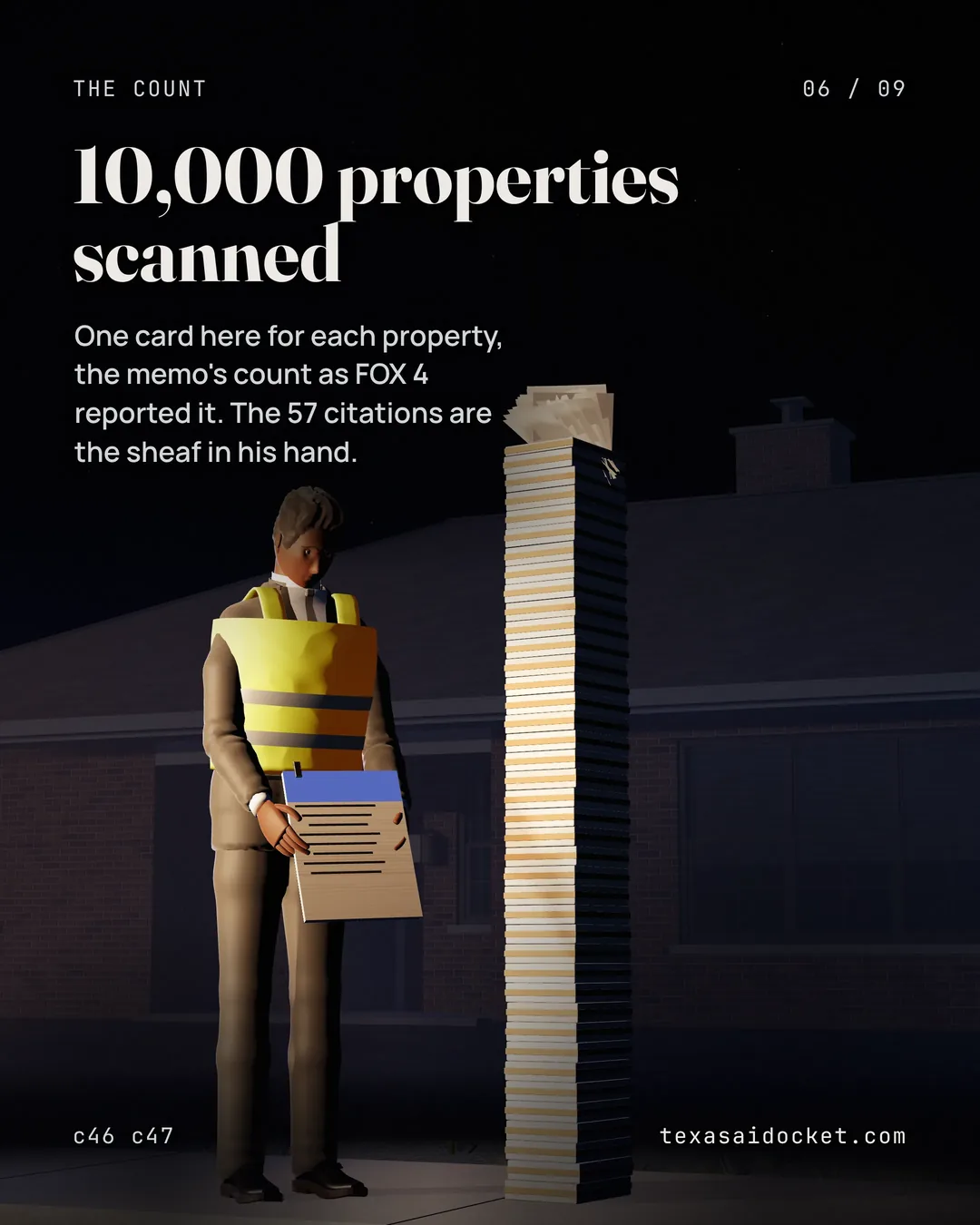
A city memo dated September 8th, 2026 says the cameras scanned 10,000 properties. It counts 57 citations at 34 properties.
How a flag becomes a citation
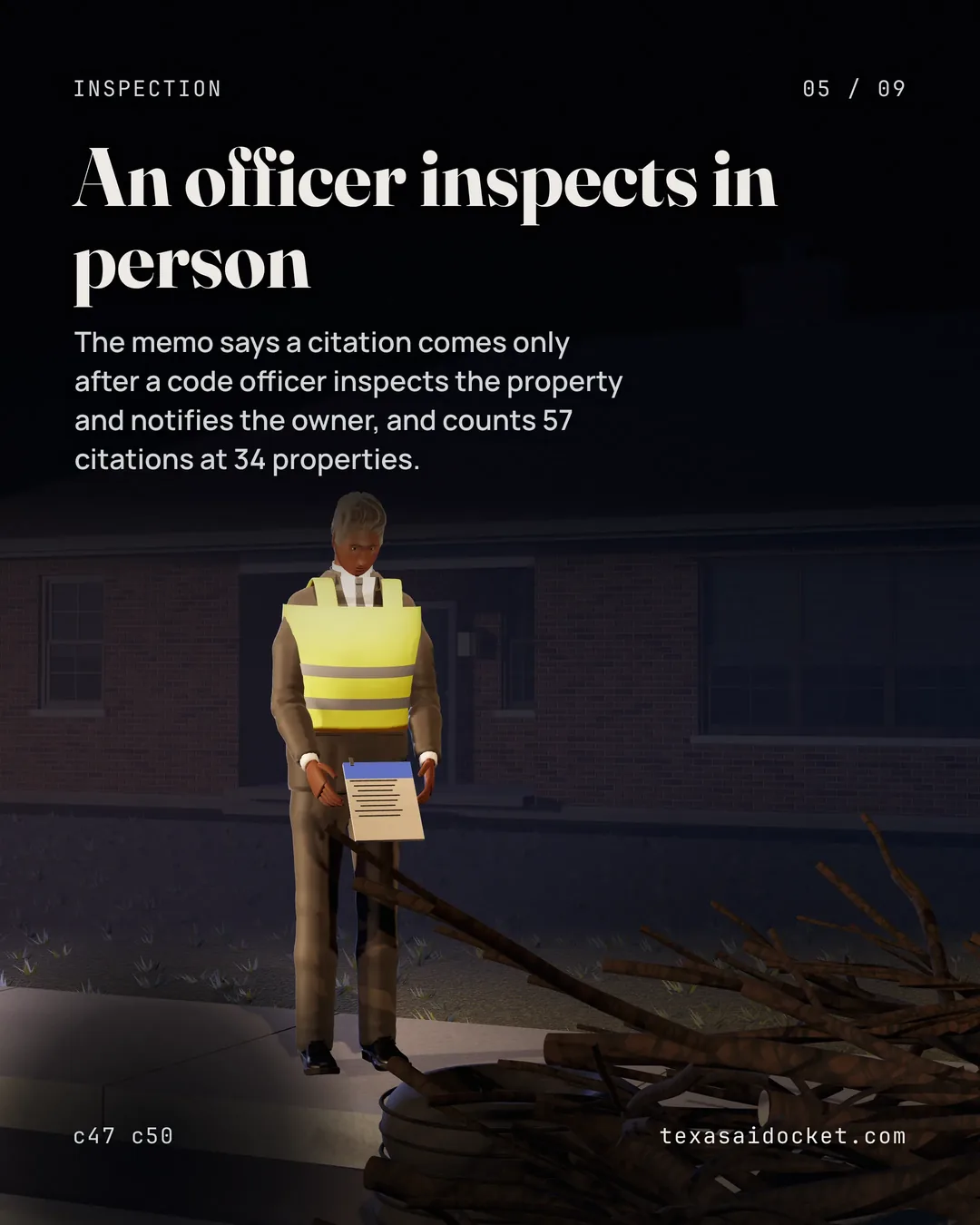
The software assigns blight scores that help Code Compliance decide which properties to review first. The memo says the citations came after camera detections were reviewed and confirmed by code officers. It says a citation is issued only after a code officer inspects the property in person and notifies the owner.
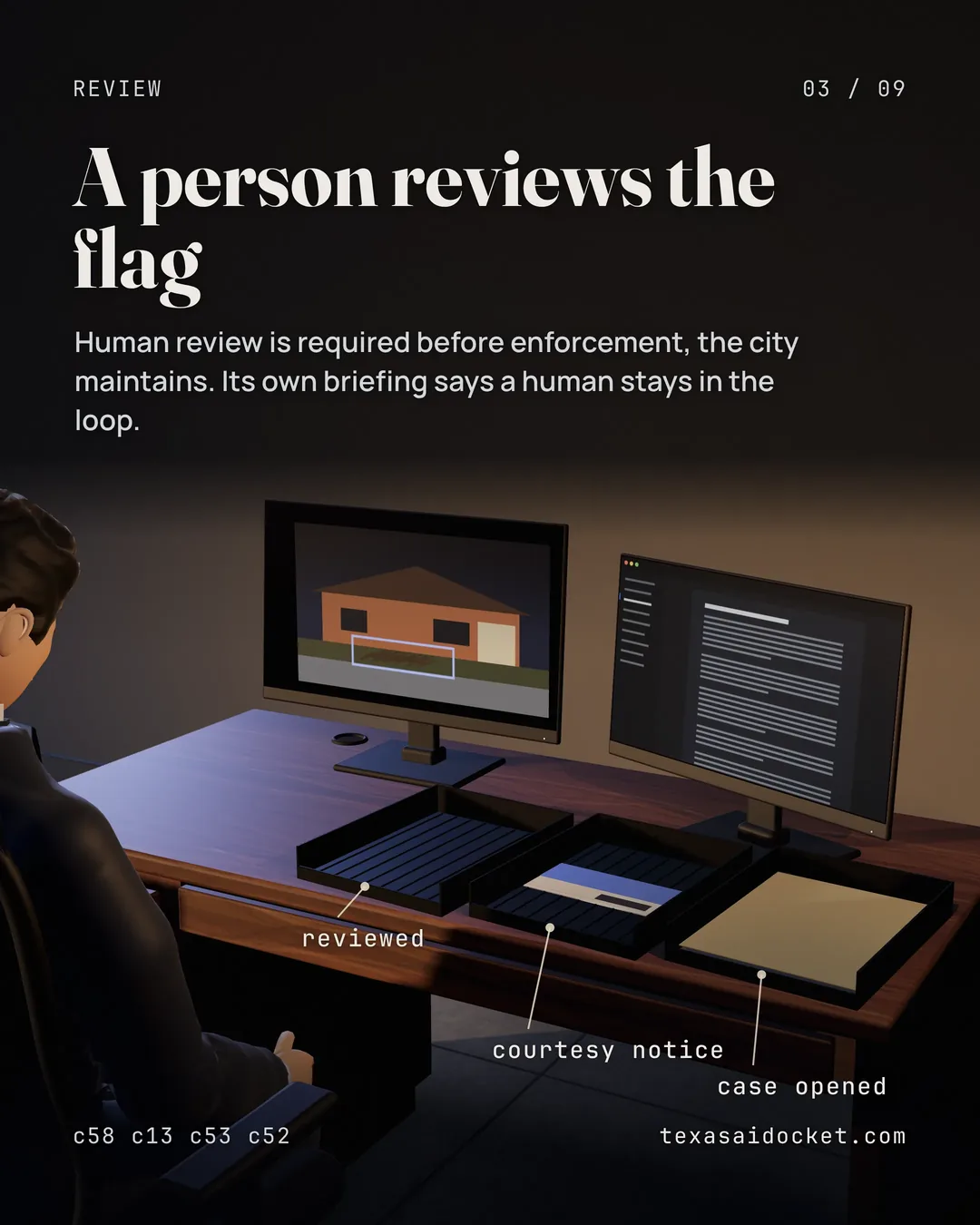
The city's briefing to its Finance Committee said the system is neither a staff replacement nor automated ticketing and that a person stays in the loop. It said faces and license plates are blurred.
Notices, cases and citations
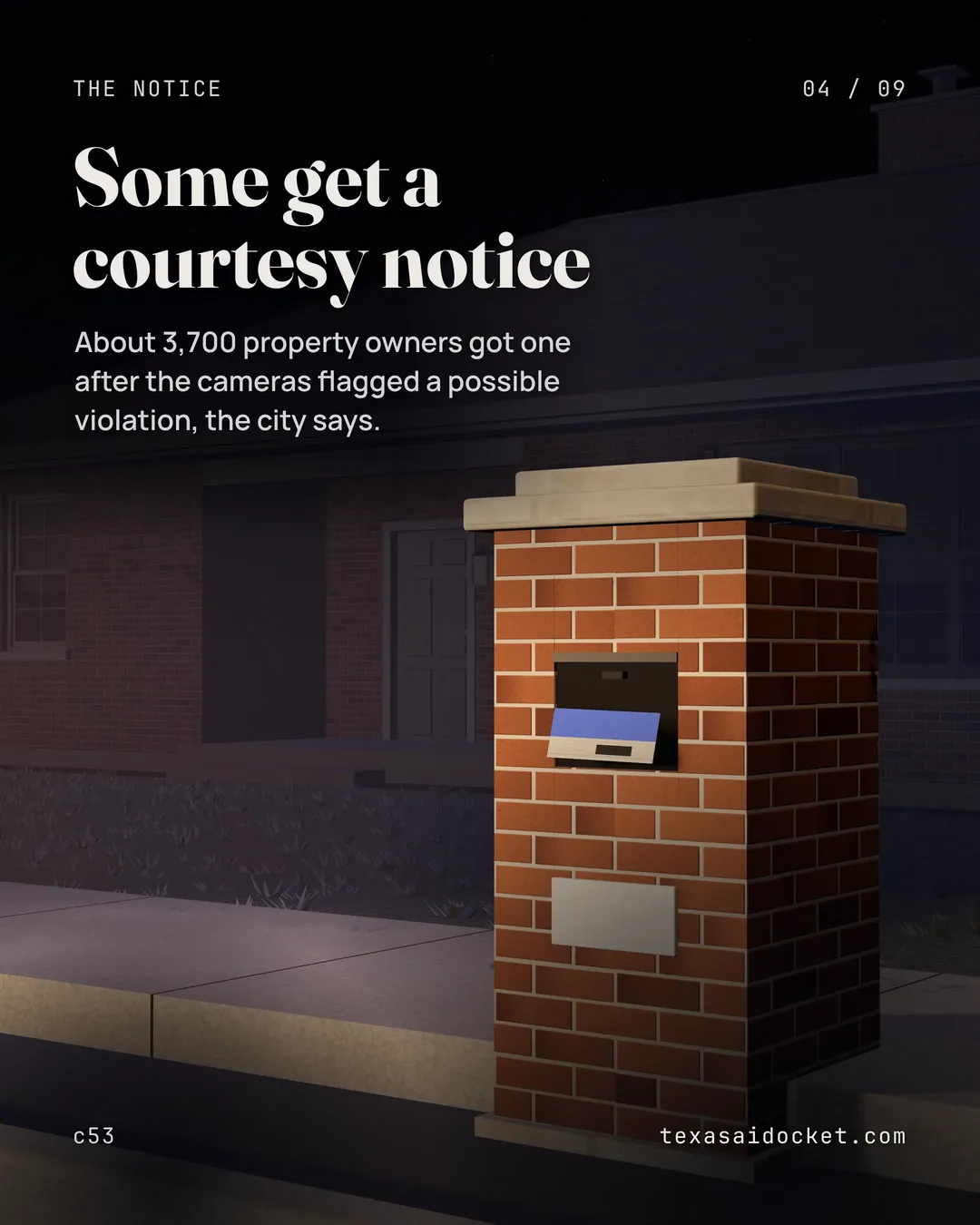
The city sent courtesy notices to approximately 3,700 property owners after potential violations were detected. City officials say the notices are not citations or formal warnings and require no action, though they warn that a continuing violation could bring enforcement. Code Compliance also opened about 300 cases where officials believe an in-person inspection should come soon.
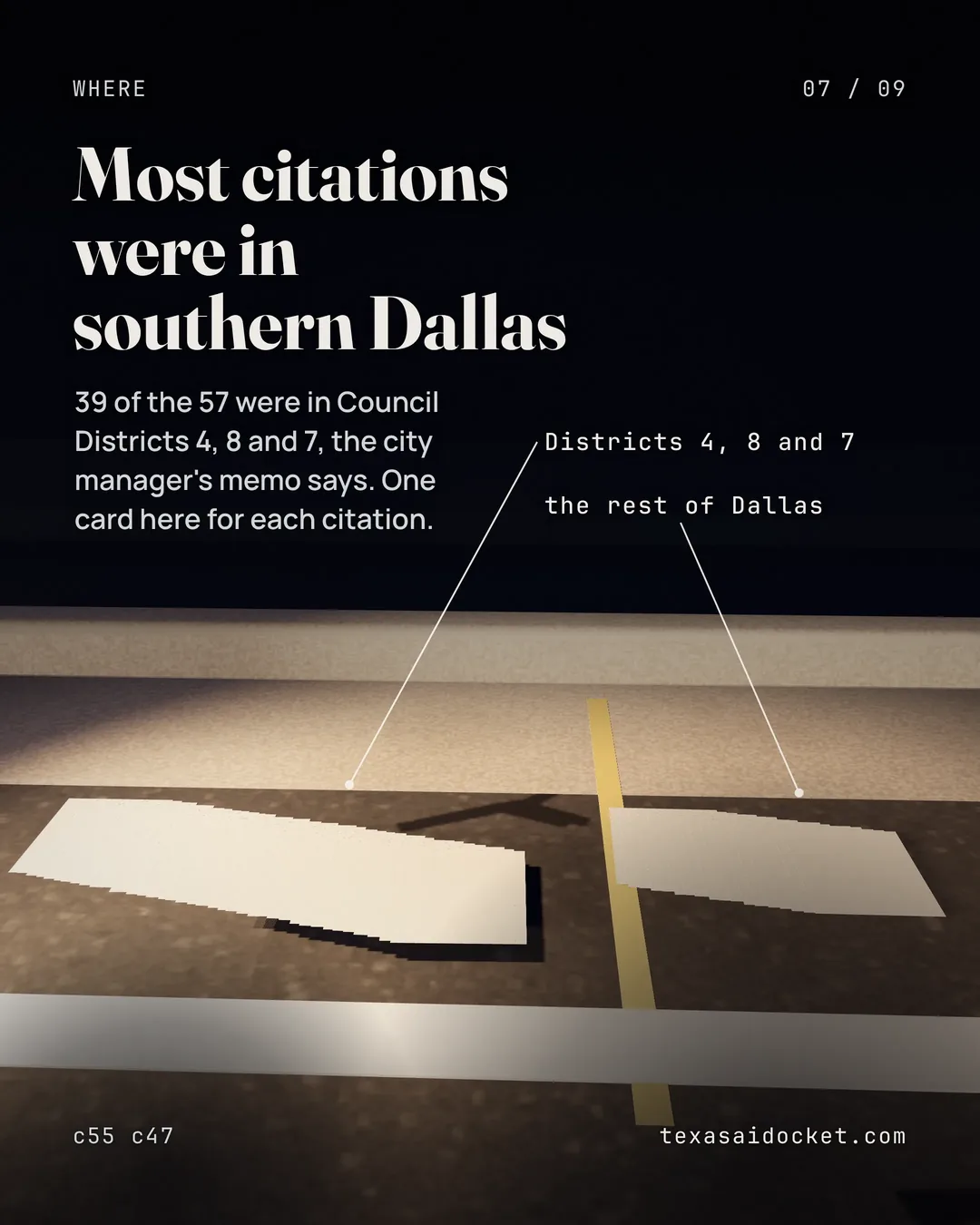
By the city manager's memo, 39 of the citations were issued in Council Districts 4, 8 and 7 in southern Dallas. Council member Chad West has raised concerns that the technology could put a disproportionate financial burden on neighborhoods with fewer resources.
The money
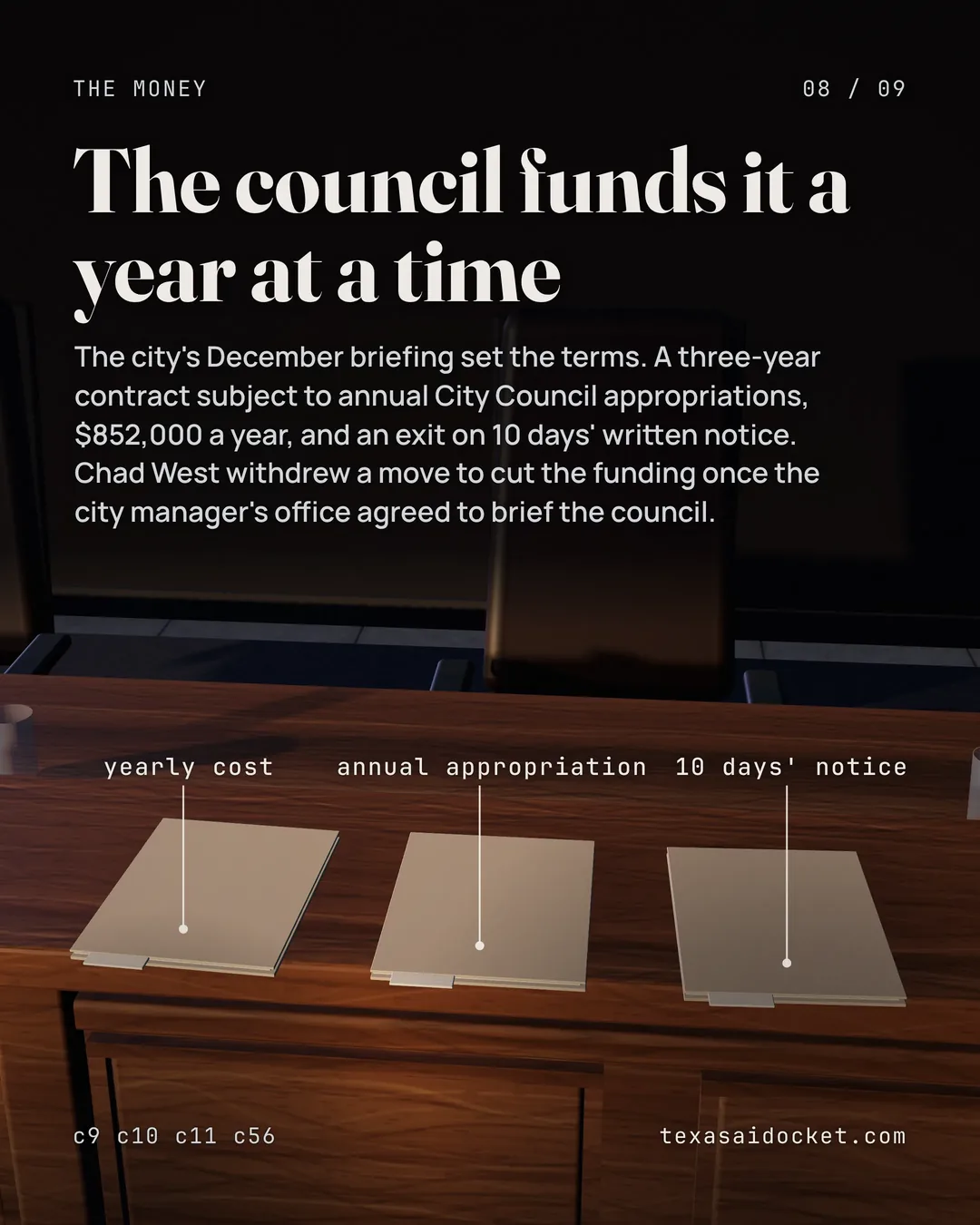
The three-year contract is estimated at $2,556,000, subject to annual City Council appropriations. It costs $852,000 a year, and the city may end it on 10 days' written notice. West proposed removing the program's funding and withdrew the request after the city manager's office agreed to brief the council.
Sources for this story
- Update on the Use of AI-Powered Camera Technology, Finance Committee briefing (15 pages)
- FOX 4 report, byline Lori Brown
- Dallas Issues Citations From AI Code Enforcement Cameras On Sanitation Trucks
Claim-by-claim verification · 30 claims
A City of Dallas briefing to the council's Finance Committee set out a plan to put 100 AI enabled cameras on Sanitation brush trucks.
Implement 100 AI-enabled cameras on Sanitation brush trucks
The briefing describes City Detect's system as its own computer vision models paired with rugged cameras mounted on existing city fleets.
City Detect combines proprietary computer-vision models with ruggedized cameras mounted on existing city fleets.
The briefing describes the hardware as 2 cameras mounted on 1 city vehicle.
2 cameras mounted on 1 city vehicle
The cameras take photos while the vehicle drives at 25 to 35 MPH, according to the briefing.
Take photos as it drives (25-35 MPH)
The cameras face sideways from the vehicle and capture images from the public right of way.
Side-facing cameras attached to vehicle • Captures images from the public right -of-way
The briefing says faces and license plates are blurred for privacy.
Blurred faces and license plates for privacy.
The cameras have a fixed focal length and can't zoom, the briefing says.
They have a fixed focal length, which means they do not support any zoom capability
The briefing lists the property conditions the software detects as bulk trash participation, collapsing structures, trash, tires, illegal dumping, graffiti, boarded windows or doors and high grass.
Detection of property conditions • Bulk trash participation • Collapsing structures • Trash • Tires • Illegal dumping • Graffiti • Boarded windows/doors • High Grass
The briefing describes a three-year contract for an estimated $2,556,000, subject to annual City Council appropriations.
This is a three-year contract for an estimated amount of $2,556,000, subject to annual City Council appropriations.
The contract costs $852,000 per year and covers 100 cameras with all associated technology, installation, data services, maintenance, warranty and replacement support.
The contract cost is $852,000 per year, which includes 100 cameras and all associated technology, installation, data services, maintenance, warranty, and replacement support.
The city may terminate the contract at any time with 10 days' written notice and without penalty.
The City may terminate the contract with 10 days’ written notice at any time, without penalty.
The briefing states the system is neither a staff replacement nor automated ticketing.
NOT staff replacement • NOT automated ticketing
The briefing commits to human review, stating that a person is in the loop for every action.
There is a human in the loop for all actions
FOX 4 reported in September that City Manager Kim Tolbert would brief on the cameras on October 19th.
A briefing on the cameras from Dallas City Manager Kim Tolbert will take place on October 19.
A City of Dallas memo dated September 8th, 2026 detailed the findings and costs of the AI powered cameras the city has used on its trash trucks since early 2026.
A September 8 memo from the City of Dallas detailed the findings and costs of AI-powered cameras that the city has been using on its trash trucks since early 2026.
According to the memo the cameras have scanned 10,000 properties and found 3,700 violations that resulted in notices from the city.
According to the memo, the cameras have scanned 10,000 properties and have resulted in 3,700 violations, resulting in notices from the city.
The memo counts 57 citations at 34 properties and states citations are issued only after a code officer inspects the property in person and notifies the owner.
57 citations have also been handed out at 34 properties from what the cameras have scanned. The memo also states citations are only issued after a code officer inspects the property in-person and provides notice to the owner.
The cameras are made by City Detect and scan homes and buildings for potential code violations.
The cameras, which are made by a company called City Detect, scan homes and buildings for potential code violations.
The September 8th city memo says the 57 citations at 34 properties came after camera detections were reviewed and confirmed by code officers.
A September 8 city memo says 57 citations have been issued at 34 properties after camera detections were reviewed and confirmed by code officers. The city has also sent thousands of property owners notices about potential violations.
The system flags potential code violations and generates blight scores that help Code Compliance decide which properties to review first.
The system uses artificial intelligence to identify potential code violations and generate “blight scores” that help Code Compliance prioritize properties for review. City records show the cameras have identified potential violations at thousands of addresses since becoming operational.
Code Compliance opened about 300 cases for properties where officials believe an in person inspection should occur soon.
In addition to the citations, Dallas Code Compliance said it has opened about 300 cases involving properties where officials believe an in-person inspection should occur soon.
The city sent courtesy notices to approximately 3,700 property owners after potential violations were detected.
The city also sent approximately 3,700 property owners what it calls “courtesy notices” after potential violations were detected.
City officials say the notices are not citations or formal warnings and require no action. The notices tell residents that continued violations could bring a formal notice, a citation or other enforcement.
City officials say the notices are not citations or formal warnings and do not require action from property owners. However, the notices tell residents that continued violations could result in a formal notice, citation, or other enforcement action.
According to the city manager's memo 39 of the citations, 68 percent, were issued in City Council Districts 4, 8 and 7 in southern Dallas.
According to the city manager’s memo, 39 citations, or 68%, were issued in City Council Districts 4, 8 and 7 in Southern Dallas.
Council member Chad West had proposed removing the program's funding and withdrew the request after the city manager's office agreed to brief the council.
West previously proposed removing funding for the program but withdrew the request after the city manager’s office agreed to brief City Council members.
The cameras are mounted on bulk trash collection trucks and photograph properties as crews travel through neighborhoods.
The cameras, operated by City Detect, are mounted on bulk trash collection trucks and photograph properties as crews travel through neighborhoods.
The city maintains that human review is required before any enforcement action.
The city also maintains that human review is required before enforcement action is taken.
Council member Chad West has raised concerns that the technology could place a disproportionate financial burden on residents of neighborhoods with fewer resources.
Councilmember Chad West has raised concerns that the technology could place a disproportionate financial burden on residents in neighborhoods with fewer resources.
Code Compliance Assistant Director Jeremy Reed said the notices give homeowners a chance to correct potential violations before any citation.
Code Compliance Assistant Director Jeremy Reed said the notices are intended to give homeowners an opportunity to correct potential violations before citations are issued.
The contract was estimated at about $2.56 million, about $852,000 a year.
The contract was estimated at about $2.56 million, or about $852,000 annually.