Articles · Chips and research
Over $19 million for a Lubbock computing cluster, and the announcement gives no install date
The state's chip fund is backing a Texas Tech computing cluster in Lubbock with over $19 million. The announcement gives no date for when the cluster will run.
Read the story


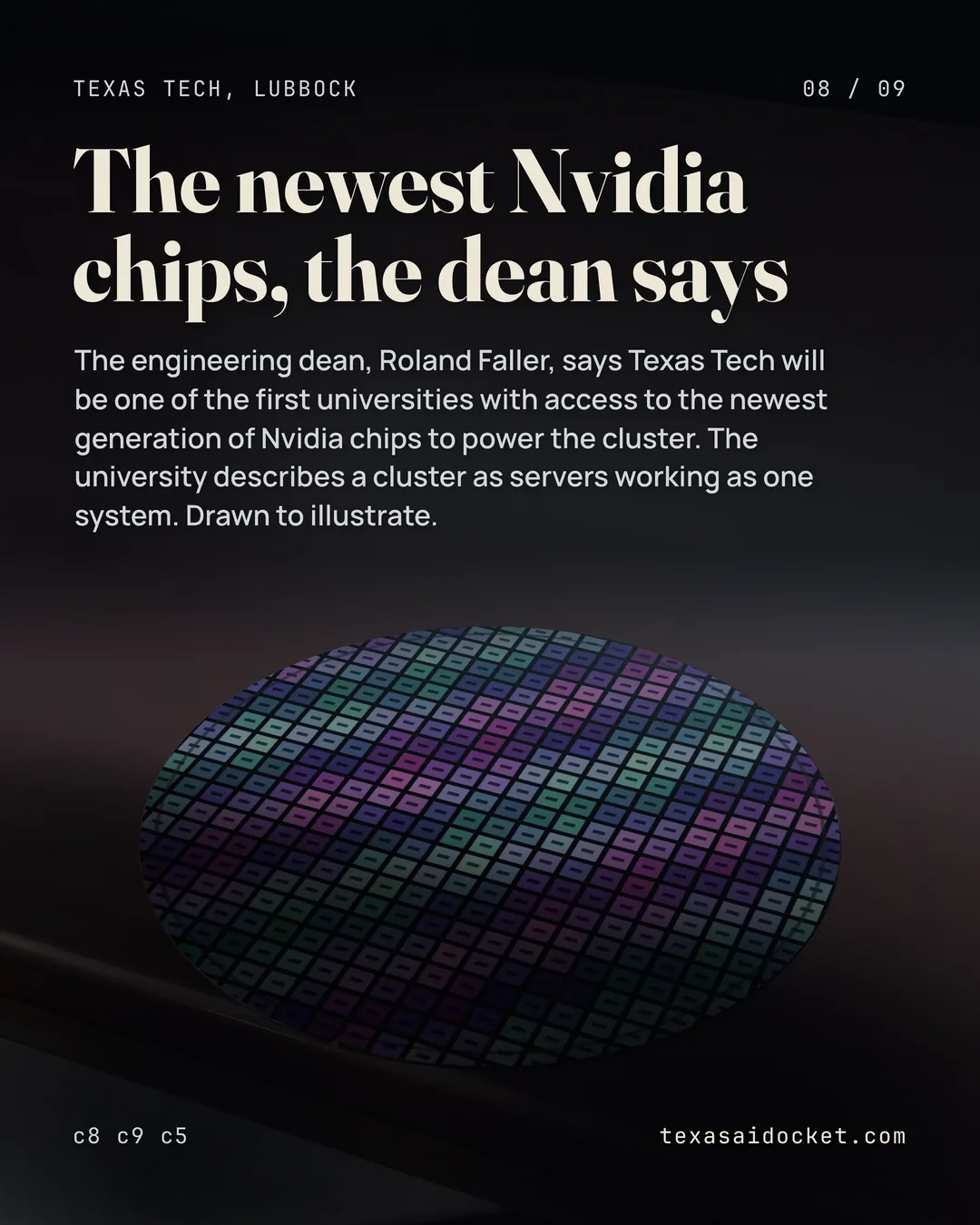

Texas Tech's college of engineering received another Texas Semiconductor Innovation Fund award worth over $19 million. The university announced it on November 13th, 2026. The money will help Texas Tech set up a next-generation computing cluster in Lubbock.
The announcement says the award will help establish the cluster. It gives no install or completion date. A reader of the announcement learns what the money is for and not when the machine will exist.
What the cluster is for
The university describes a computing cluster as linked high-performance servers that work as one system on large parallel workloads. The project will combine artificial intelligence with high-fidelity simulation data and lab results. The stated goal is faster development of new semiconductor devices and materials.
The university says conventional semiconductor design leans on physics-based modeling that can be computationally intensive. Planned research includes AI-driven discovery and modeling of materials, and using AI to guide the epitaxial growth of ultrawide-bandgap semiconductors.
Roland Faller, dean of the Whitacre College of Engineering, is on the research team. He says Texas Tech will be among the first universities with access to the newest generation of Nvidia chips to power the cluster. That is the dean's statement about access, and the announcement names no chip count and no delivery date.
Three awards in one year
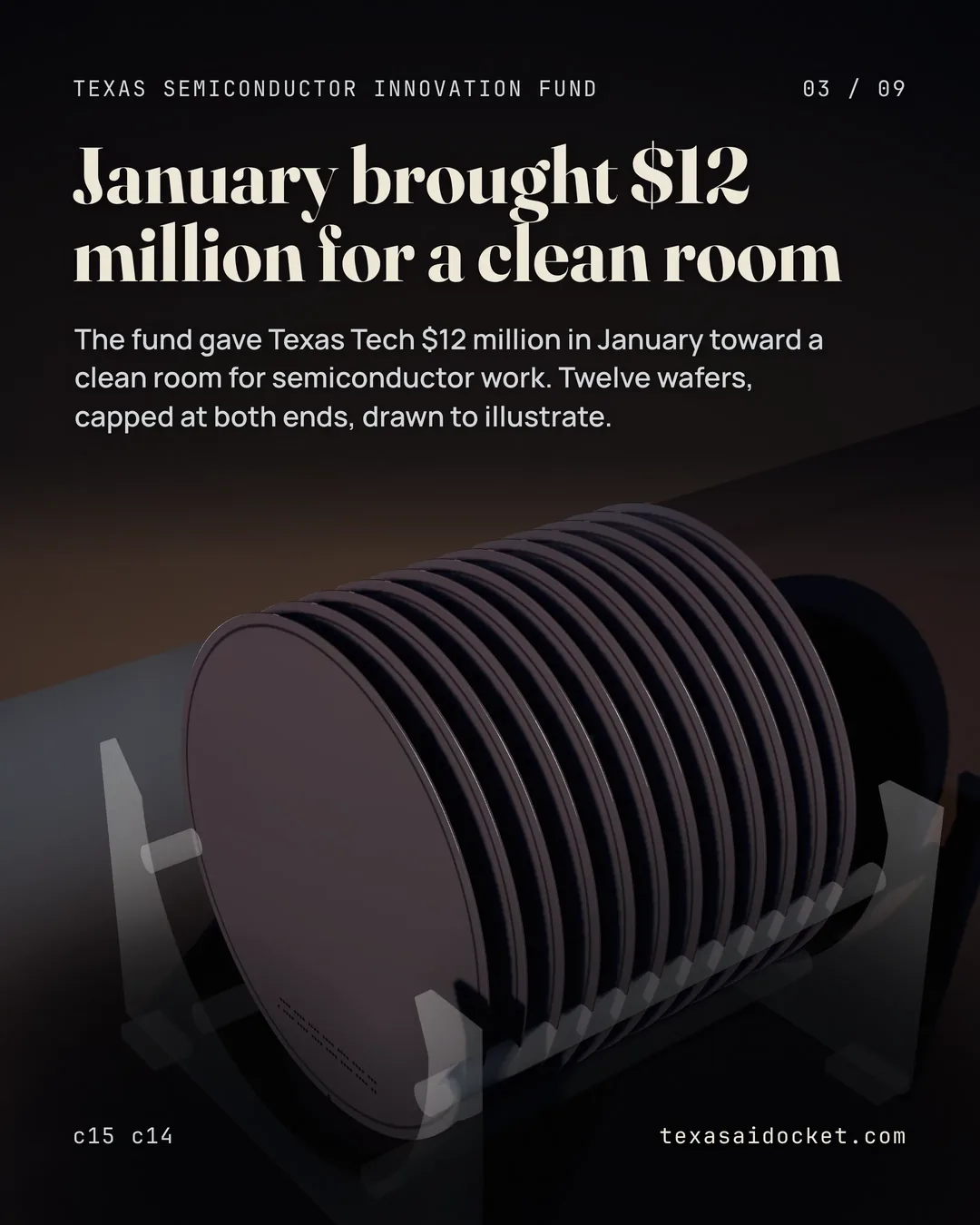
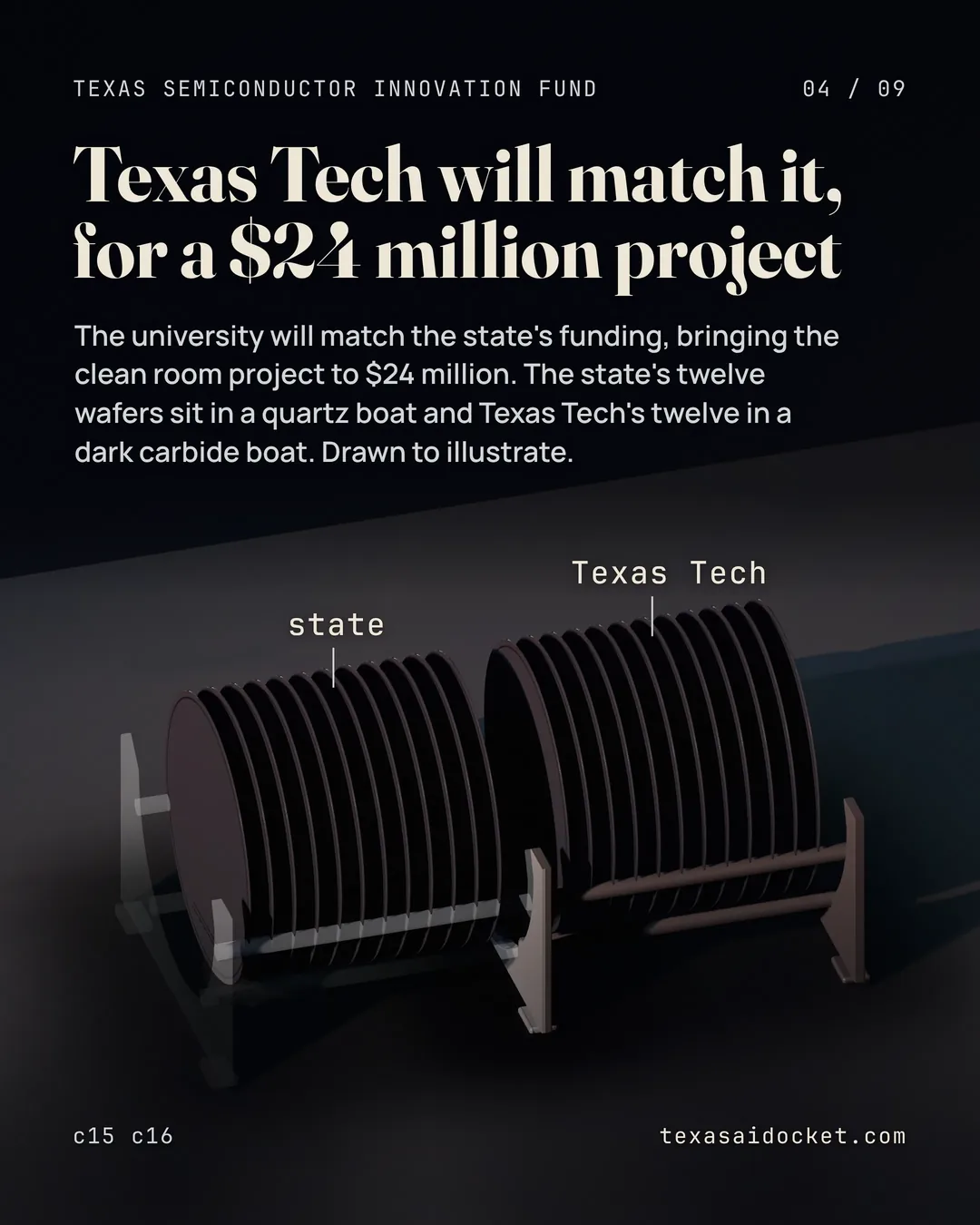
This is not Texas Tech's first award from the fund. Earlier awards paid for a new clean room and for semiconductors meant for harsh environments. In January the fund awarded Texas Tech $12 million toward the clean room. The university will match that state money for a clean room project of $24 million.
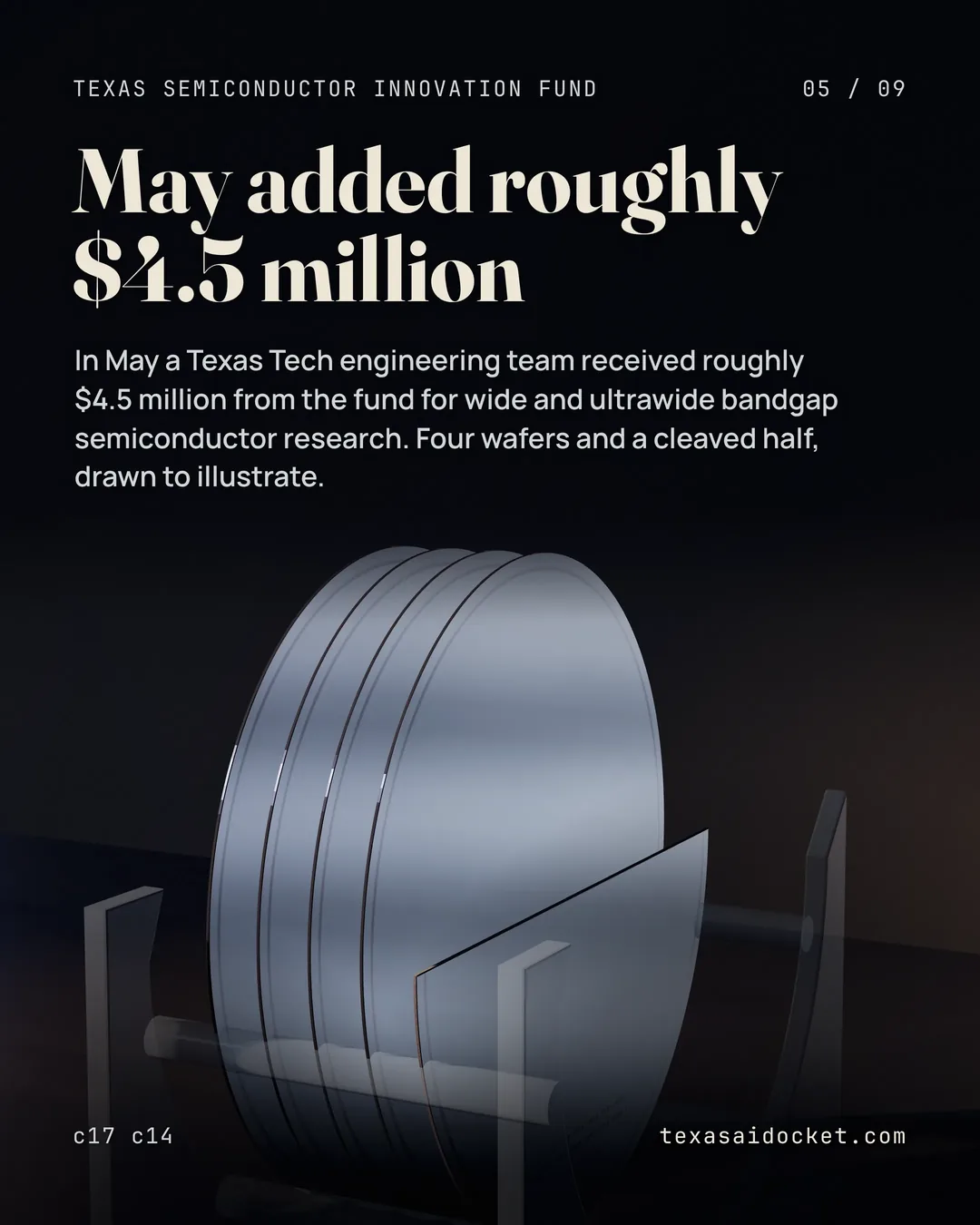
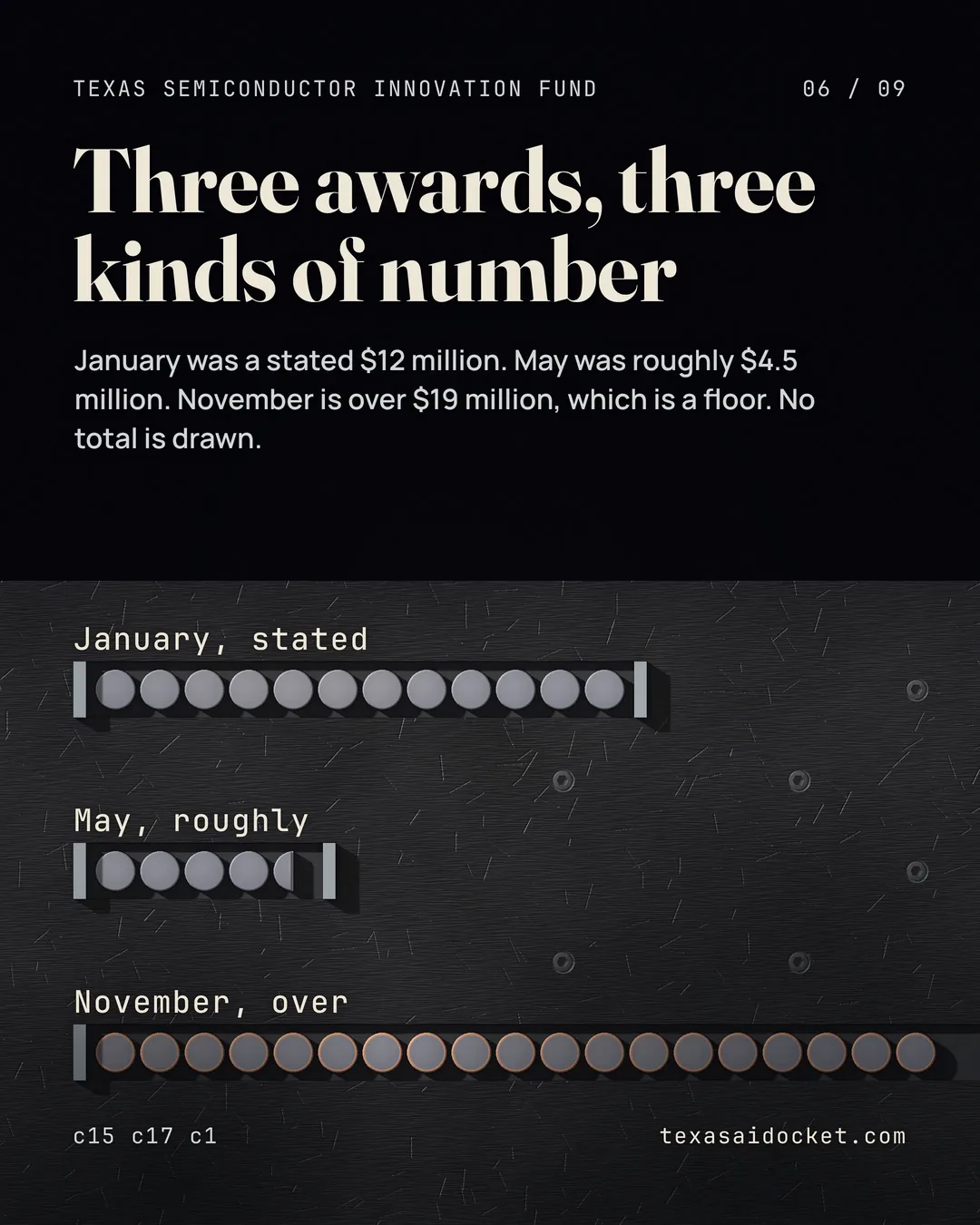
In May a team at the same college received roughly $4.5 million for wide and ultrawide bandgap semiconductor research. The three figures are not alike. January's is stated as a whole figure, May's is approximate and November's is a floor, so no total can be stated honestly.
Who runs the fund
The fund's grants are administered by the Texas CHIPS Office in the Office of the Governor. The Texas CHIPS Act, signed in 2023,, created the fund. Texas Tech President Lawrence Schovanec thanked Governor Abbott and state leaders for the investment.
The open question as of the announcement is the schedule. Nothing in the three announcements says when the Lubbock cluster will be installed or when its first research will run.
Sources for this story
- Texas Tech Now, the announcement of the fund's November award for the Lubbock computing cluster
- Texas Tech Now, the announcement of the fund's January award toward a clean room
- Texas Tech Now, the announcement of the fund's May award for semiconductor research
Claim-by-claim verification · 19 claims
Texas Tech's Edward E. Whitacre Jr. College of Engineering received another award from the Texas Semiconductor Innovation Fund worth over $19 million.
received an additional Texas Semiconductor Innovation Fund (TSIF) award of over $19
Texas Tech announced the award on November 13th, 2026.
Texas Tech Receives $19 Million Grant to Further Semiconductor Innovation November 13, 2026
The money will help Texas Tech set up a next-generation computing cluster in Lubbock.
The funding of this award will help Texas Tech establish a next-generation computing cluster in Lubbock.
The cluster is not built yet. The announcement says the award will help establish it and gives no install or completion date.
will help Texas Tech establish a next-generation computing
The university describes a computing cluster as linked high-performance servers that work as one system on large parallel workloads.
designed to function as a single unified system to handle massive, parallel workloads.
The project will combine artificial intelligence with high-fidelity simulation data and lab results.
This project will integrate artificial intelligence (AI) with high-fidelity simulation data and experimental results.
The goal is faster development of new semiconductor devices and materials.
This should shorten development cycles for next-generation semiconductor devices and materials.
The engineering dean says Texas Tech will be among the first universities with access to the newest generation of Nvidia chips to power the cluster.
Texas Tech will be one of the first universities to have access to the newest generation of Nvidia chips to power the cluster.
Roland Faller, dean of the Whitacre College of Engineering, is on the research team.
Along with Faller, the research team consists of
Planned research includes AI-driven discovery and modeling of materials.
Some of those projects include AI-driven materials discovery and modeling
Planned research also includes using AI to guide the epitaxial growth of ultrawide-bandgap semiconductors.
AI-enabled epitaxial growth of ultrawide-bandgap semiconductors
The university says conventional semiconductor design leans on physics-based modeling that can be computationally intensive.
Conventional semiconductor design relies heavily on physics-based modeling.
Texas Tech President Lawrence Schovanec thanked Governor Abbott and state leaders for the investment.
We are grateful to Governor Abbott and state leaders for this investment in Texas Tech University and the state’s future,
This is not Texas Tech's first award from the fund. Earlier awards paid for a new clean room and for semiconductors meant for harsh environments.
Texas Tech previously earned TSIF awards to develop a new clean room and to develop wide/ultrawide bandgap semiconductors for use in harsh environments
In January the fund awarded Texas Tech $12 million toward a clean room for semiconductor work.
after receiving a $12 million Texas Semiconductor Innovation Fund (TSIF) grant award
Texas Tech will match that state money, for a clean room project of $24 million.
The university will match the state’s funding, bringing the total project award to $24 million
In May a team at the same college received roughly $4.5 million from the fund for wide and ultrawide bandgap semiconductor research.
received roughly $4.5 million from the Texas Semiconductor Innovation Fund (TSIF)
The fund's grants are administered by the Texas CHIPS Office in the Office of the Governor.
TSIF grants are administered by the Texas CHIPS Office, within the Office of the Governor’s
The Texas CHIPS Act, signed in 2023, created the fund.
Gov. Greg Abbott signed into law the Texas CHIPS Act in 2023, establishing both the TSIF