Articles · Health
A $200,000 grant funds a one year UT San Antonio pilot that plans to analyze veterans' recorded stories with natural language processing
A one year pilot in San Antonio plans to test whether software can find signs of mild brain injury in how veterans tell their own stories. It has no results yet.
Read the story
A UT San Antonio research project aims to turn language into data that could help clinicians understand and treat cognitive and communication difficulties. It received a $200,000 grant from the San Antonio Medical Foundation. The work is a one year proof of concept study that will use natural language processing, a form of artificial intelligence.
One of the three leads is Alicia Swan, director of rehabilitation research at the South Texas Veterans Health Care System. Another, Rocio Norman, is a speech language pathologist who has worked with veterans for 18 years.
What the tests miss
Many veterans Norman treated reported trouble finding words, organizing their thoughts or keeping up in fast or noisy conversations, even when standard assessments did not show a clear impairment. She says people with brain injury still have words and their grammar generally remains intact.
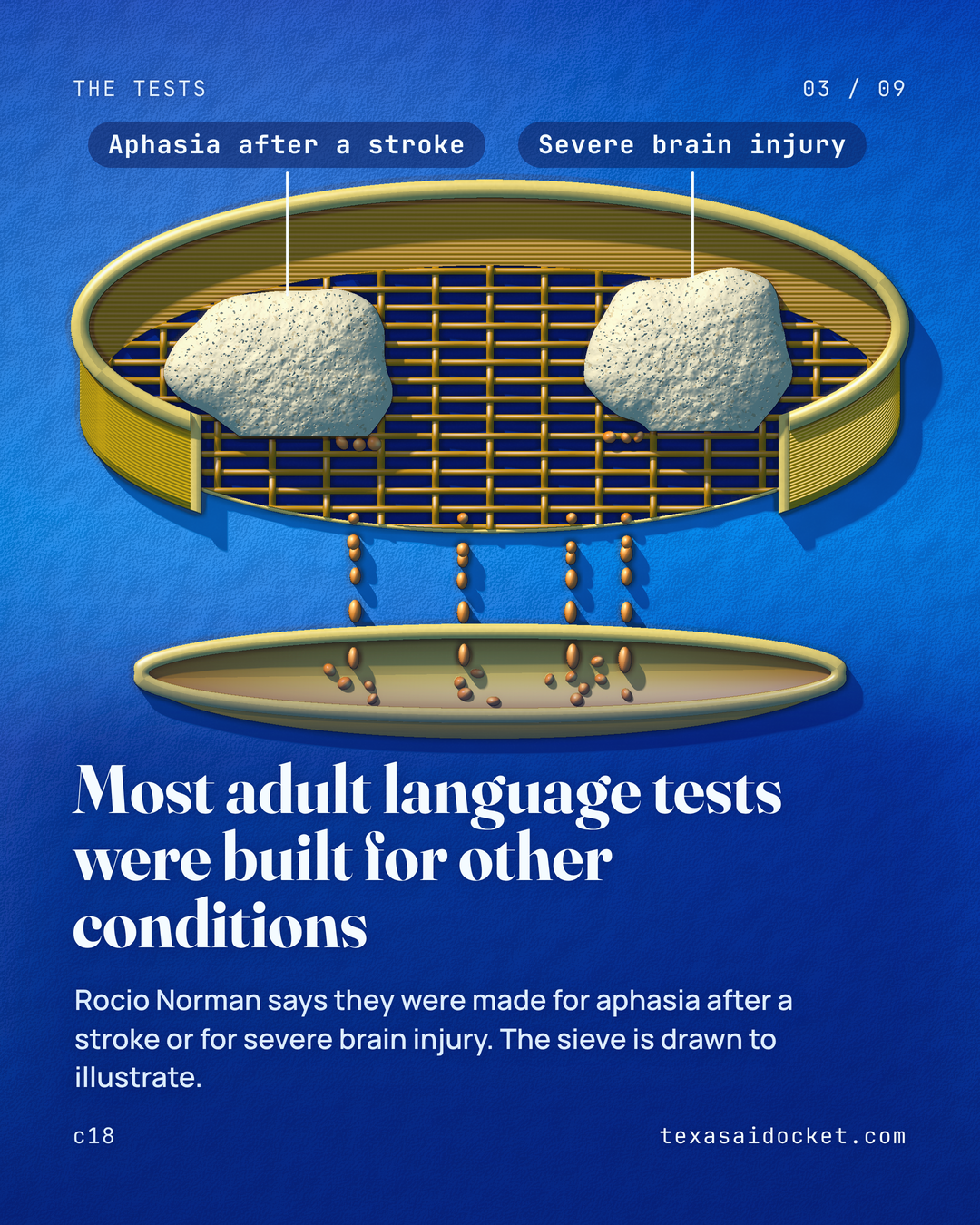
Norman says most adult language assessments were developed for people with aphasia after a stroke or for severe brain injury. She says the team hopes speech could become a biomarker for mild brain injury.
What the study will use
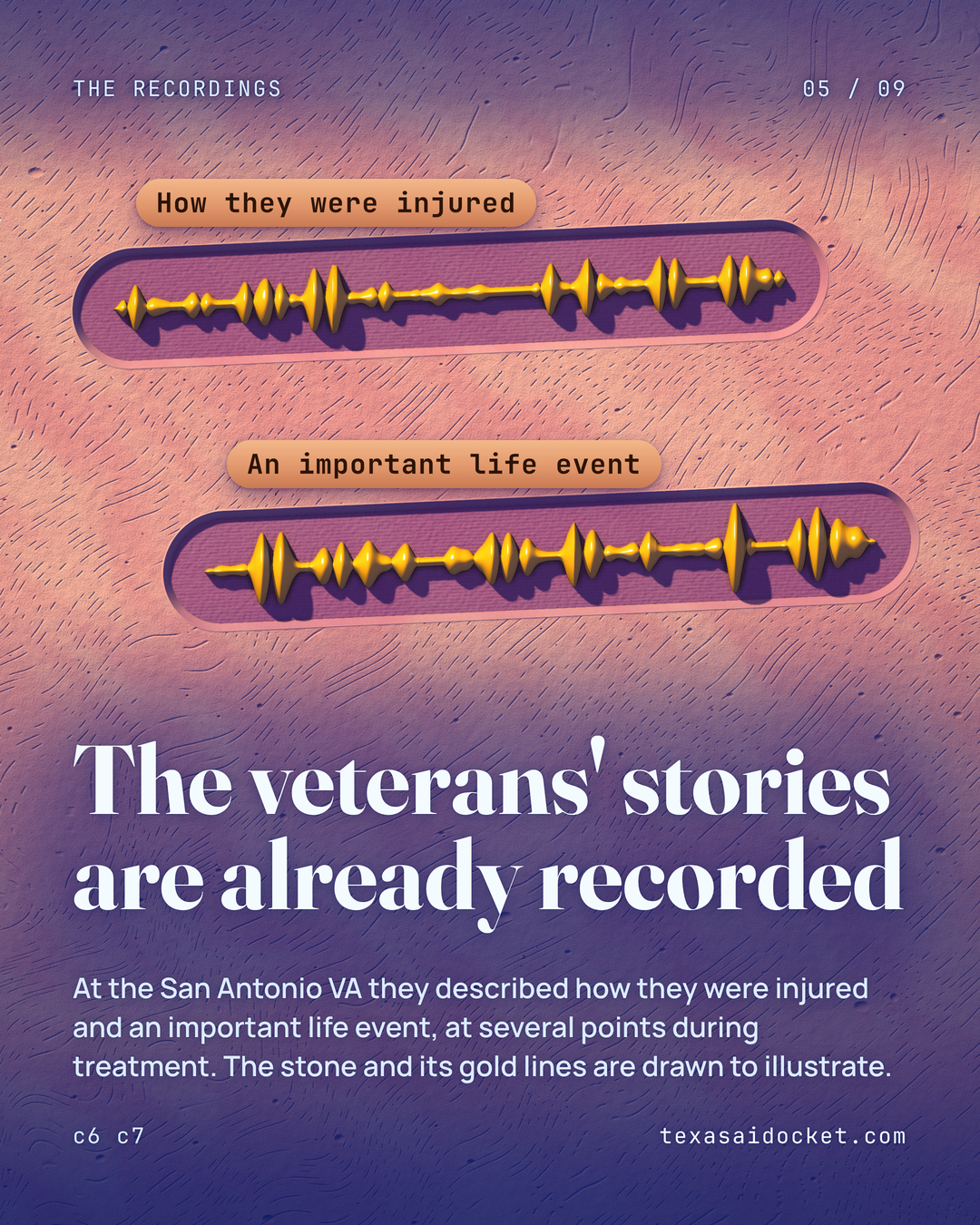
The study builds on recordings already collected at the San Antonio VA, in which veterans described how they were injured and recounted an important life event. The recordings were collected at several points during treatment.
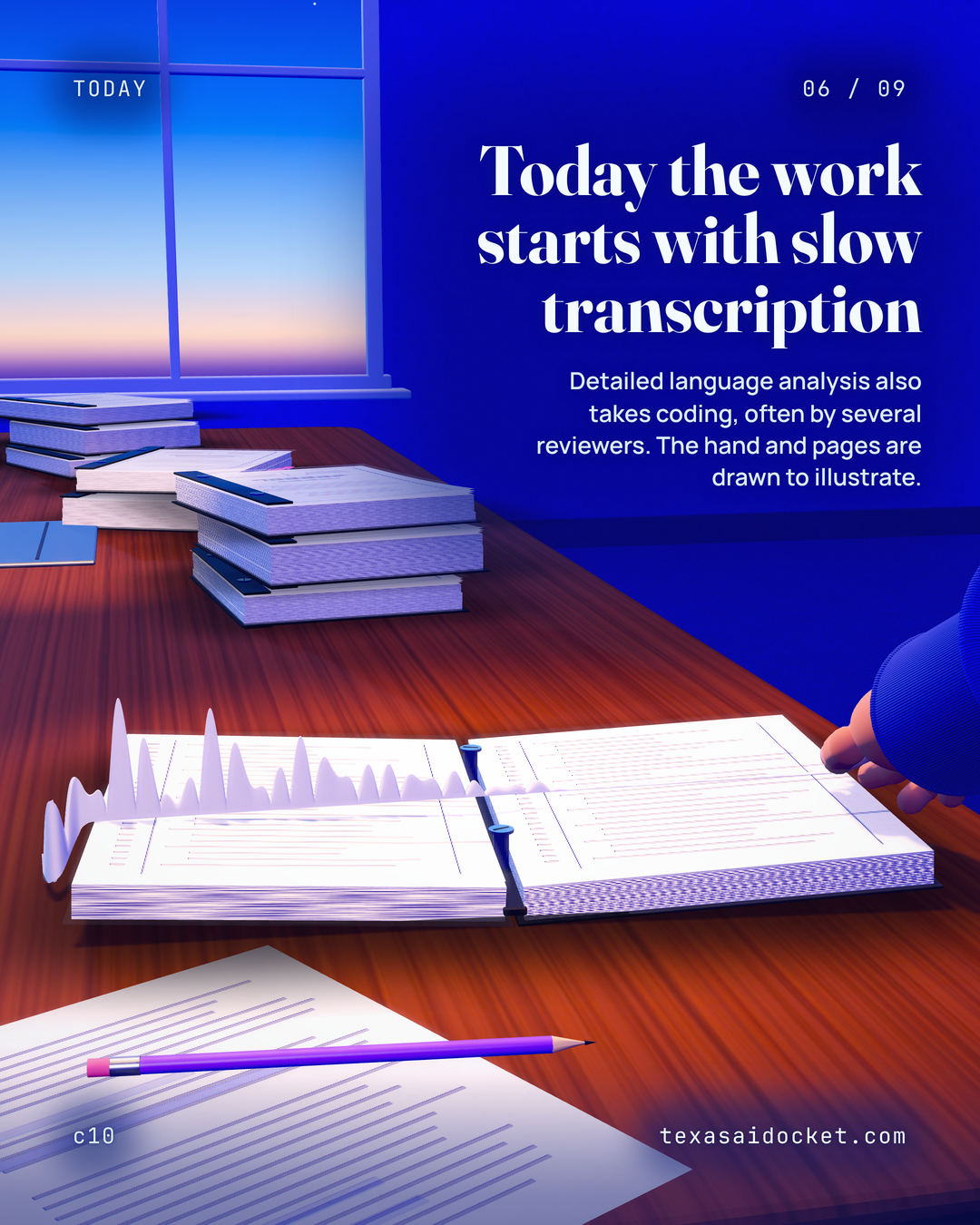
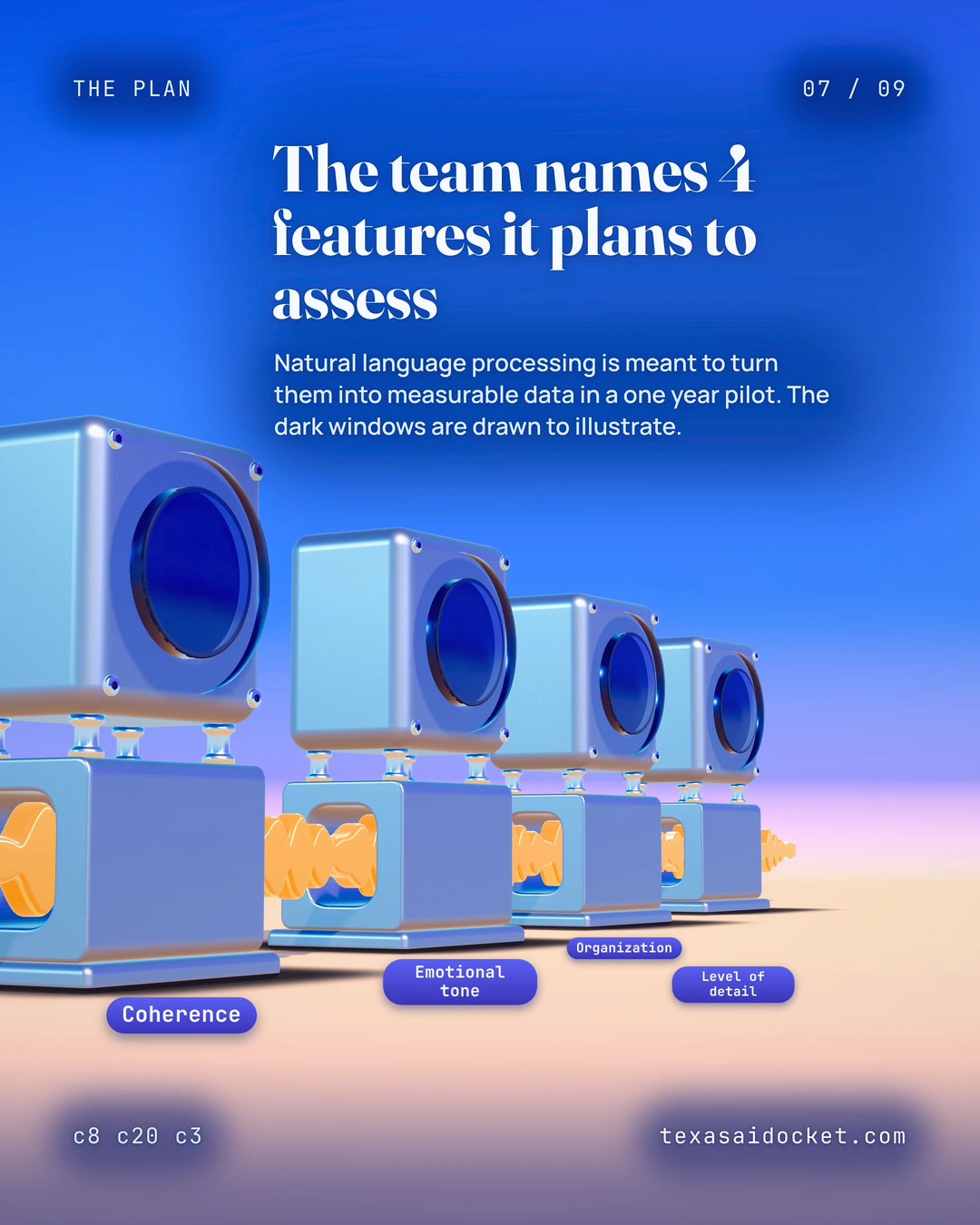
After transcription, the team plans to assess features such as coherence, emotional tone, organization and level of detail. Today detailed language analysis takes slow transcription and coding, often by several reviewers. An automated system could flag language features for a clinician to weigh alongside observations and standard assessments.
What it has not shown
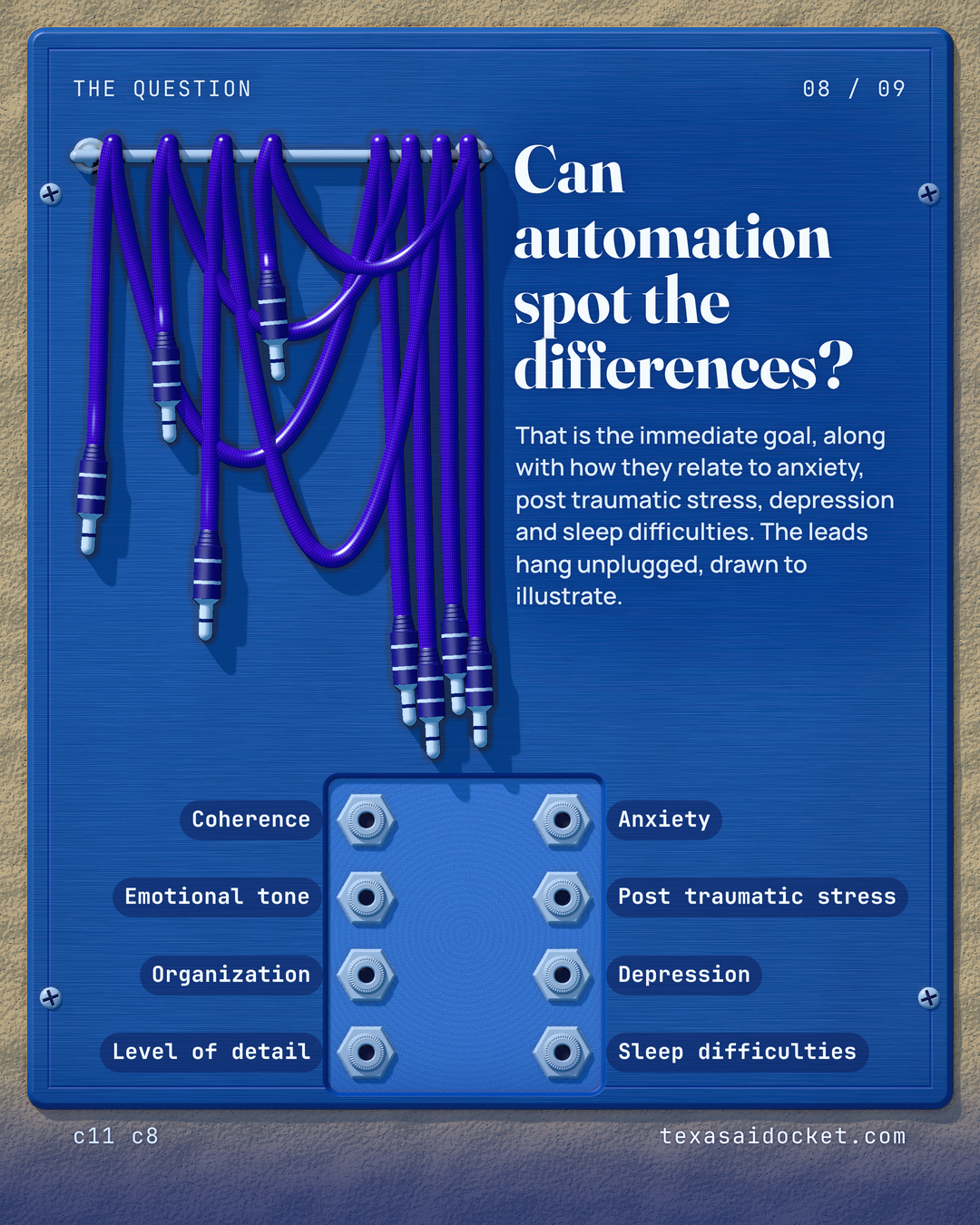
The immediate goal is to learn whether an automated method can objectively identify communication differences at all. The team also wants to know how those differences relate to anxiety, post traumatic stress, depression and sleep difficulties. The researchers say the technology is meant to support clinicians, not replace them.
The announcement reports no findings, no accuracy figure and no count of veterans in the recordings, and no clinic uses the tool. If the pilot produces meaningful findings, the team plans to seek larger federal grants.
Sources for this story
Claim-by-claim verification · 21 claims
A UT San Antonio research project aims to turn language into data that could help clinicians understand and treat cognitive and communication difficulties.
A new collaborative research project is bringing together researchers from The University of Texas at San Antonio with expertise in speech-language pathology, artificial intelligence and veteran care and rehabilitation to turn language into data that could help clinicians better understand, and ultimately treat, cognitive and communication difficulties.
The project received a $200,000 grant from the San Antonio Medical Foundation.
Alicia Swan, PhD, Vivian Ta-Johnson, PhD, and Rocio Norman, PhD, CCC-SLP, received a $200,000 collaborative grant from the San Antonio Medical Foundation.
It is a one year proof of concept study. It uses natural language processing to measure speech and language features linked to mild brain injury.
The one-year, proof-of-concept study will use natural language processing, a form of artificial intelligence, to analyze and measure speech and language patterns associated with mTBI, with the intention of creating a tool that would make language analysis practical during a routine clinic visit.
One of the three leads is Alicia Swan, director of rehabilitation research at the South Texas Veterans Health Care System.
Alicia Swan, PhD, an mTBI expert and director of rehabilitation research at the South Texas Veterans Health Care System within the Department of Veterans Affairs.
Rocio Norman is a speech language pathologist who has worked with veterans for 18 years.
For Norman, a speech-language pathologist who has worked with veterans for 18 years
The study draws on recordings already collected at the San Antonio VA, in which veterans described how they were injured and an important life event.
The study builds on data from a targeted auditory plasticity study that Norman leads at the San Antonio VA, where researchers have already collected recordings in which veterans described how they were injured and recounted an important life event.
The recordings were made at several points during treatment.
The recordings were collected at multiple points during treatment.
After transcription, the team plans to assess features such as coherence, emotional tone, organization and level of detail.
allowing the team to assess features such as coherence, emotional tone, organization and level of detail.
The researchers say the tool is meant to support clinicians and not replace them.
The researchers emphasize that the technology is intended to support clinicians, not replace them.
Today detailed language analysis takes slow transcription and coding, often by several reviewers.
Detailed language analysis currently requires time-consuming transcription and coding, often by multiple reviewers.
The immediate goal is to learn whether an automated method can objectively identify communication differences. It also asks how they relate to symptoms such as anxiety, post traumatic stress, depression and sleep difficulties.
the immediate goal is to determine whether an automated method can objectively identify communication differences and how those differences relate to neurobehavioral symptoms such as anxiety, post-traumatic stress, depression and sleep difficulties.
If the pilot finds something meaningful, the team plans to seek larger federal grants.
If the pilot produces meaningful findings, the team plans to seek larger federal grants
Norman says the team hopes speech could become a biomarker for mild brain injury.
We use the term ‘biomarker’ because we hope speech could become a biomarker for mild TBI.
The VA lists its Audie L. Murphy Memorial Veterans Hospital in San Antonio at ZIP code 78229.
San Antonio, TX 78229-4404
Census Bureau records place ZIP Code Tabulation Area 78229 in Bexar County.
221704258477524|78229|ZCTA5 78229|14973958|22716|G6350|B5|S|27590475823262|48029|Bexar County|3212413223|40802184|G4020|H1|A|14973958|22716
Many veterans Norman treated reported trouble finding words, organizing thoughts or keeping up in fast or noisy conversations, even when standard tests showed no clear impairment.
Many reported difficulty finding words, organizing their thoughts or keeping up in fast-moving or noisy conversations, even when standard assessments did not show a clear impairment.
Norman says people with brain injury still have words and their grammar generally remains intact.
They still have words, and grammar generally remains intact
Norman says most adult language assessments were built for people with aphasia after a stroke or for severe brain injury.
Norman said most adult language assessments were developed for people with aphasia — a language disorder affecting communication — following a stroke or individuals with severe brain injury.
An automated system could flag language features for a clinician to weigh alongside observations and standard assessments, and could save the clinician time.
An automated system could flag patterns for a clinician to consider alongside observations and standard assessments, while also saving valuable time for the clinician.
Ta-Johnson says natural language processing offers a way to turn features of language into measurable data.
Natural language processing gives us a way to turn patterns in language into measurable data.
The team hopes to make language analysis practical during a routine clinic visit.
with the intention of creating a tool that would make language analysis practical during a routine clinic visit