Articles · Research
UT Arlington is designing an AI trap meant to keep wild screwworm flies and free the sterile ones, in a $3.1 million USDA project that runs through June 2028
UT Arlington is designing an AI trap meant to keep wild screwworm flies and free the sterile ones. The trap isn't built yet. A prototype is expected next spring.
Read the story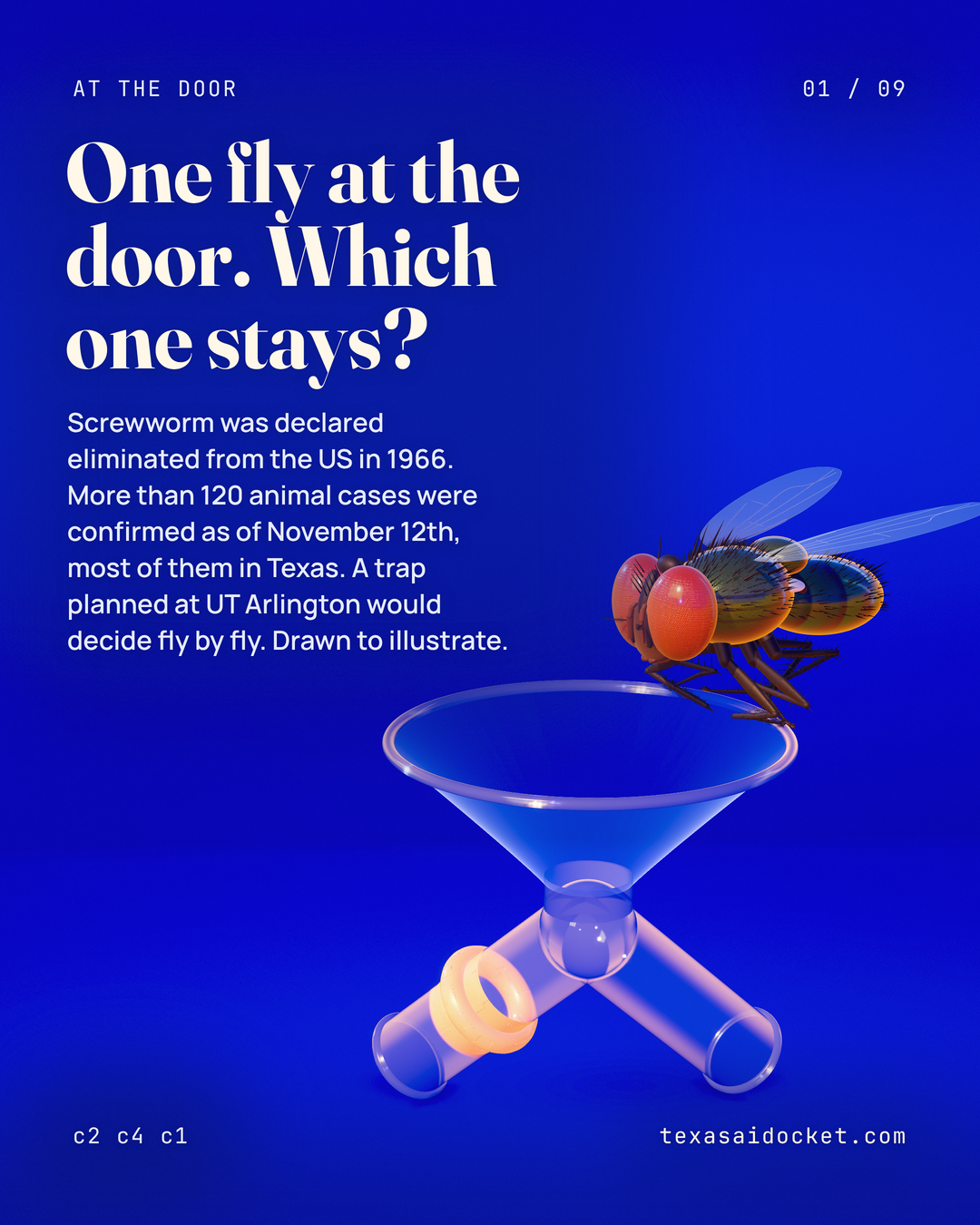
UT Arlington is coordinating a $3.1 million project funded by the U.S. Department of Agriculture to stop the spread of New World screwworm. The parasite threatens livestock across Texas and other states. The parasite was declared eliminated from the United States in 1966 and has reemerged. More than 120 confirmed animal cases were reported as of November 12th, most of them in Texas, according to the USDA case dashboard UT Arlington cites.
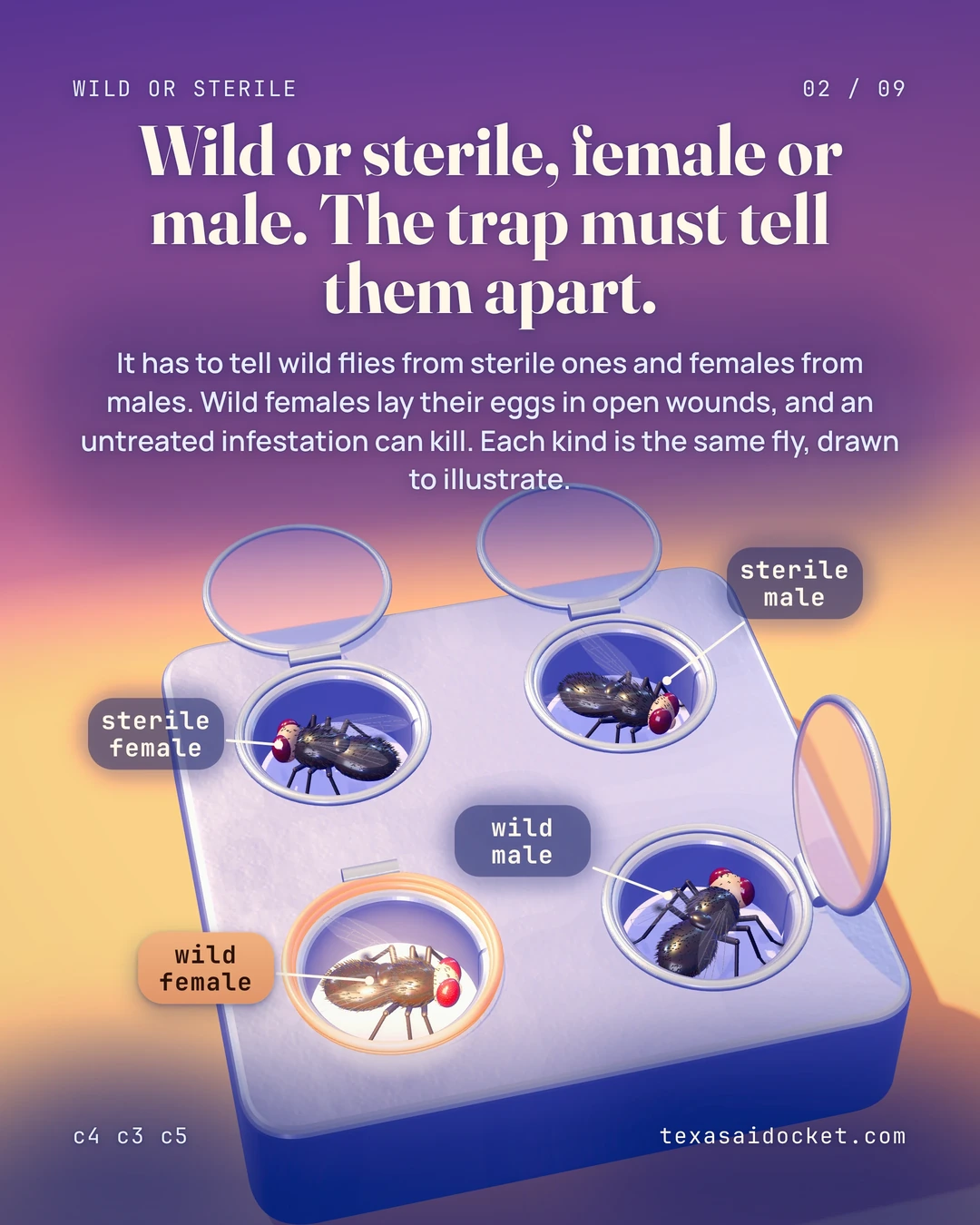
Female screwworm flies lay eggs in open wounds, and untreated infestations can be fatal. The center of the project is an AI powered smart trap meant to tell wild flies from sterile ones and females from males.
One door or two
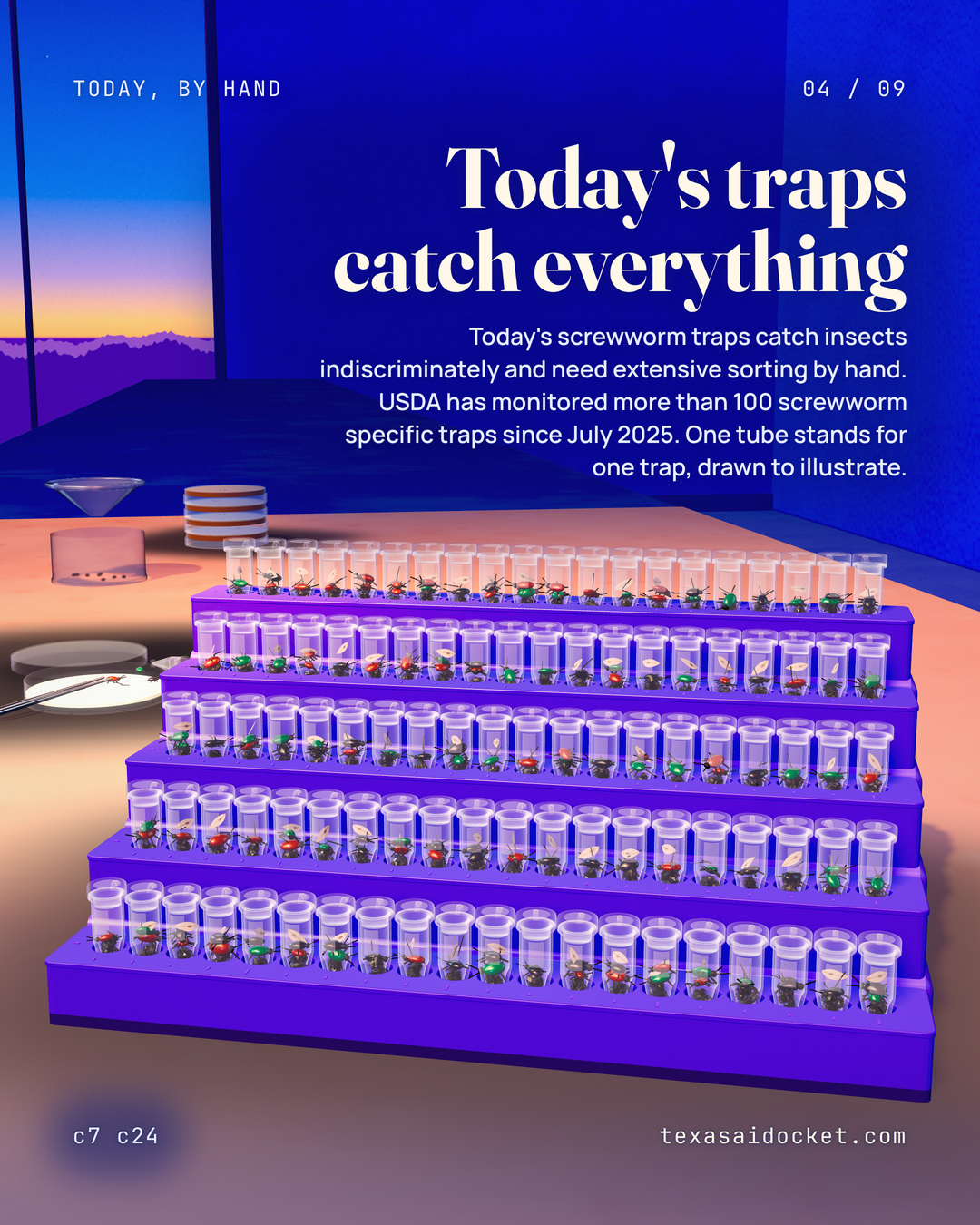
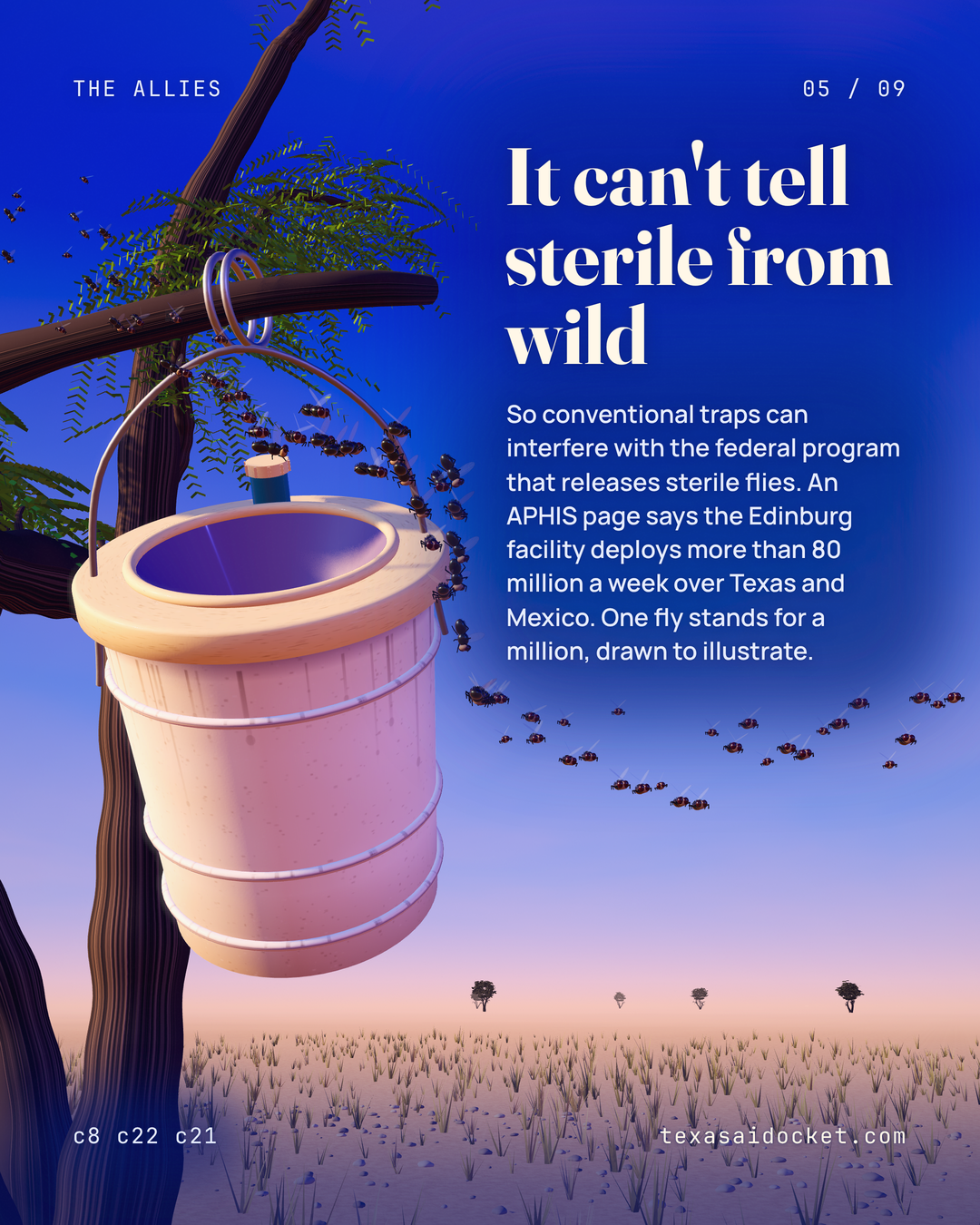
Today's screwworm traps capture insects indiscriminately and need extensive sorting by hand, which delays confirming the parasite is present. They can also interfere with the federal program that releases sterile flies to suppress wild populations, because they can't tell sterile flies from wild ones. USDA has monitored more than 100 screwworm specific traps since July 2025.
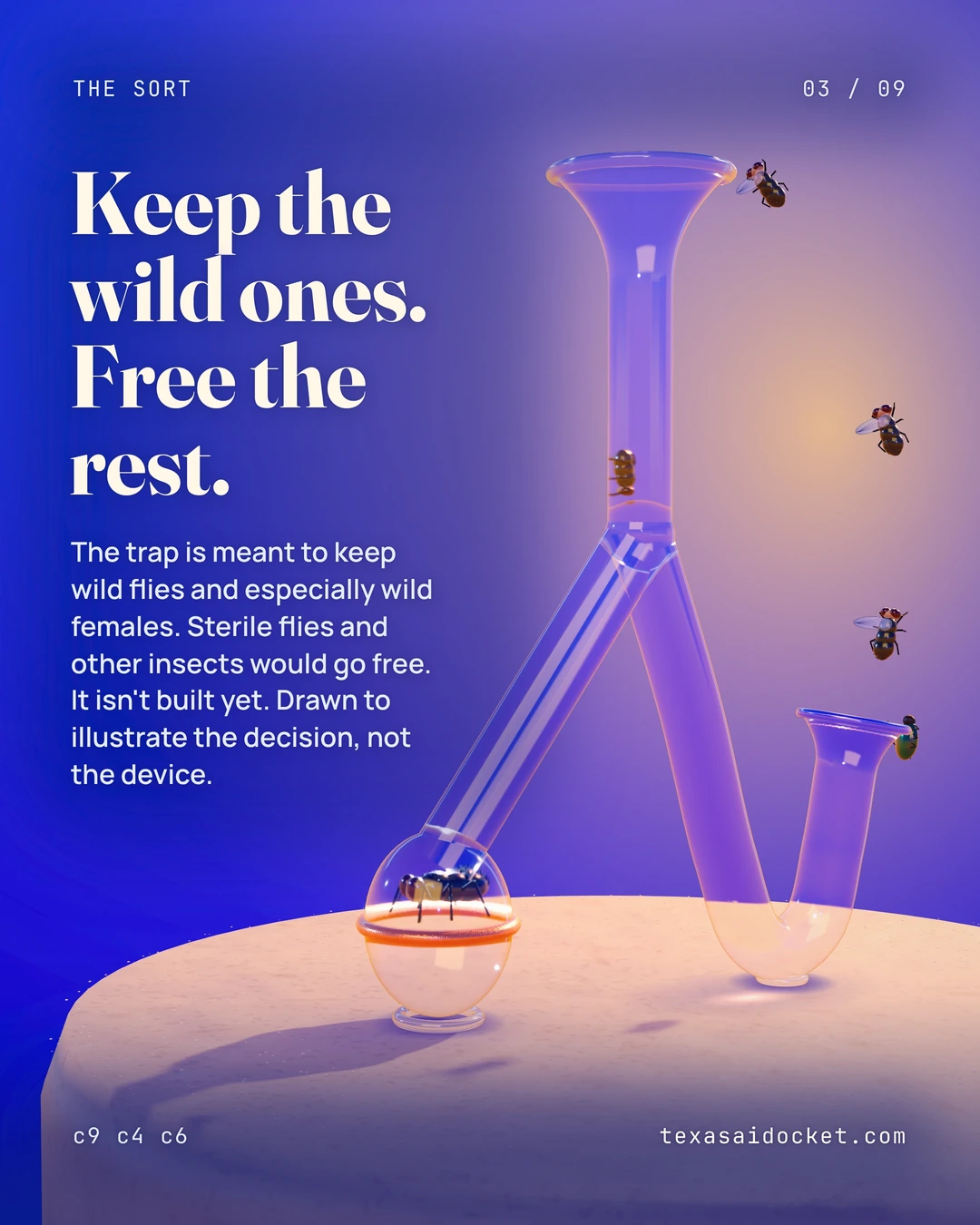
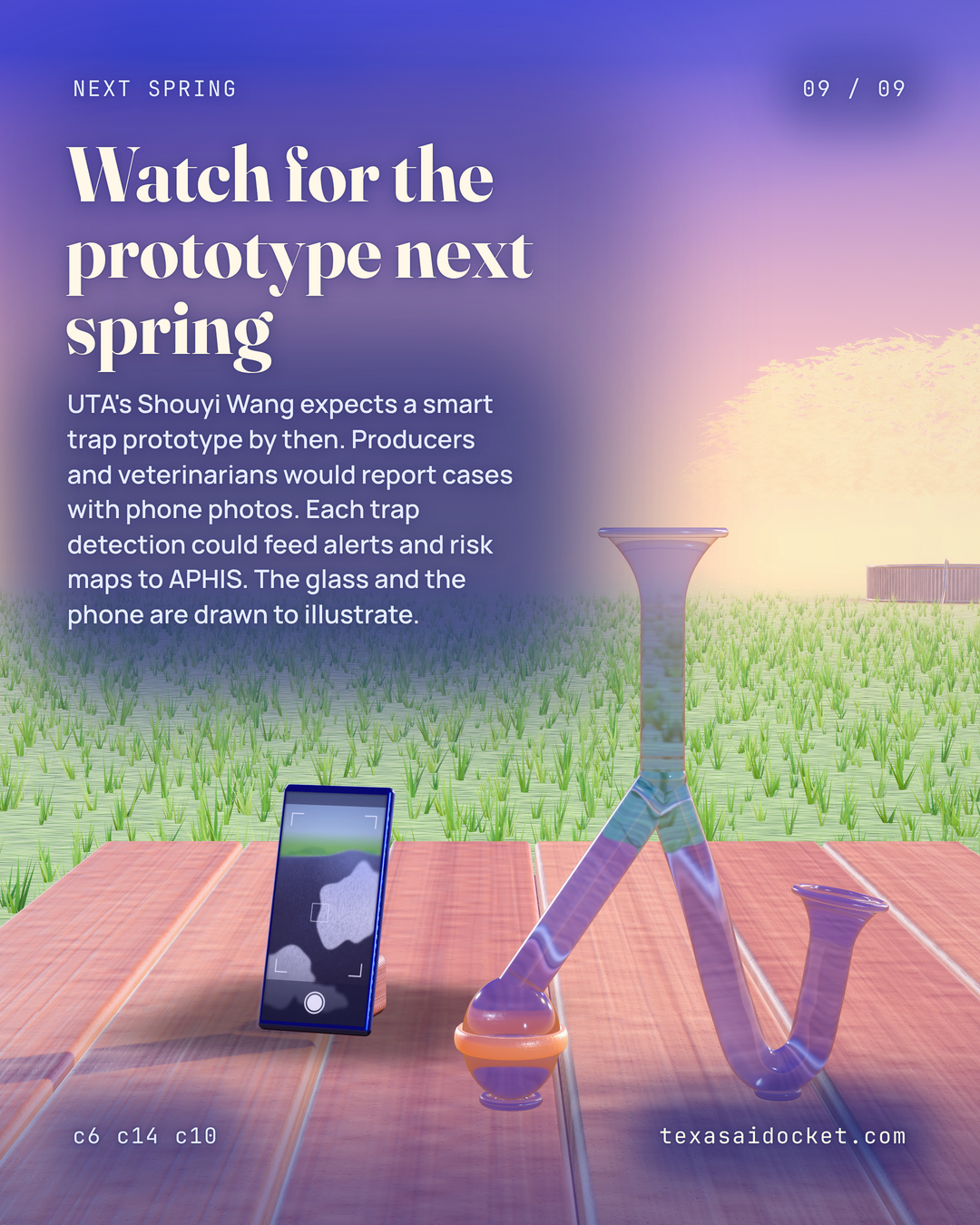
The planned trap is designed to keep wild flies, especially the females, and release sterile flies and other insects back into the environment. Wild females are the target because they produce the larvae. Each detection could feed alerts, location tracking and risk maps to USDA's Animal and Plant Health Inspection Service, and producers and veterinarians would report cases with smartphone photos.
The machine already in the air
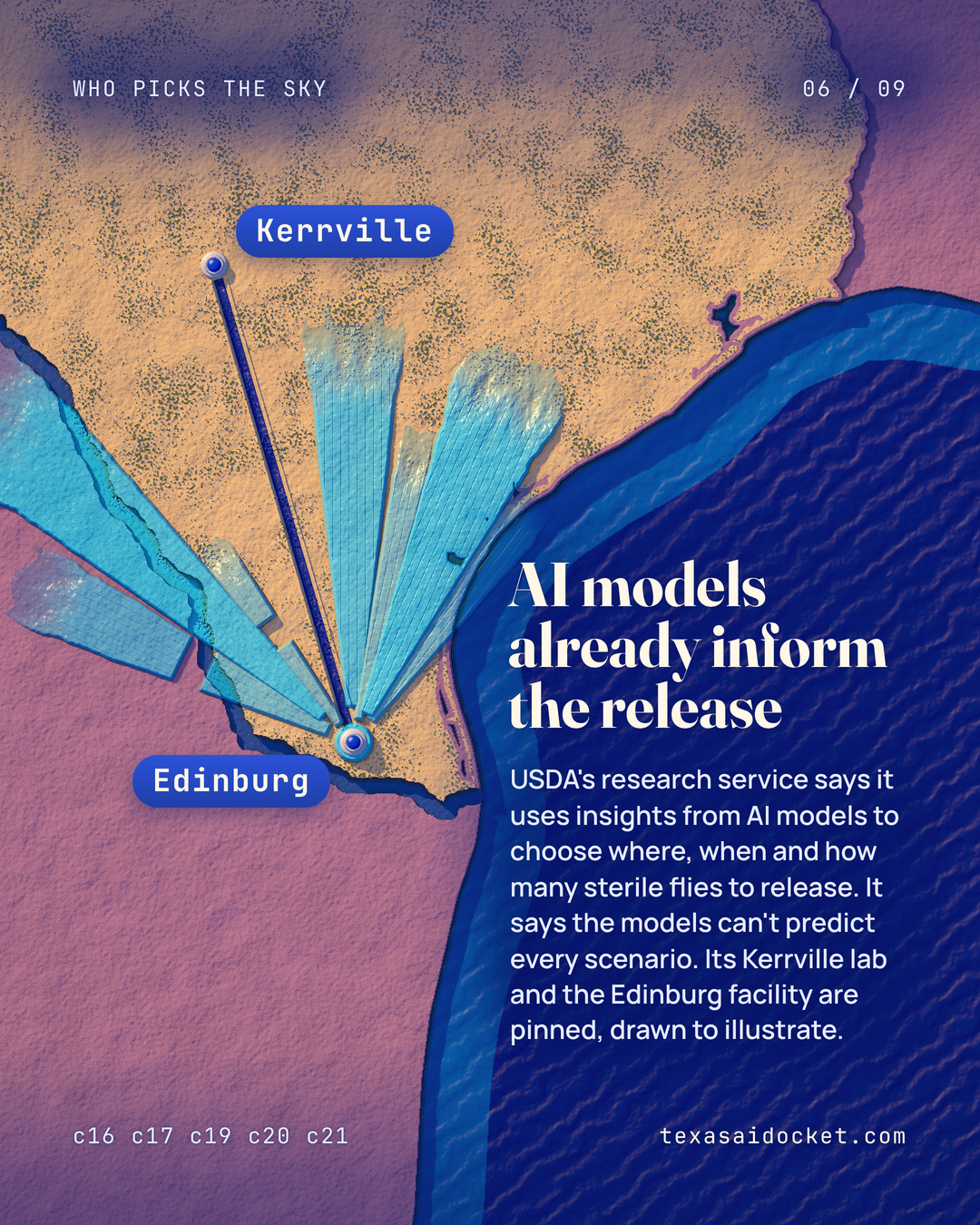
An APHIS page says the $8.5 million facility at Moore Air Force Base in Edinburg deploys more than 80 million sterile flies a week over Texas and Mexico. USDA developed a strain that yields only male flies for those releases. Its research service says AI models already help choose where, when and how many sterile flies to release, work led from its Knipling-Bushland laboratory in Kerrville. The service also says those models can't predict every scenario.
What exists today
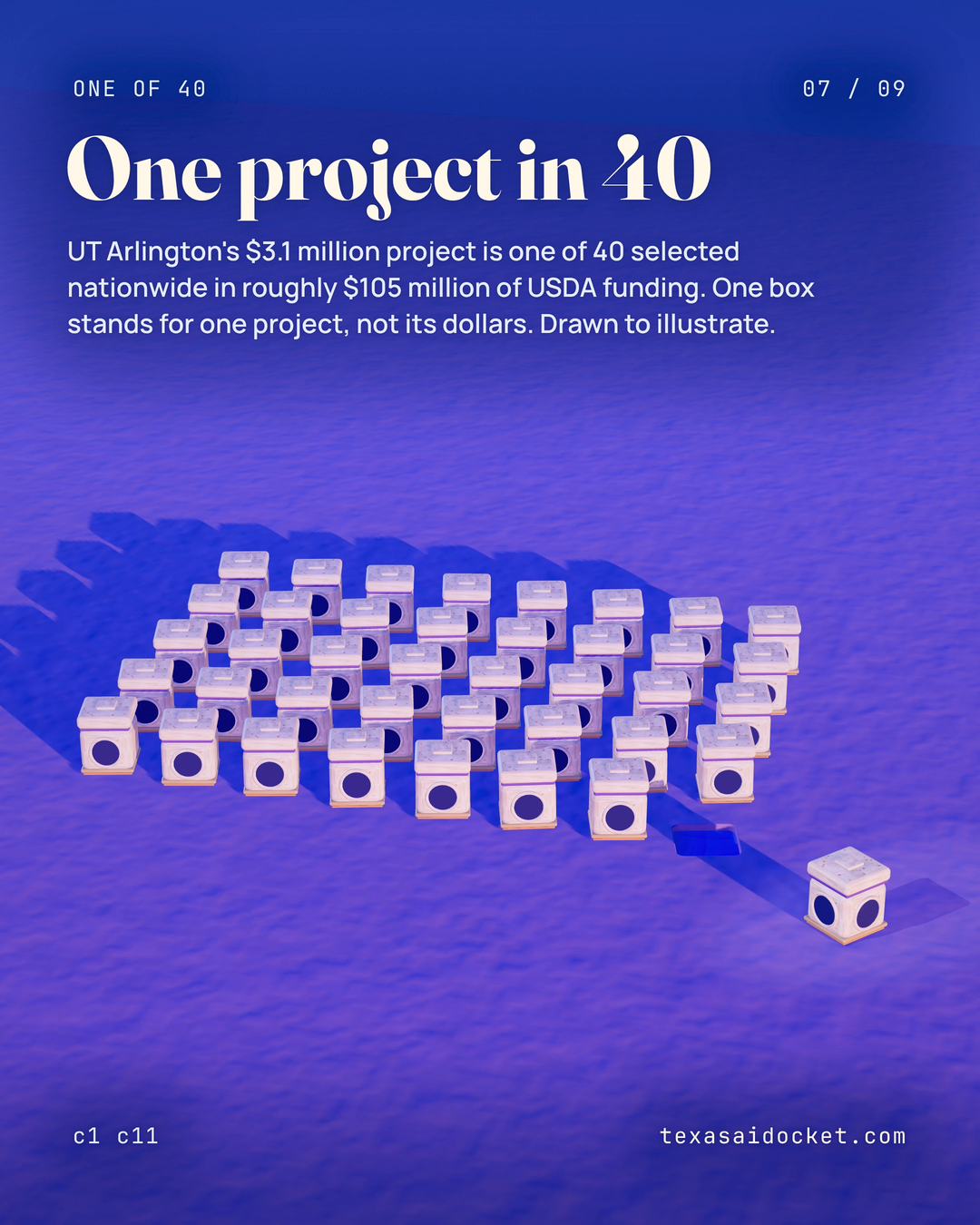
The smart trap is still in development. It builds on fruit fly trap research by UT Arlington associate professor Shouyi Wang. Wang expects a prototype by next spring. The project runs through June 2028,. Fieldwork takes place in Texas, other states and affected regions of Mexico. It is one of 40 projects selected nationwide in roughly $105 million of USDA funding.
By the end of the project, UT Arlington aims to deliver a field tested system to APHIS. No accuracy figure, field result or catch count exists yet. No trap has been built to produce one.
Sources for this story
- University of Texas at Arlington News Center, UTA leads fight against screwworm, November 12th, 2026
- USDA Agricultural Research Service, Tracking the Path of New World Screwworm, 2026
- USDA APHIS, New World Screwworm Response, 2026
Claim-by-claim verification · 24 claims
UT Arlington is coordinating a $3.1 million USDA funded project to stop the spread of New World screwworm, a parasite threatening livestock across Texas and other states.
The University of Texas at Arlington is coordinating a $3.1 million project funded by the U.S. Department of Agriculture to stop the spread of New World screwworm, a flesh-eating parasite threatening livestock across Texas and other states.
Screwworm was declared eliminated from the United States in 1966 and has reemerged. More than 120 confirmed animal cases were reported as of November 12th, most of them in Texas, per the USDA case dashboard.
New World screwworm was declared eliminated from the United States in 1966 but has recently reemerged, with more than 120 confirmed animal cases reported as of Nov. 12, most of them in Texas, according to the USDA's case dashboard.
Female screwworm flies lay eggs in open wounds, and untreated infestations can be fatal.
Female screwworm flies lay eggs in open wounds or mucous membranes of warm-blooded animals; left untreated, the resulting infestations can be fatal.
The center of the project is an AI powered smart trap meant to tell wild screwworm flies from sterile ones and females from males.
At the center of the project is an AI-powered "smart trap" capable of distinguishing wild screwworm flies from sterile ones and females from males.
The trap is meant to capture wild females selectively, because they produce the larvae.
Because wild female flies are responsible for producing the destructive larvae, the trap selectively captures them, allowing for earlier detection of potential outbreaks.
Shouyi Wang, a UTA associate professor, expects a smart trap prototype by next spring.
The technology builds on previous AI-based fruit fly trap research by Shouyi Wang, a UTA associate professor, who expects to have a smart-trap prototype ready by next spring.
Current traps capture insects indiscriminately and need extensive manual sorting.
Current screwworm traps capture insects indiscriminately, requiring extensive manual sorting and delaying confirmation of the screwworm’s presence.
Conventional traps can interfere with the federal sterile fly program because they can't tell sterile flies from wild ones.
They can also interfere with a federal program that releases sterile flies to suppress wild screwworm populations because conventional traps cannot distinguish sterile flies from wild ones.
Wang says the trap is designed to keep wild flies, especially females, and release sterile flies and other insects.
The smart trap is designed to recognize and selectively retain targeted wild screwworm flies, especially high-risk females, while releasing sterile flies and non-target insects back into the environment.
Wang says each detection can feed alerts, tracking and risk maps to USDA's Animal and Plant Health Inspection Service.
Connected through a smart-trap network, each detection can feed real-time alerts, location-based tracking and predictive risk maps that provide the USDA’s Animal and Plant Health Inspection Service (APHIS) with timely, actionable information for faster, more targeted responses.
The UTA project was one of 40 selected nationwide in roughly $105 million of USDA funding.
UTA's project was one of 40 selected nationwide as part of roughly $105 million in USDA funding.
The project runs through June 2028, with fieldwork across several states including Texas and in affected regions of Mexico.
The project runs through June 2028, with fieldwork taking place across multiple states, including Texas, and in affected regions of Mexico.
UTA's Smart Agriculture Research Center leads the project, and its associate director says it aims to build real time surveillance and AI diagnostic tools.
“Our project aims to develop a real-time surveillance system and AI-enabled on-site diagnostic tools to support producers, veterinary practitioners and government agencies,” said Prasanna Gowda, research professor and associate director of UTA’s Smart Agriculture Research Center (SARC), which leads the project.
Producers and veterinarians would report cases with smartphone images, Gowda says.
Our proposed AI-enabled diagnostic tools will not only allow producers and veterinary practitioners to identify infections faster but also enable them to report directly to our real-time surveillance system with high-resolution images captured on their smartphones.
By the end of the project UTA aims to deliver a field tested system to APHIS.
By the end of the project, UTA aims to deliver a complete field-tested system to APHIS for ongoing use in nationwide screwworm surveillance and response.
USDA's research service says its predictive models for New World screwworm use advanced analytic tools and artificial intelligence.
Predictive models use advanced analytic tools and artificial intelligence (AI) to interpret ecological, environmental, and historical information
USDA says it uses the models to choose where, when and how many sterile flies to release.
USDA uses insights from the models to identify optimal locations, timing, and the number of sterile flies to release
USDA's research service says the models are already used to pick areas for more livestock and wildlife surveillance.
are already being utilized to select areas for increased livestock and wildlife surveillance
The modeling work comes from USDA's Knipling-Bushland Livestock Insects Research Laboratory in Kerrville, directed by Kim Lohmeyer.
Kim Lohmeyer, Director of the ARS Knipling-Bushland Livestock Insects Research Laboratory in Kerrville, TX
USDA's research service says the models can't predict every scenario.
these models cannot predict every scenario, especially those impacted by unpredictable variables
USDA has built a sterile fly dispersal facility at Moore Air Force Base in Edinburg.
USDA has completed construction of a domestic sterile fly dispersal facility at Moore Air Force Base in Edinburg, Texas
An APHIS page says the $8.5 million facility deploys more than 80 million sterile flies per week over Texas and Mexico.
This $8.5 million facility is now used to deploy more than 80 million sterile flies per week over Texas and Mexico.
USDA developed a screwworm strain that yields only males for the sterile fly releases.
USDA developed a new strain of New World screwworm that yields only male screwworms for use in the sterile insect dispersal
Since July 2025 USDA has monitored more than 100 screwworm specific traps.
Since July 2025, USDA has been actively monitoring more than 100 NWS-specific traps