Articles · Defense and federal
DARPA's Triage Challenge finals at TEEX's Disaster City in College Station tested drones and ground robots that find simulated casualties for human medics
Drones and ground robots triaged simulated casualties beside human medics at Disaster City in College Station. DARPA's director called the result not enough.
Read the story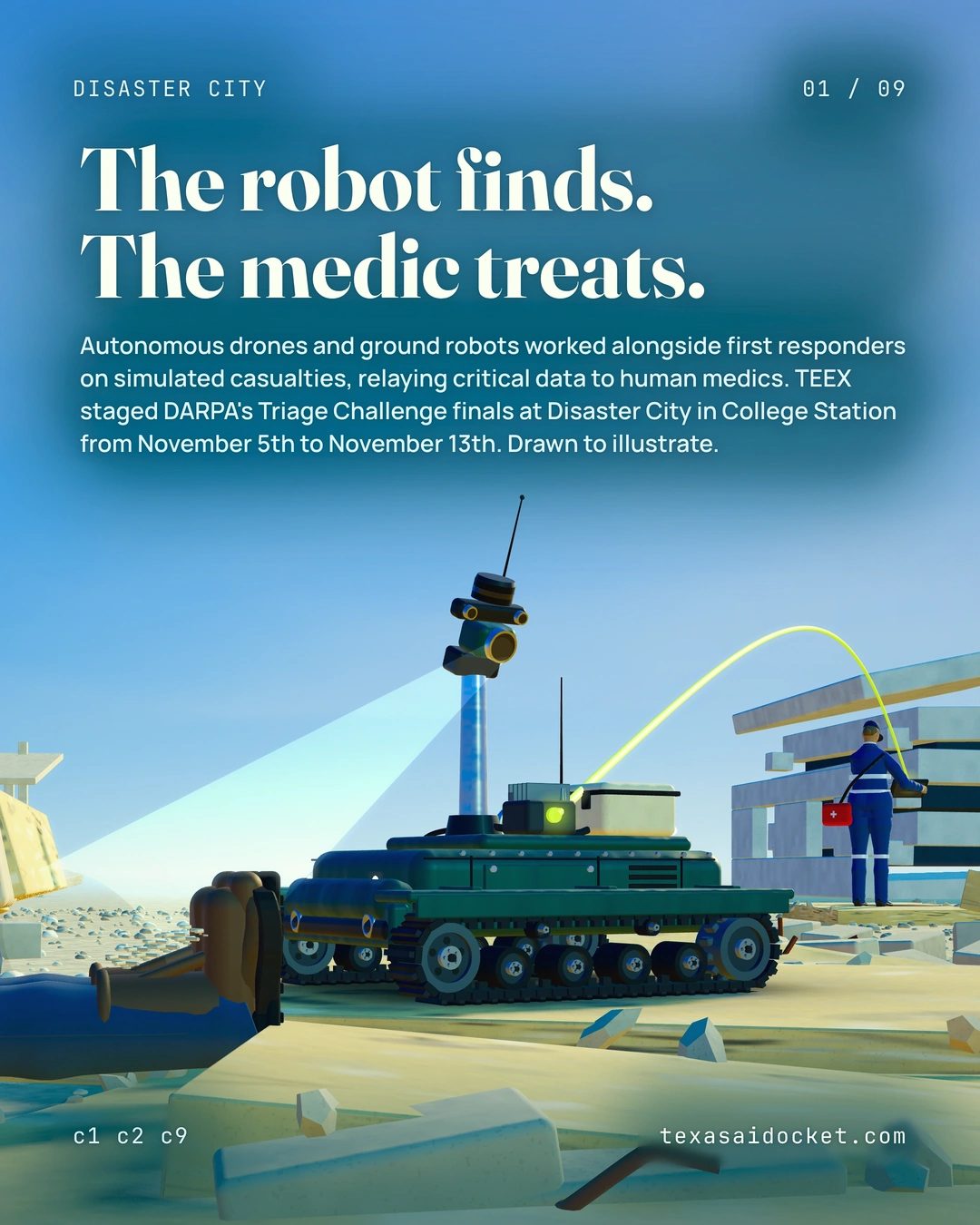
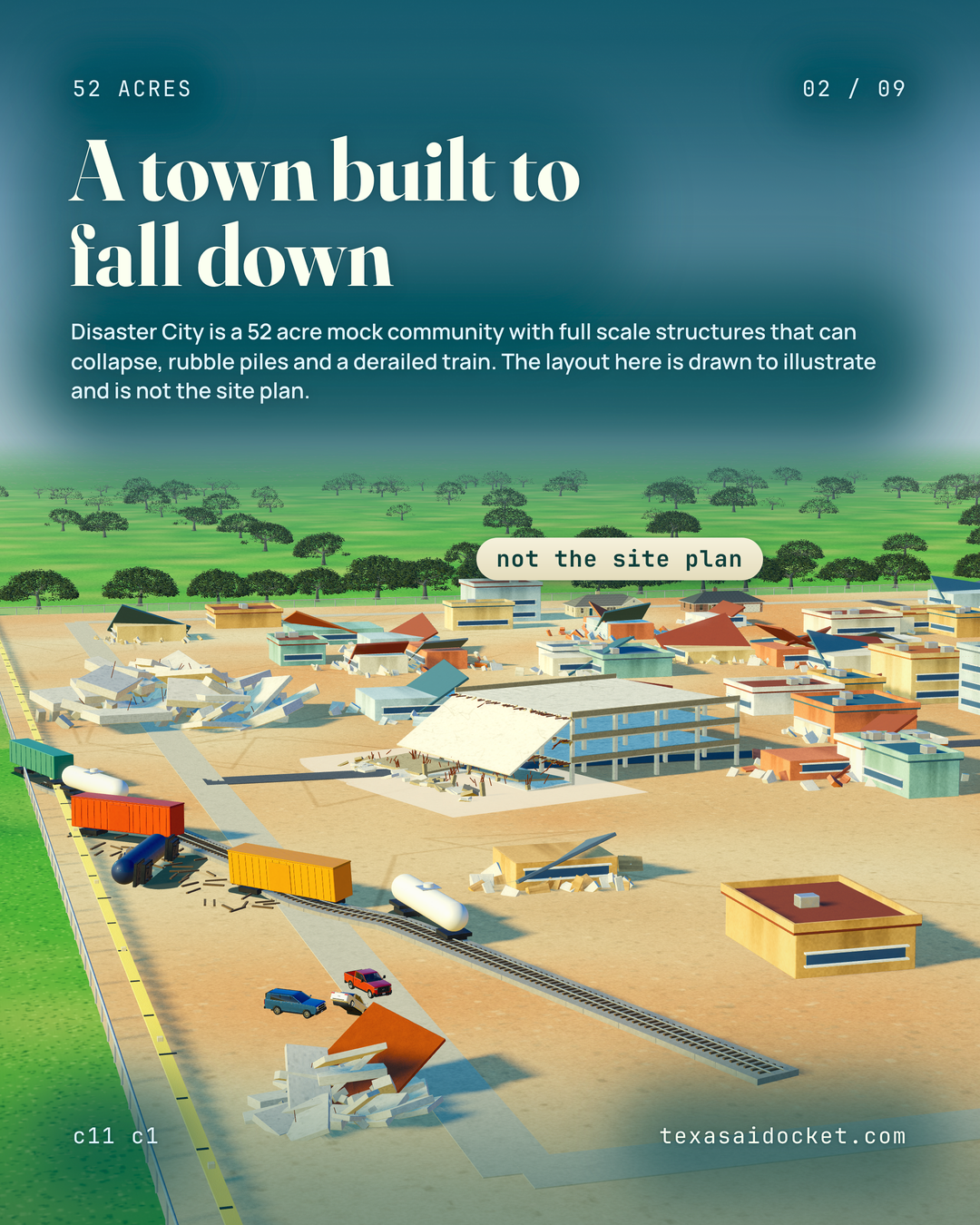
TEEX staged the finals of DARPA's Triage Challenge at Disaster City in College Station from November 5th to November 13th. Disaster City is a 52 acre mock community with full scale structures that can collapse, rubble piles and a derailed train.
Autonomous drones and ground robots worked alongside first responders there. They triaged simulated mass casualty incidents and relayed critical data to human medics. The challenge seeks autonomous systems such as drones and robots that can assess injuries quickly, accurately and at scale.
What the machines had to do
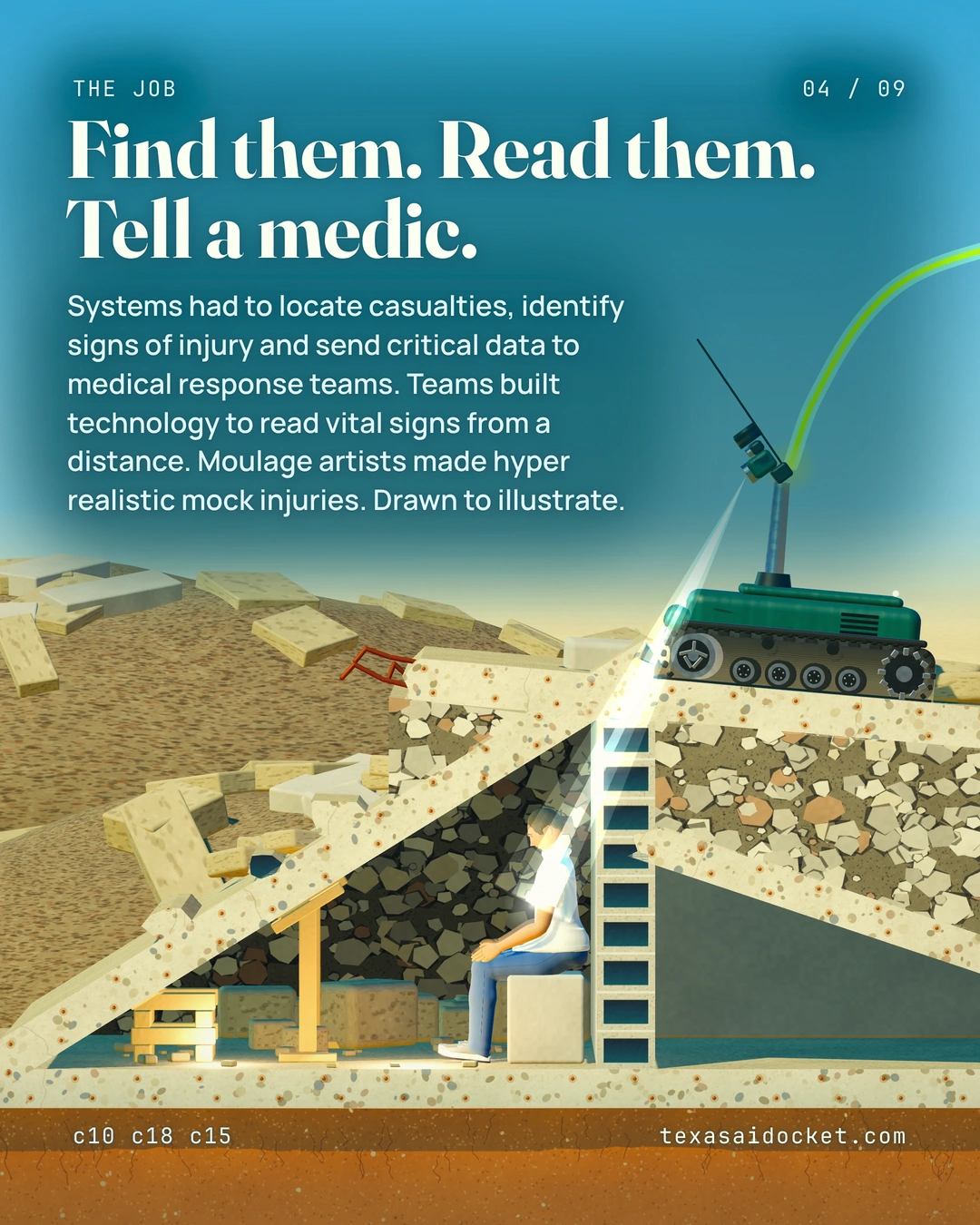
Competitors had to show their systems could locate casualties, identify signs of injury and send critical data to medical response teams. Teams built technology to read vital signs from a distance and work alongside human medics. The program page says teams developed algorithms, aerial drones and ground vehicles meant to work with the medics who give hands on care. Neither DARPA's account of the finals, its program page nor TEEX's account calls these systems artificial intelligence.
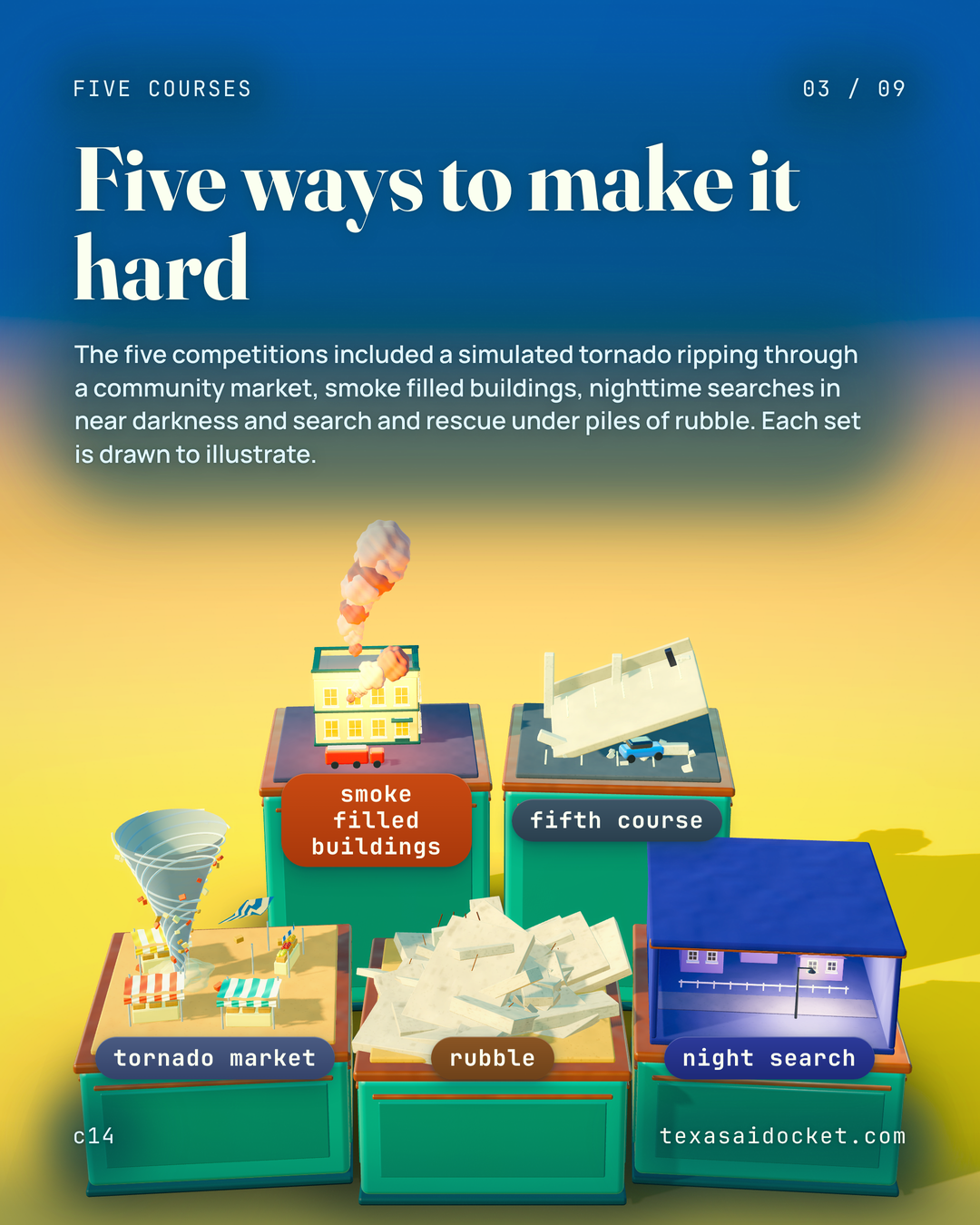
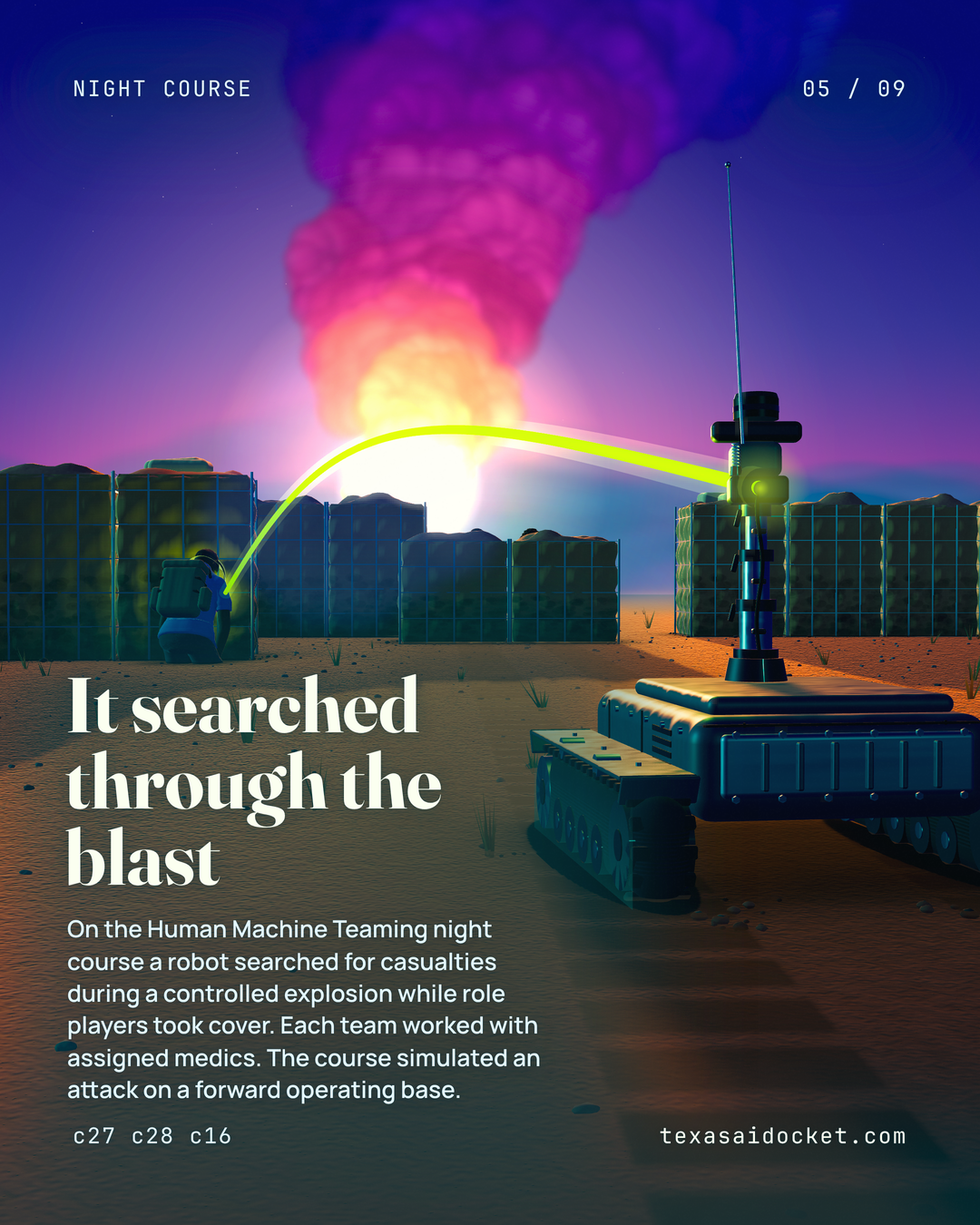
The competitions included a simulated tornado ripping through a community market, smoke filled buildings, nighttime searches in near darkness and search and rescue under rubble. On the Human Machine Teaming night course a robot searched for casualties during a controlled explosion while role players took cover. That course simulated an attack on a forward operating base. Each team worked with assigned medics on it.
Moulage artists made hyper realistic mock injuries. Actors playing civilians moved through nearly a dozen timed preparation stations. DARPA's command post checked every mock casualty report against each patient's simulated injuries and vital signs.
Who won
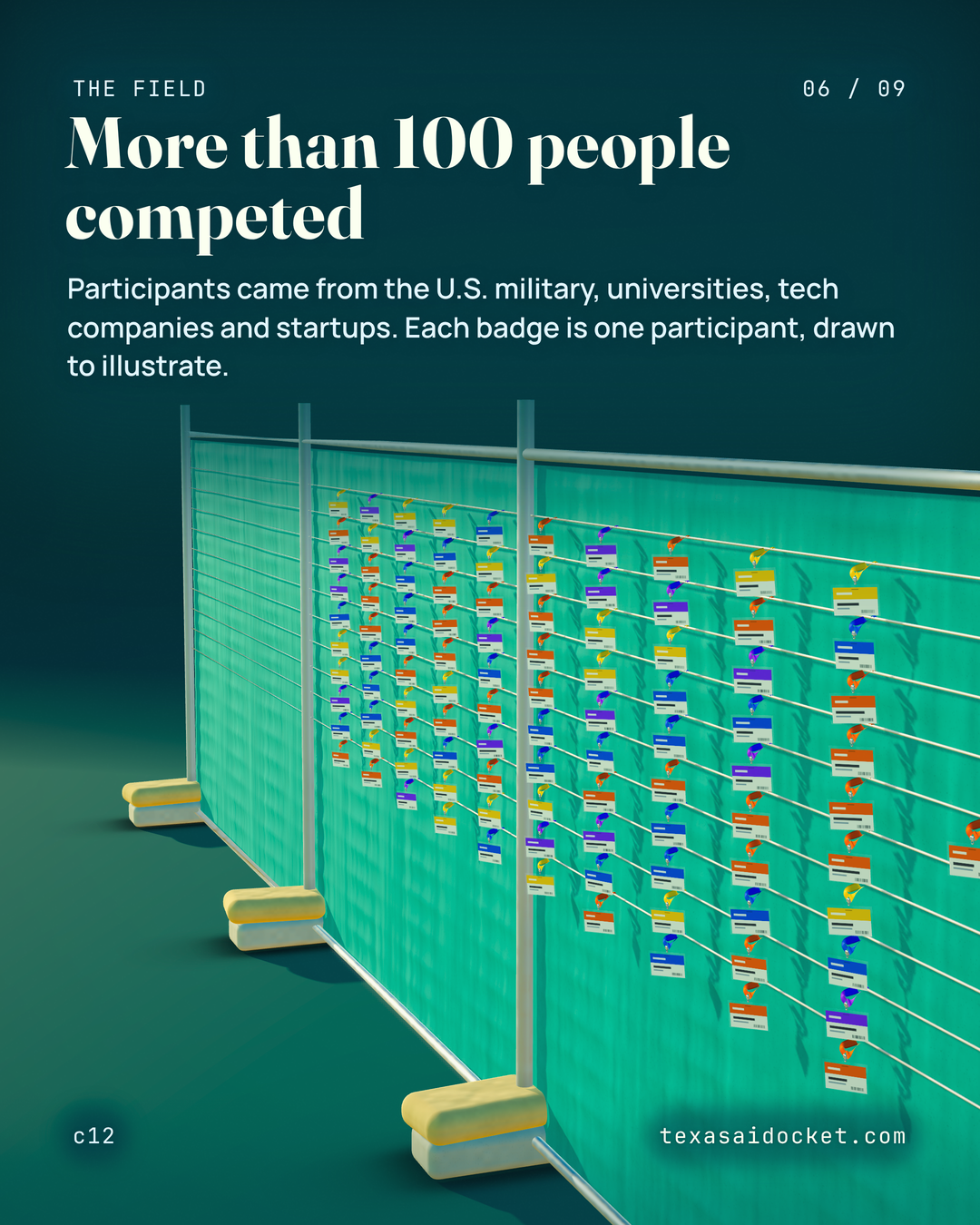
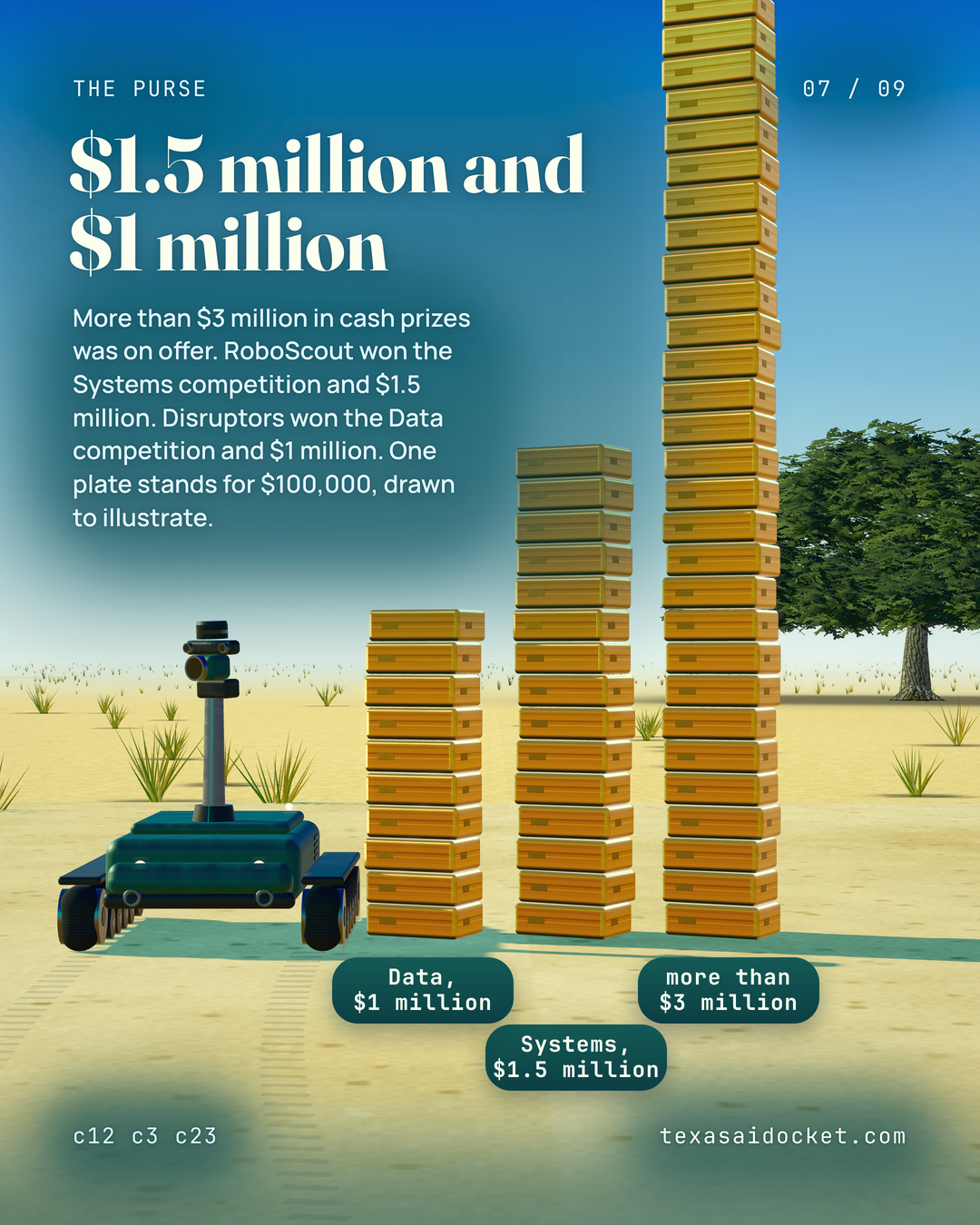
More than 100 participants from the military, universities, tech companies and startups competed for more than $3 in cash prizes. RoboScout won the Systems competition and Disruptors won the Data competition. DARPA lists the prize amounts in its account of the finals. A self funded two person team from Hawaii, called DRONE, placed second in the first trials.
Why the director said it is not enough
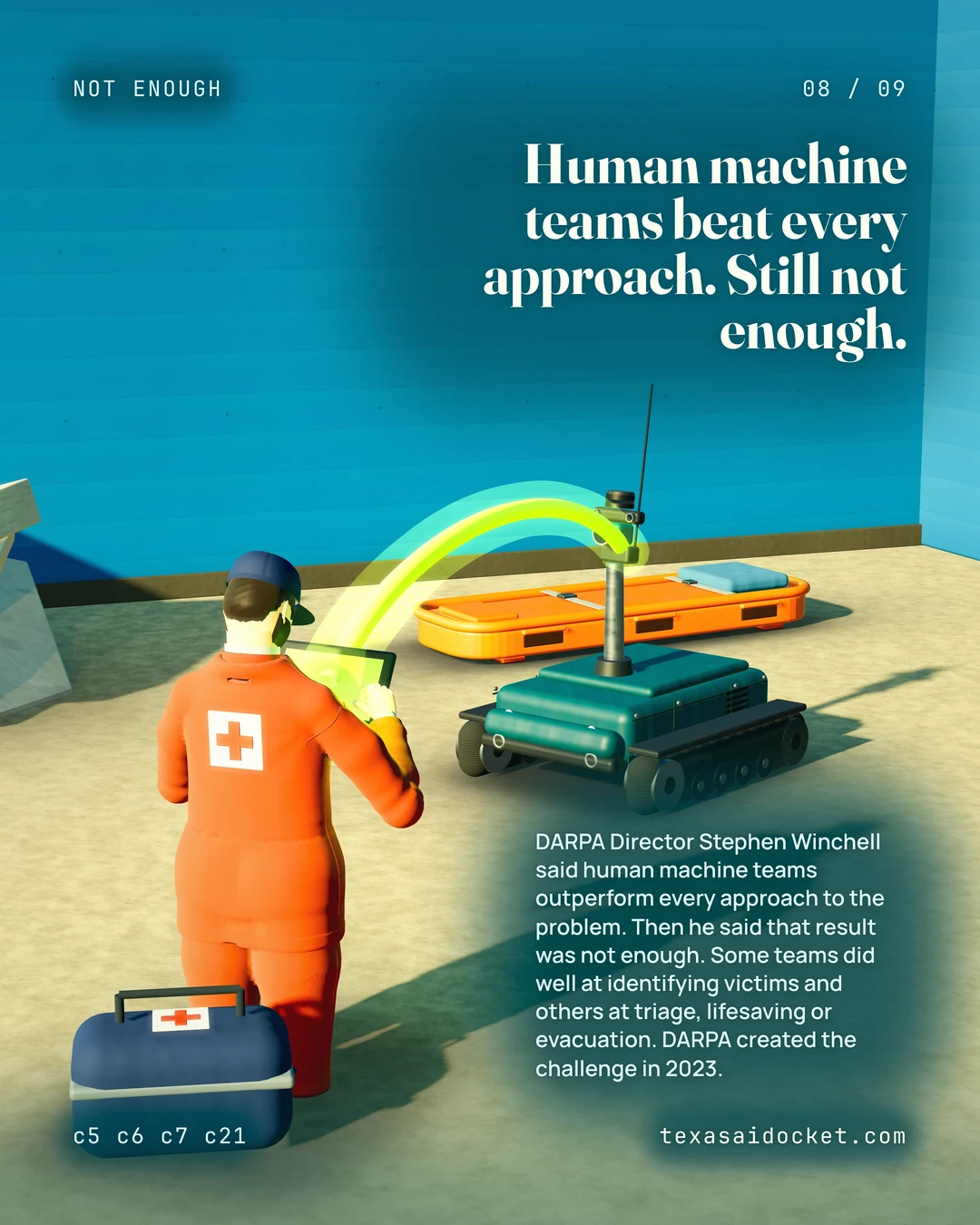
DARPA Director Stephen Winchell said human machine teams outperform every approach to the problem. He then said that result was not enough. He said some teams did well at identifying victims and others at triage, lifesaving or evacuation. DARPA's account of the finals and TEEX's account give no lives saved, accuracy or rankings beyond the winners.
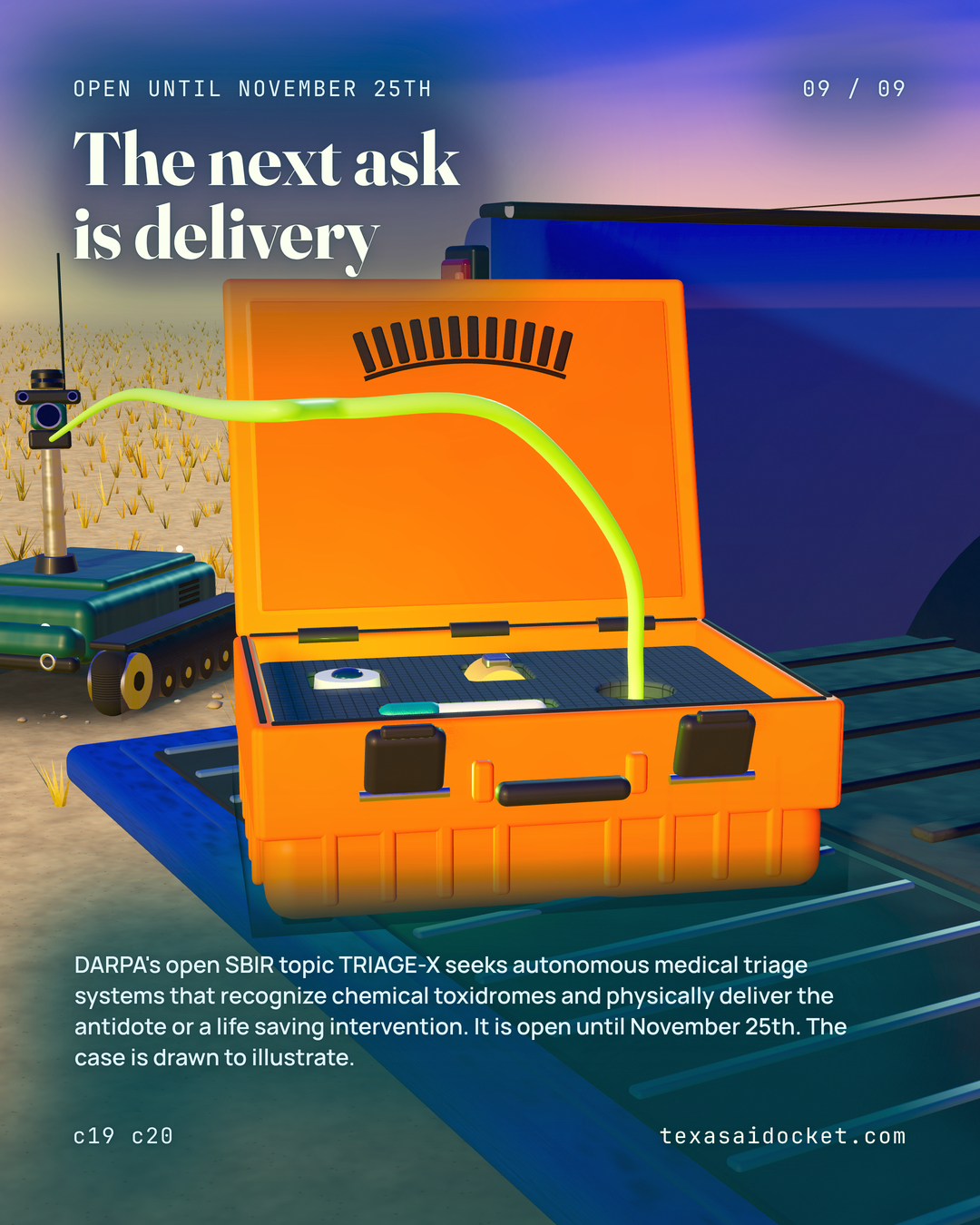
DARPA has an open research topic called TRIAGE-X for autonomous medical triage systems that recognize chemical toxidromes and physically deliver the antidote or a life saving intervention. It is open until November 25th, 2026. Every casualty in the finals was simulated. Neither DARPA's account nor TEEX's describes any of these systems used in a real emergency.
Sources for this story
- TEEX, TEEX turns Disaster City into a DARPA Triage Challenge proving ground
- DARPA, DARPA Triage Challenge completes Finals event
- DARPA, DARPA Triage Challenge program page
Claim-by-claim verification · 31 claims
TEEX staged the DARPA Triage Challenge at Disaster City in College Station from November 5th to November 13th.
The scenarios were part of the DARPA Triage Challenge, which the Texas A&M Engineering Extension Service, or TEEX, staged from Thursday, Nov. 5 through Friday, Nov. 13, at Disaster City® in College Station.
Autonomous drones and ground robots worked alongside first responders to triage simulated mass casualty incidents and relayed critical data to human medics.
Autonomous drones and ground robots raced alongside first responders this week to triage simulated mass casualty incidents, spotting faux-but-lifelike life-threatening injuries and relaying critical data to human medics.
The finals ended on November 13th at Disaster City in College Station. RoboScout won the Systems competition and $1.5 million, and Disruptors won the Data competition and $1 million.
The DARPA Triage Challenge concluded the Finals event on Nov. 13, 2026, at Disaster City in College Station, Texas. RoboScout won the Systems competition and $1.5 million, while Disruptors won the Data competition and $1 million.
Competitors used autonomous systems and human machine teams in simulated disasters that included a tornado hitting an open air market, smoke, heavy darkness and complex obstacle lanes.
Competitors employed autonomous systems and human-machine teams to navigate simulated catastrophic events, including a tornado hitting an open air market, smoke, heavy darkness, and complex obstacle lanes.
DARPA Director Stephen Winchell said human machine teams outperform every approach to the problem in some of the most rigorous environments.
We've decisively proven that human-machine teams outperform every approach to the problem in some of the most rigorous, large scale, complex environments that you've ever seen
Winchell then said that result was not enough.
But that's not enough, right?
Winchell said some teams did well at identifying victims and others at triage, lifesaving or evacuation.
Some of the teams perform really well on the identification of victims. Some of the teams perform really well on the triage and lifesaving or the evacuation pieces.
The challenge seeks autonomous systems such as drones and robots that can assess injuries quickly, accurately and at scale in mass casualty incidents.
The DARPA Triage Challenge (DTC) seeks to transform how medical responders triage in mass casualty incidents (MCIs) by developing autonomous systems – such as drones and robots – that can assess injuries quickly, accurately, and at scale.
Competing teams developed algorithms, unmanned aerial vehicles or unmanned ground vehicles designed to work with the human medics who give hands on care in the field.
Competing teams have developed algorithms, unmanned aerial vehicles (UAVs), and/or unmanned ground vehicles (UGVs) designed to collaborate with the human medics who provide hands-on evaluation and care in the field.
Competitors must show their systems can locate casualties, identify signs of injury and send critical data to medical response teams.
Through a series of scenarios, competitors must demonstrate that their systems can locate casualties, identify signs of injury, and transmit critical data to medical response teams.
Disaster City is a 52 acre mock community with full scale structures that can collapse, rubble piles and a derailed train.
runs Disaster City®, a 52-acre mock community with full-scale structures that can collapse, rubble piles, a derailed train and more to simulate realistic disaster response in a simulated and safe environment.
More than 100 participants from the U.S. military, universities, tech companies and startups competed for more than $3 million in cash prizes.
more than 100 participants from the U.S. military, universities, tech companies and startups competed for over $3 million in cash prizes
Teams were graded at DARPA's command post, where computing technology checked every mock casualty report against each patient's simulated injuries and vital signs.
Teams are graded by DARPA’s command post, where state-of-the-art computing technology checks every mock casualty report against each patient’s simulated injuries and vital signs.
The five competitions included a simulated tornado ripping through a community market, smoke filled buildings, nighttime searches in near darkness and search and rescue under rubble.
Each of the five competitions was unique, including a simulated tornado ripping through a community market, smoke-filled buildings, nighttime searches in near darkness and search and rescue under piles of rubble.
Moulage artists made hyper realistic mock injuries for the challenge.
Behind the scenes at the DARPA Triage Challenge, skilled moulage artists create hyper-realistic mock injuries.
For the Human Machine Teaming course each team was assigned medics, and teams and medics worked together to rapidly triage casualties.
Teams are assigned medics they will partner with for the Human-Machine Teaming (HMT) course, in which teams and medics work together to rapidly triage casualties.
Program manager Jeremy Pamplin said the challenge was built to be the most realistic, repeatable and rigorous testbed for assessing medical technologies ever created.
We did this challenge to be the most realistic, repeatable and rigorous testbed for assessing medical technologies ever created
Competitors used the technology their teams developed to read vital signs from a distance and work alongside human medics.
read vital signs from a distance and work alongside human medics for faster
DARPA has an open SBIR topic, TRIAGE-X, for autonomous medical triage systems that recognize chemical toxidromes and physically deliver the antidote or a life saving intervention.
If you’d like to get involved, DARPA has an open SBIR topic, TRIAGE-X, which seeks to develop and demonstrate capability with autonomous medical triage systems to recognize chemical toxidromes and physically deliver the corresponding antidote or life-saving intervention.
DARPA says the TRIAGE-X topic is open until November 25th, 2026.
is open until Nov. 25, 2026.
DARPA created the Triage Challenge in 2023, according to TEEX.
DARPA is the Defense Advanced Research Projects Agency and created the DARPA Triage Challenge in 2023.
TEEX says choosing it as host was an easy decision for Jeremy Pamplin, a retired Army colonel and physician who is the challenge's program manager.
For retired U.S. Army Col. and physician Jeremy Pamplin, program manager for the DARPA Triage Challenge, choosing TEEX was an easy decision.
Points from each competition decided which teams reached the championship round, where the top two teams competed for the $1.5 million grand prize.
advanced to the championship round, where the top two competed for the $1.5 million grand prize.
Team DRONE, a Hawaii team whose name stands for Disaster Response Observation Network for Emergencies, was one of the few self-funded teams.
One of the few self-funded teams was DRONE, short for Disaster Response Observation Network for Emergencies, based in Hawaii.
DRONE had two full-time members, Dr. Bob Nakata and his daughter Angelina, a sophomore studying computer science at Northeastern University.
The team has just two full-time members, Dr. Bob Nakata and his daughter, Angelina, a sophomore computer science student at Northeastern University.
The father and daughter team placed second during the first trials of the competition, ahead of major research groups.
The father-daughter combo staved off tough competition from major research conglomerates to place second during the first trials of the competition.
On the night course of the Human Machine Teaming lane, a robot searched for casualties during a controlled explosion while role players took cover.
A controlled explosion erupts on the HMT night course as a robot searches for casualties and role players take cover from the blast.
That night course was built to simulate an attack on a forward operating base.
The course is designed to simulate an attack on a forward-operating base.
Actors playing civilians went through nearly a dozen preparation stations, each timed to within a few minutes.
Actors playing civilians in the challenge, for example, moved through nearly a dozen preparation stations, each timed within a few minutes.
Ray Ivie, director of the TEEX Office of Research, said TEEX was extremely grateful to help bring the finals to life.
TEEX is extremely grateful to help bring the finals of the DARPA Triage Challenge to life here,
DARPA's program page says a casualty's life depends on how fast and how accurate triage decisions are.
Every casualty's life hinges on the speed and accuracy of these decisions.